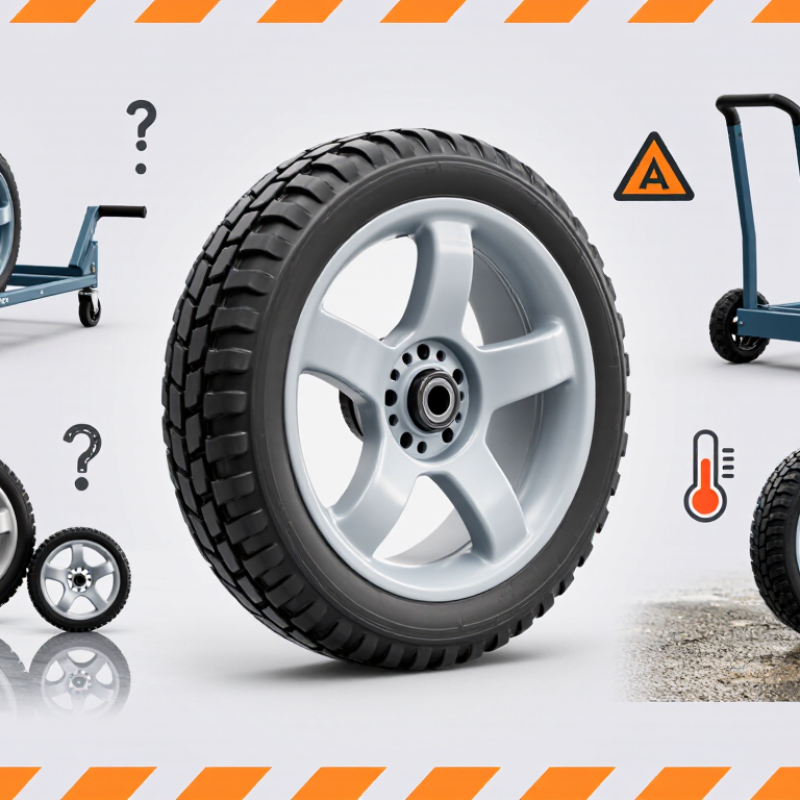
| 1 | Load capacity | Confirm the rated capacity for each wheel and compare it with the maximum expected load. Include the cart or equipment’s own weight, and account for uneven load distribution. | Overloading can deform or damage a wheel and may make equipment harder to control. |
| 2 | Wheel material | Check the specified plastic type and its documented properties, such as impact resistance, stiffness, and suitability for the intended environment. | Different plastics perform differently under load, impact, moisture, and temperature changes. |
| 3 | Floor and surface compatibility | Match the wheel’s tread and hardness to the floor. Consider whether the wheel must roll over smooth concrete, tile, rough flooring, or thresholds. | A suitable wheel can improve rolling performance and help reduce noise, floor marking, or surface damage. |
| 4 | Wheel diameter and width | Verify that the dimensions fit the equipment and provide adequate clearance. Larger-diameter wheels generally roll more easily over small obstacles, if the design allows them. | Incorrect dimensions may prevent installation or affect maneuverability and ground clearance. |
| 5 | Axle, bore, and mounting fit | Measure the axle or bore, hub width, and mounting arrangement. Check tolerances and confirm that the supplied hardware is compatible with the equipment. | A correct fit helps prevent excess movement, binding, and premature wear. |
| 6 | Bearings and bushings | Identify whether the wheel uses a plain bore, bushing, or bearing. Check the manufacturer’s guidance on lubrication, sealing, and operating conditions. | The hub arrangement affects rolling resistance, maintenance needs, and performance in dusty or wet settings. |
| 7 | Operating environment | Confirm the stated operating temperature range and compatibility with any oils, cleaners, moisture, or chemicals the wheel may encounter. | Heat, cold, and chemical exposure can affect plastic properties and service life. |
| 8 | Brakes and swivel locks | For mobile equipment that must remain stationary, check whether a brake or swivel lock is needed and make sure it is compatible with the wheel assembly. | Brakes and locks can help control unintended movement when equipment is parked or loaded. |
| 9 | Product documentation and safety | Review the rated capacity, dimensions, installation instructions, warnings, and any applicable standards or test documentation supplied for the specific wheel. | Clear documentation helps verify that the product is appropriate for the intended application and installation. |
| 10 | Inspection and maintenance | Ask how to inspect the wheel and hub. Follow the supplied maintenance instructions, and check periodically for cracks, flat spots, excessive play, debris, or loose fasteners. | Regular inspection can help identify wear or damage before it affects safe operation. |



 Close