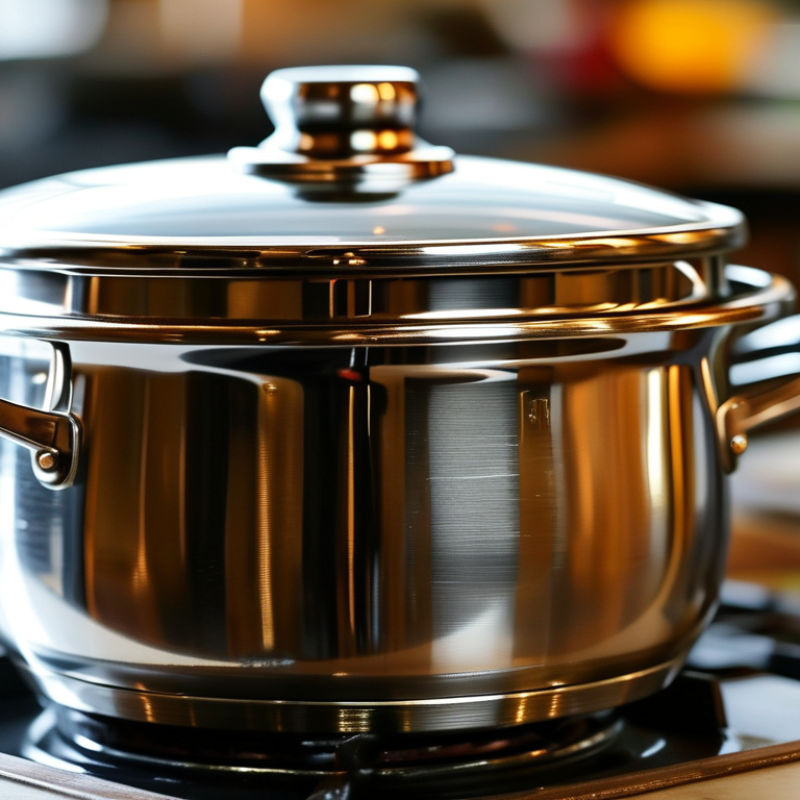
| Tri-Ply Saucepan | 304 stainless steel cooking surface with an aluminum core and a stainless steel exterior. | Very good when the aluminum layer extends across the base and sidewalls; aluminum conducts heat far better than stainless steel. | Sauces, grains, vegetables, reheating, and controlled low-to-medium heat cooking. | Suitable for normal food preparation when manufactured for food contact. Avoid prolonged storage of highly acidic or salty foods in the pan. | Excellent resistance to rust and ordinary kitchen wear. A bonded core reduces the risk of localized hot spots. | Hand washing helps preserve appearance. Remove heat tint with a mild stainless-steel cleaner; avoid chlorine bleach and abrasive scouring pads. | Excellent all-purpose choice |
| Straight-Sided Sauté Pan | 304 stainless steel interior, commonly paired with a thick aluminum or copper-aluminum heat-spreading layer. | Very good with a fully clad or thick encapsulated base; performance depends strongly on core thickness and contact with the cooktop. | Searing, browning, pan sauces, shallow frying, and one-pan meals. | Preheating and using moderate heat can reduce sticking and overheating. Stainless steel is non-coating, so there is no synthetic non-stick film to deteriorate. | High resistance to scratching, deformation, and repeated heating when the base is properly bonded. | Allow the pan to cool before washing. De-glaze stuck food with warm water rather than scraping aggressively. | Best for versatility |
| Stockpot | 304 stainless steel body, often with a separate encapsulated aluminum base rather than full sidewall cladding. | Good at the base when the encapsulated disk is sufficiently thick; sidewall heating is less even than fully clad cookware. | Stock, pasta, soup, blanching, steaming, and batch cooking. | Use adequate water for boiling applications and avoid heating an empty pot for extended periods. Check that handles and lid components are securely attached. | Very high durability because of the simple stainless body and relatively low mechanical stress during use. | Dishwasher compatibility is common, but frequent dishwasher cycles may dull the finish. Dry promptly to reduce water spotting. | Best for capacity and longevity |
| Fry Pan | 304 stainless steel cooking surface with an aluminum or multi-metal heat-spreading core. | Very good in fully clad designs; a thin single-layer stainless pan may heat unevenly and create hot spots. | Searing meat, browning vegetables, frying eggs with appropriate technique, and oven finishing. | Use sufficient cooking oil and moderate preheating. Stainless steel can cause food to stick if the surface is too cool, too hot, or inadequately lubricated. | Excellent scratch resistance compared with coated cookware. The pan may discolor from high heat without losing its basic corrosion resistance. | For burnt residue, simmer water with a small amount of baking soda, then wash normally. Avoid steel wool on polished surfaces. | Best for high-heat durability |
| Saucepan with Pouring Rim | 304 stainless steel body with a bonded aluminum base or fully clad wall construction; rim may be formed or rolled. | Good to very good, depending on whether the heat-spreading layer covers only the base or the entire vessel. | Milk-based sauces, custards, reductions, oatmeal, and small portions of rice or vegetables. | Stir milk and sugar-based mixtures regularly to limit scorching. Do not leave acidic sauces in the cookware for extended storage. | Strong corrosion resistance and good resistance to denting when the wall and base are adequately thick. | Clean promptly after use. A non-abrasive cleanser can restore the finish after protein or sugar residue dries on the surface. | Best for precision cooking |
| Steamer Insert | Perforated 304 stainless steel insert used with a stainless steel pot or compatible stockpot. | Steam transfers heat efficiently, but the insert itself is not designed for direct dry heating. | Vegetables, dumplings, seafood, tamales, and gentle reheating. | Ensure the water level remains below the food and that handles stay clear of the burner. Use caution when removing the hot lid because escaping steam can cause burns. | Very good resistance to moisture, repeated washing, and normal kitchen temperatures. | Rinse food particles from perforations immediately. Dry thoroughly to reduce mineral deposits and trapped moisture. | Best for low-fat steaming |
| Oven-Safe Roasting Pan | 304 stainless steel pan, commonly reinforced with a thick base or a separate rack made from stainless steel. | Moderate to good; a thick base improves browning, while a thin body may respond quickly but distribute heat less evenly. | Roasting poultry, vegetables, baked pasta, pan gravies, and oven-to-table cooking. | Verify the temperature limits of handles, lids, silicone parts, and any non-metal components before oven use. | Excellent resistance to oven heat, corrosion, and repeated cleaning when welded joints are sound. | Soak baked-on residue before cleaning. Avoid sudden cold-water exposure immediately after removing the hot pan to minimize thermal shock. | Best for oven versatility |
| 304 Stainless Steel Lid | Formed or spun 304 stainless steel, sometimes combined with a tempered-glass viewing panel and a metal or heat-resistant handle. | Not a primary heat-distribution component; its main function is heat and moisture retention. | Simmering, steaming, braising, and reducing evaporation during cooking. | Steam vents and handles can become hot. A glass section must be checked for its stated temperature and thermal-shock limits. | Metal lids offer excellent long-term durability and do not suffer from coating wear. | Dry the underside and handle area after washing. Inspect rivets, screws, and vent openings periodically. | Best for long service life |
| Induction-Compatible Set | 304 stainless steel interior with a magnetic stainless steel exterior layer or a bonded magnetic base; not every 304 surface is induction-compatible. | Good to very good when the base is flat, sufficiently thick, and engineered for induction energy transfer. | Induction, gas, electric, and ceramic cooktops, subject to the cookware specification. | Confirm induction compatibility using the product specification or a magnet test on the exterior base. Keep the base flat and clean for stable contact. | High durability if the magnetic base is securely bonded and remains flat during repeated heating. | Lift rather than slide cookware on glass cooktops to reduce scratching. Avoid heating an empty pan on high induction power. | Best for multi-market compatibility |
| Uncoated 304 Stainless Steel Set | Cooking surfaces are exposed 304 stainless steel without a polymer non-stick coating; construction may be single-layer, encapsulated-base, or fully clad. | Highly dependent on the construction. A single-layer body conducts heat poorly compared with aluminum, while a multi-layer design distributes heat more evenly. | General cooking for buyers prioritizing a non-coated, long-life surface. | 304 stainless steel is widely used for food-contact equipment, but food compatibility also depends on manufacturing quality, welds, finishing, and regulatory compliance in the destination market. | Excellent resistance to peeling, flaking, and ordinary utensil wear because there is no surface coating to delaminate. | Use non-abrasive cleaners. Water spots, rainbow heat tint, and minor scratches are mainly cosmetic and do not necessarily indicate structural failure. | Best for low-coating ownership |



 Close
Close