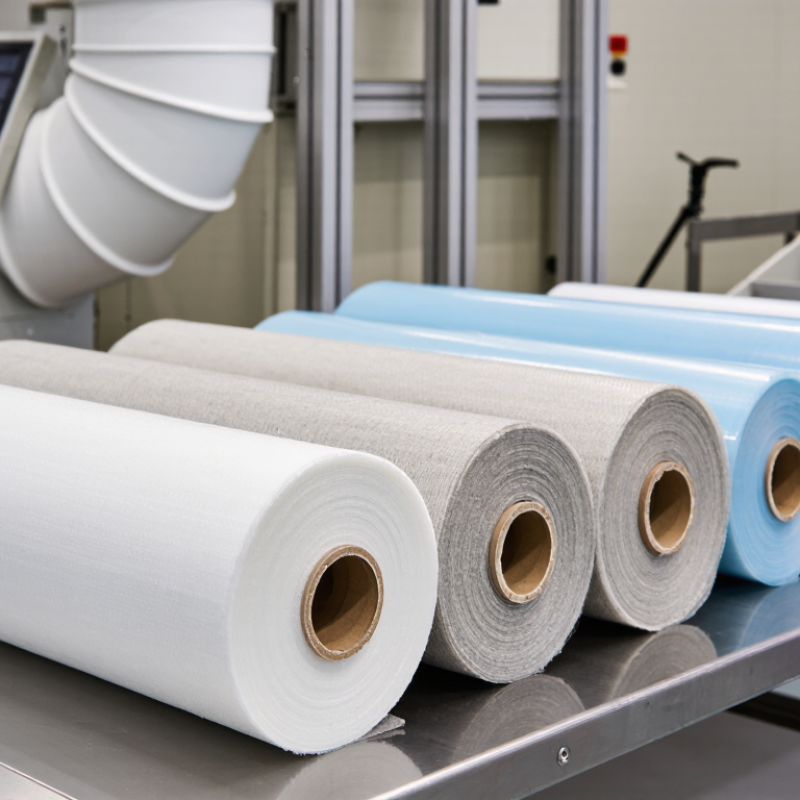
| Progressive-density synthetic media | Layered synthetic fibers, commonly polyester, with a looser upstream face and denser downstream structure. | Particles are captured through a combination of interception, impaction, and depth loading within the fiber structure. | HVAC prefiltration, air-handling units, and general ventilation systems. | Uses more of the media depth for dust storage than a uniform structure; available in different thicknesses and grades. | Performance and dust-holding capacity vary with fiber arrangement, thickness, and operating conditions. Check the pressure drop at the intended airflow. | A versatile option when the system needs general-purpose prefiltration and a balance between service life and airflow resistance. |
| Uniform-density synthetic media | Nonwoven synthetic fibers distributed with a comparatively consistent density through the sheet. | Particles are retained on and within the fiber network; loading tends to develop through the media as dust accumulates. | Ventilation systems, equipment protection, and replacement filter pads cut from rolls. | Simple to convert and install; synthetic fibers generally tolerate moisture better than untreated cellulose media. | Dust capacity and efficiency depend on the particular fiber web and grade; a uniform structure may load differently from a progressive-density design. | A practical choice when straightforward fabrication, consistent material structure, and routine prefilter replacement are priorities. |
| Fiberglass roll media | Randomly arranged glass fibers, often supplied in thicknesses and grades intended for disposable panel or roll filters. | Fibers intercept and retain airborne particles as air passes through the web. | Basic HVAC prefilters, industrial ventilation, and applications where low-cost disposable media is suitable. | Widely used in simple prefiltration applications and can be cut to size from a roll. | Handle and install according to the product instructions to limit fiber release. It is not a substitute for a properly rated final filter where high efficiency is required. | Suitable for basic, lower-demand prefiltration when the system design and maintenance plan allow frequent media changes. |
| Adhesive-treated or tackified media | Fibrous roll media treated with a tackifying substance to help retain collected dust. | Particles are captured by the fiber web, while the tacky surface helps reduce the release of collected dust during handling or airflow changes. | Coarse-dust prefilters and selected ventilation or industrial air-intake applications. | Can improve retention of dust on the media surface and may be useful where re-entrainment is a concern. | Confirm compatibility with operating temperature, humidity, and any downstream equipment. The treatment does not by itself define a filtration-efficiency class. | Consider where dust retention is important and the media’s treatment is compatible with the process conditions. |
| Electret synthetic media | Synthetic fibers carrying an electrostatic charge, sometimes combined with a layered nonwoven structure. | Mechanical fiber capture is supplemented by electrostatic attraction for suitable particles. | Selected HVAC and ventilation filters where the complete filter design is tested for the required performance. | Electrostatic attraction can support particle capture without relying solely on a very dense fiber structure. | Charge-related performance can be affected by media design, particle loading, and environmental conditions. Use test data for the complete filter, not a claim based only on the media. | Choose when verified filter-level test results meet the application’s needs and operating conditions. |
| Washable or reusable synthetic media | More open, durable synthetic mesh or fibrous media designed for cleaning and repeated use. | Captures larger particles on and within the media; cleaning removes accumulated dust when the product is designed for reuse. | Selected equipment prefilters and applications with an established cleaning and inspection process. | Can reduce disposable-media use when it is cleaned, dried, inspected, and reinstalled correctly. | Cleaning does not guarantee the original performance is restored. Follow the supplier’s cleaning instructions and replace damaged or permanently loaded media. | Best suited to applications where reusable media is explicitly permitted and maintenance staff can follow a controlled cleaning routine. |



 Close