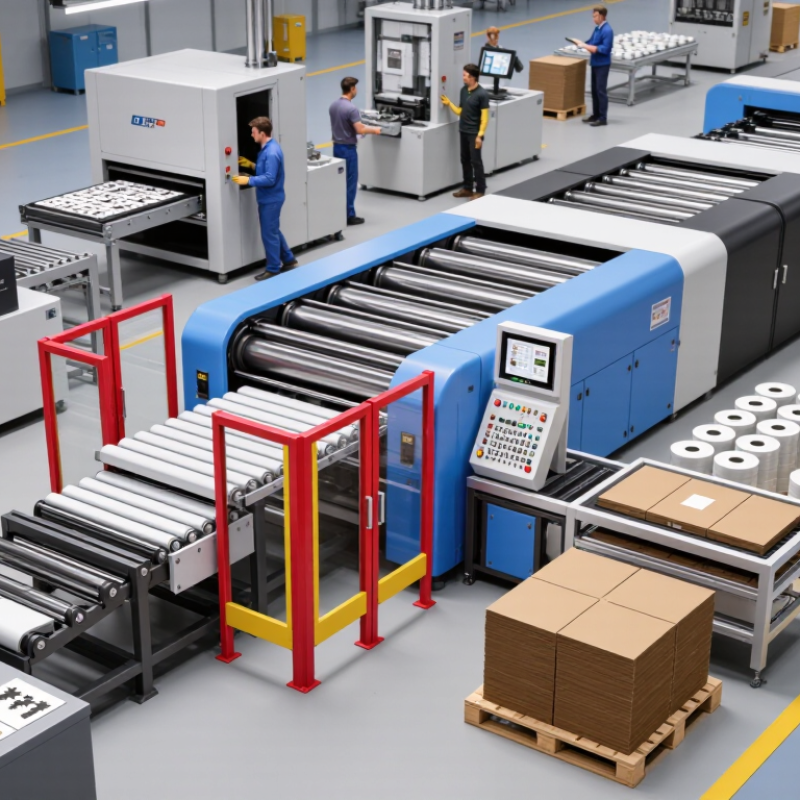
| Flatbed Die-Cutting Machine | Approx. 450 × 320 mm to 1,600 × 1,100 mm | About 1,500–8,000 sheets/hour, depending on format, material, and automation | Paperboard, corrugated board, labels, folding cartons, leather, gasket materials, and thin plastics | Reciprocating flatbed platen with a cutting die | Often approximately ±0.10–0.30 mm when properly set up | Short to medium runs, complex shapes, cartons, prototypes, and mixed job sizes | Maximum sheet size, stripping capability, die-change time, feeding stability, pressure adjustment, and local technical support |
| Rotary Die-Cutting Machine | Common web widths of approximately 200–1,500 mm | About 30–180 m/min, depending on material and converting process | Self-adhesive labels, flexible films, foils, paper webs, tapes, and thin laminates | Cylindrical rotary die or magnetic-cylinder tooling | Often approximately ±0.10–0.25 mm with stable web tension and registration | High-volume continuous production and roll-to-roll converting | Web-tension control, registration accuracy, tooling availability, waste removal, splicing system, and line integration |
| Digital Cutting Table | Typical cutting areas from approximately 1,600 × 1,200 mm to 3,200 × 2,000 mm | Material-dependent; commonly suitable for sampling and low-to-medium volume work rather than maximum throughput | Corrugated board, foam, honeycomb board, textiles, leather, rubber, plastics, and composite sheets | Computer-controlled oscillating knife, tangential knife, rotary knife, or milling tool | Often approximately ±0.20–0.50 mm, depending on material and tool condition | Rapid prototyping, customized orders, sample production, and frequent design changes | Software compatibility, tool-change options, vacuum table, camera registration, file formats, operator training, and service response |
| Laser Cutting and Die-Cutting System | Common working areas from approximately 600 × 400 mm to 1,600 × 1,000 mm | Highly dependent on material, power, pattern complexity, and cut length | Paper, film, textiles, wood-based sheets, acrylic, and selected non-metallic materials | Focused laser beam with computer-controlled motion | Often approximately ±0.05–0.20 mm under controlled operating conditions | Fine detail, non-contact processing, variable data, and tooling-free short runs | Laser power, exhaust and filtration, edge discoloration, material compatibility, fire protection, software, and electrical compliance |
| Steel-Rule Die Press | Common die areas from approximately 500 × 400 mm to 1,600 × 1,200 mm | Often about 500–3,000 cycles/hour, depending on product and press design | Gaskets, foam, rubber, insulation, leather, textiles, plastics, and packaging board | Steel-rule die pressed against a flat material stack or sheet | Typically approximately ±0.20–0.50 mm, depending on die quality and material compression | Thicker materials, industrial components, gaskets, and repeatable batch production | Press force, daylight opening, bed size, die height, safety guarding, material stack height, and replacement-die cost |
| Sheet-Fed Creasing and Die-Cutting Line | Common sheet formats from approximately 520 × 360 mm to 1,650 × 1,200 mm | About 3,000–9,000 sheets/hour, depending on board grade and finishing operations | Folding carton board, coated paperboard, micro-flute corrugated board, and laminated packaging stock | Flatbed die-cutting with integrated creasing, stripping, and delivery sections | Often approximately ±0.10–0.30 mm with accurate feeding and registration | Medium to large packaging runs requiring creasing, stripping, and consistent output | Feeder design, register control, stripping station, blanking system, automation level, compressed-air demand, and changeover time |
| Roll-to-Sheet Label Die-Cutting Line | Typical web widths of approximately 200–550 mm | About 20–100 m/min, depending on label size, waste matrix, and finishing configuration | Paper labels, film labels, adhesive stocks, laminate webs, and thermal materials | Rotary or semi-rotary die-cutting with slitting and waste matrix removal | Often approximately ±0.10–0.25 mm for print-to-cut registration | Label converters handling multiple SKUs and frequent roll changes | Print-mark sensor, web guide, adhesive handling, matrix-waste removal, rewind quality, roll diameter, and inspection system |



 Close
Close