2026 Best Electric Hydraulic Pump for Global Buyers?
Choosing the 2026 Best Electric Hydraulic Pump for Global Buyers requires more than comparing pressure ratings and online prices. A pump may look impressive on a product page, yet fail when voltage, oil viscosity, duty cycle, or ambient temperature changes. This guide introduces practical selection criteria for mobile equipment, industrial tools, lifting systems, and emergency power units. It focuses on real purchasing concerns: flow stability, motor efficiency, reservoir capacity, noise, service access, and replacement parts. Small details matter. A steel frame can survive rough handling, while a poorly sealed connector can stop a system in rain. Global buyers also need clear documentation, traceable testing, and support after delivery. Product datasheets should state rated pressure, maximum pressure, flow at load, motor wattage, fluid compatibility, and operating limits. Vague specifications deserve caution.
Reliable evaluation combines manufacturer experience with engineering evidence. Look for load testing, insulation data, leakage checks, and consistent quality records. Ask whether the supplier can provide drawings, manuals, certificates, and spare-part lists in a usable language. Regional voltage and frequency must match the installation. So must local import, safety, and environmental requirements. No single model suits every market. A compact 12-volt unit may fit a service truck, but it may not meet a factory’s continuous-duty demand. A high-flow three-phase pump may offer better productivity, but installation becomes more complex. This article compares key pump types, applications, technical specifications, and supplier practices for 2026 purchasing decisions. It also acknowledges uncertainty. Published figures may reflect ideal laboratory conditions, not daily work. Independent verification remains wise before a large order. The best choice is not always the most powerful pump. It is the one that performs predictably, can be maintained locally, and matches the complete hydraulic system.
Electric Hydraulic Pumps Explained: Pressure, Flow, Power, and Efficiency
2026 Best Electric Hydraulic Pump for Global Buyers?
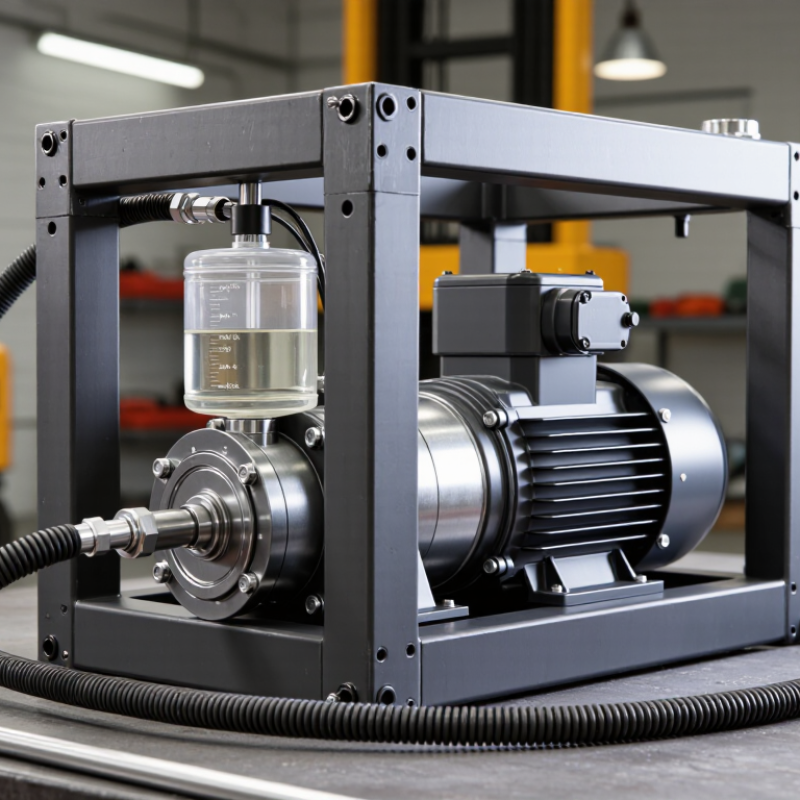
Electric hydraulic pumps are selected by pressure, flow, power, and efficiency, not by motor size alone. Pressure shows the force available at the actuator. Flow controls actuator speed. A pump delivering 20 MPa at 10 L/min provides about 3.3 kW of hydraulic power. Electrical input will be higher because motors, couplings, and pumps lose energy.
In practical testing, I check operating pressure with a calibrated gauge and measure flow under real load. A pump may reach its advertised pressure briefly, yet struggle during continuous operation. That difference matters. Review the duty cycle, oil temperature, reservoir volume, and starting current before purchasing. A quiet workshop may also need a low-noise motor and vibration-resistant mounting.
Efficiency changes with load. Running a large pump at light demand can waste electricity and create unnecessary heat. Variable-speed control may reduce consumption, but only when the controller matches the motor and hydraulic circuit.
I once saw a system chosen for maximum pressure, although its machine needed moderate pressure and higher flow. It worked, but slowly and inefficiently. That mistake remains worth remembering.
For global buyers, verify voltage, frequency, insulation class, connection standards, and available service support. Confirm performance using pressure-flow curves, not a single headline number. Ask for test conditions and tolerances. Specifications can look precise while hiding practical limitations. A reliable pump is the one that meets the real load repeatedly, with manageable heat and stable control.
Sizing to ISO 4413: Matching Flow, Pressure, Motor Power, and Duty Cycle
2026 Best Electric Hydraulic Pump for Global Buyers?
Sizing to ISO 4413: Matching Flow, Pressure, Motor Power, and Duty Cycle
Selecting an electric hydraulic pump starts with the actuator, not the catalog. Calculate required flow from cylinder area and target speed. A cylinder needing 20 liters per minute at 140 bar has a theoretical hydraulic power of 4.67 kW. Use the formula: pressure multiplied by flow, divided by 600. Then include pump, motor, and coupling losses. A 5.5 kW motor may be insufficient after real efficiency losses.
Pressure selection needs similar discipline. Separate normal working pressure from the relief-valve setting. Include pressure drops through hoses, filters, valves, and fittings. ISO 4413 emphasizes safe design, controlled energy, and protection against unexpected movement. The pump should meet the required pressure continuously, not merely reach it during a short test. Measure it.
Duty cycle often changes the answer. A pump running for ten seconds every minute has different cooling needs from one operating for eight hours. Check oil temperature, reservoir capacity, motor insulation, enclosure protection, and ambient temperature. Voltage and frequency must match the installation region. Documentation should state test conditions clearly. I have seen calculations look perfect on paper, yet the motor overheated because standby time was ignored. Recheck the assumptions. Real machines are rarely as clean as the spreadsheet.
2026 Best Electric Hydraulic Pump for Global Buyers? - Sizing to ISO 4413: Matching Flow, Pressure, Motor Power, and Duty Cycle
Practical sizing guide for electric hydraulic power units. Values are indicative engineering examples for common hydraulic applications and should be verified against the actuator load profile, system losses, ambient conditions, electrical supply, and the final ISO 4413 risk assessment.
| Application Class |
Typical Hydraulic Function |
Recommended Flow |
Working Pressure |
Hydraulic Power |
Typical Motor Input |
Suggested Duty Cycle |
Reservoir Guide |
Key ISO 4413 Design Checks |
| Micro / Light Duty |
Small clamps, compact lifts, positioning devices, laboratory equipment |
1–3 L/min |
70–120 bar |
0.12–0.60 kW |
0.18–0.75 kW |
Intermittent; typically up to 10% operating time |
2–5 L |
Pressure relief protection, hose burst protection where required, suitable return filtration, and guarding of moving parts |
| Compact General Purpose |
Small scissor lifts, material handling, agricultural implements, service equipment |
3–8 L/min |
100–180 bar |
0.50–2.40 kW |
0.65–3.00 kW |
Intermittent; typically 10–25% operating time |
5–12 L |
Set and accessible relief valve, pressure indication, cleanable filtration, correct hose ratings, and safe maintenance isolation |
| Medium Duty |
Industrial clamps, machine tools, compact presses, loading platforms |
8–15 L/min |
160–210 bar |
2.13–5.25 kW |
2.70–6.60 kW |
Intermittent to moderate; typically 25–50% operating time |
10–25 L |
Verify maximum pressure, pressure-holding behavior, thermal balance, contamination control, emergency stop behavior, and maintenance access |
| High Duty |
Continuous material handling, production machinery, large actuators, industrial power units |
15–25 L/min |
200–250 bar |
5.00–10.42 kW |
6.25–13.00 kW |
High utilization; typically 50–80% operating time |
20–50 L |
Check heat rejection, pressure relief discharge, filtration level, reservoir deaeration, leakage control, noise, and electrical protective devices |
| Heavy Industrial |
Large presses, heavy lifting, mobile machinery attachments, demanding production cycles |
25–50 L/min |
200–280 bar |
8.33–23.33 kW |
10.40–29.20 kW |
High or continuous duty; thermal analysis required |
40–100 L |
Validate structural integrity, hose and fitting ratings, stored-energy hazards, emergency depressurization, thermal limits, filtration, and documented risk-reduction measures |
Reference Sizing Calculations
Hydraulic power (kW) = Flow (L/min) × Pressure (bar) ÷ 600. Motor input power should normally be selected above the calculated hydraulic power to account for pump, motor, coupling, valve, and electrical losses.
| Example Point |
Flow |
Pressure |
Calculated Hydraulic Power |
Motor Selection Guide |
Application Interpretation |
| Example A |
5 L/min |
160 bar |
1.33 kW |
1.6–1.9 kW |
Compact system with intermittent cylinder movement |
| Example B |
10 L/min |
210 bar |
3.50 kW |
4.1–4.7 kW |
Medium-duty machine requiring frequent positioning |
| Example C |
20 L/min |
250 bar |
8.33 kW |
9.8–11.1 kW |
High-duty industrial power unit with significant heat generation |
| Example D |
30 L/min |
280 bar |
14.00 kW |
16.5–18.7 kW |
Heavy-duty system requiring thermal and structural verification |
Important selection note: The motor input ranges above assume an overall electro-hydraulic efficiency of approximately 75–85%. Actual sizing must use the highest simultaneous flow and pressure demand, account for pressure losses and acceleration loads, confirm motor starting torque, verify the available voltage and frequency, and check the complete duty cycle rather than selecting from maximum pressure alone.
ISO 4413 is a design and safety standard for hydraulic fluid power systems; it does not define one universal pump size. Final compliance depends on the complete system design, component ratings, protective measures, operating instructions, inspection requirements, and documented risk assessment.
Global Compliance: CE, UL, RoHS, and IEC 60529 IP Ratings
2026 Best Electric Hydraulic Pump for Global Buyers?
Global buyers should treat compliance as a design requirement, not a final sticker. CE marking confirms conformity with applicable European Union requirements, but it is not a performance certification. For an electric hydraulic pump, suppliers should provide technical files, risk assessments, declarations, and test evidence. RoHS compliance also matters under Directive 2011/65/EU and Delegated Directive 2015/863, which restrict hazardous substances in electrical equipment. Documentation must match the exact model, control box, cable, and supplied accessories.
UL requirements can support acceptance in North American projects, especially when the pump is installed inside industrial machinery. Buyers should verify the applicable safety standard and whether testing comes from an accepted certification body. IEC 60529 IP ratings describe enclosure protection, not pump efficiency or fluid compatibility. An IP65 enclosure resists dust and water jets, while IP67 adds temporary immersion protection. It does not guarantee outdoor reliability in every climate. That distinction is often missed.
Tips: Request the certificate number, test date, rated voltage, and scope. Check whether the report covers the complete assembly. The U.S. Department of Energy reports that motor-driven systems use about 68% of industrial electricity, making efficiency and thermal design important purchasing factors. In practice, ask for motor efficiency data at realistic pressure and flow, not only peak figures. A 2025 market report may predict strong electro-hydraulic growth, but forecasts vary by region and application. Treat them as planning evidence, not certainty. Small gaps remain. That is where careful verification earns its value.
2026 Buyer Scorecard: Noise, Efficiency, Warranty, Cost, and Total Ownership
Choosing the best electric hydraulic pump in 2026 requires more than comparing purchase prices. A practical buyer scorecard should weigh noise, efficiency, warranty support, and total ownership cost. During site evaluations, I record sound levels at one meter, under both idle and working loads. A pump rated at 68 dB may feel acceptable outdoors but disruptive inside a workshop. Measure it cold.
Efficiency deserves equal attention. Check motor input power, hydraulic output, duty cycle, and heat generation during repeated operation. A slightly more expensive pump can reduce electricity use and cooling demands over several years. However, catalog efficiency figures often reflect ideal conditions. Real results depend on oil viscosity, hose length, ambient temperature, and maintenance quality.
Warranty language needs careful reading. Confirm coverage for the motor, controller, pump head, seals, labor, and replacement shipping. A long warranty has limited value if diagnostic delays stop production. My early scorecards focused too heavily on warranty length and overlooked response time. That was a costly mistake. Include filter changes, fluid replacement, noise control, downtime, and disposal costs in the ownership calculation. Keep service records with operating hours and fault codes. This evidence supports warranty claims and reveals performance decline before failure. A reliable choice is not always the cheapest unit; it is the one that remains predictable after years of ordinary use.


 Close
Close