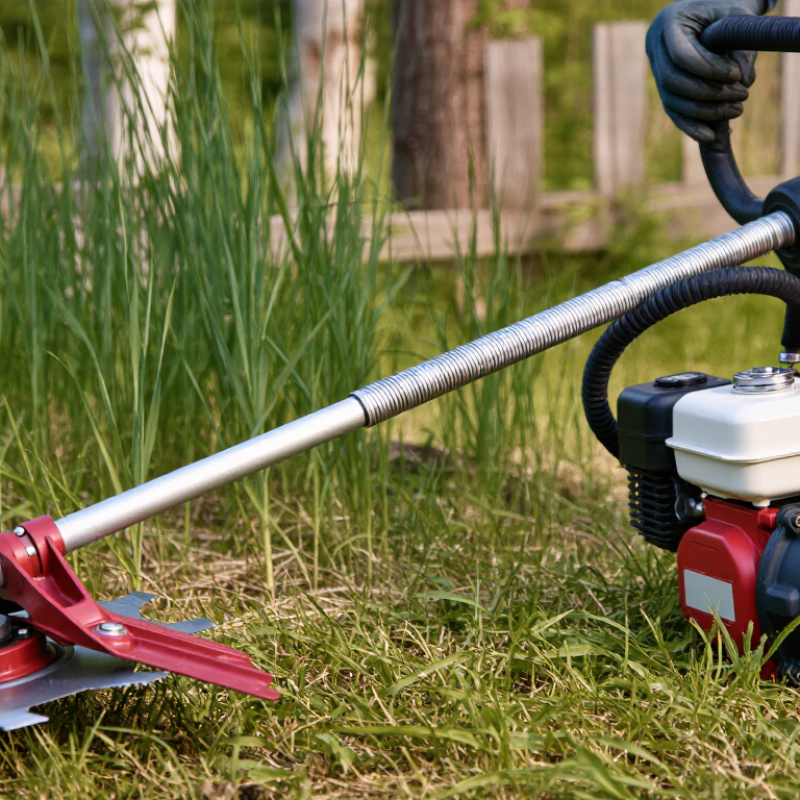
| Definition | A brush cutter that transfers engine or motor torque through a flexible rotating shaft inside a protective housing. | The flexible drive allows the cutting head to be positioned remotely from the power unit, improving maneuverability in confined or irregular areas. | Landscape maintenance, roadside work, drainage channels, orchards, and vegetation management around obstacles. |
| Power Source | Battery-electric, corded electric, or petrol engine; professional portable models commonly use approximately 0.8–2.0 kW of rated output. | Higher output supports denser grass and tougher weeds, while electric systems generally reduce local exhaust emissions and operating noise. | Battery systems for noise-sensitive areas; petrol systems for long-duration work away from charging infrastructure. |
| Cutting Width | Approximately 25–45 cm, depending on the cutting head, blade, and available power. | A wider path increases productivity in open areas but can reduce control in narrow spaces and increase power demand. | 25–35 cm for obstacles and tight access; 35–45 cm for open grass, field margins, and large properties. |
| Cutting Attachments | Nylon line head for grass; multi-tooth metal blade for brambles, reeds, and woody weeds; specialized blades only when approved by the manufacturer. | The attachment must match the vegetation type, shaft speed, guard design, and power rating. | Routine turf edging, dense weeds, invasive vegetation, light scrub, and seasonal field clearing. |
| Flexible Shaft Construction | Multi-layer steel cable or spring-style drive shaft enclosed in a lubricated, abrasion-resistant outer housing. | A properly supported and lubricated shaft reduces heat, vibration, wear, and the risk of premature cable failure. | Frequent professional use where repeated bending and movement around trees, posts, walls, and slopes are expected. |
| Shaft Length and Reach | Common working shaft lengths are approximately 1.2–2.0 m, with adjustable handles or harness systems on many professional models. | Reach should allow a balanced cutting posture without forcing the operator to overextend or twist. | Longer reach for banks and drainage edges; shorter or adjustable configurations for dense landscaping and precise trimming. |
| Weight and Balance | Professional handheld systems commonly weigh about 5–10 kg before fuel or removable battery packs, depending on configuration. | Total carried weight and the location of the power unit affect fatigue, control, and safe work duration. | Low-weight battery units for routine trimming; harness-supported systems for extended vegetation clearance. |
| Vibration Control | Anti-vibration mounts, padded handles, balanced cutting heads, and a correctly tensioned flexible shaft. | Lower transmitted vibration improves comfort and supports compliance with workplace exposure-control procedures. | Municipal, grounds-care, and contractor work involving repeated daily operation. |
| Noise and Emissions | Battery-electric models produce no direct exhaust emissions during use and are generally quieter than petrol models; actual sound levels vary by design. | Noise, local air-quality rules, and working-hour restrictions can determine the most suitable power source. | Hospitals, schools, residential communities, parks, and other noise-sensitive locations. |
| Fuel or Battery Runtime | Runtime depends on load, cutting attachment, vegetation density, battery capacity, fuel-tank size, and operating technique. | Use manufacturer-rated runtime as a comparison point, but plan for shorter periods in heavy growth or continuous cutting. | Multiple batteries or spare fuel for full-shift work; rapid charging and battery rotation for fleet operations. |
| Safety Equipment | Approved guard, eye and face protection, hearing protection where required, gloves, safety footwear, long trousers, and a suitable harness. | The guard and personal protective equipment help control risks from thrown objects, rotating parts, noise, and vegetation contact. | All professional applications, especially work near roads, buildings, pedestrians, glass, and vehicles. |
| Maintenance Requirements | Inspect the guard, head, blade, fasteners, cables, and housing before use; clean air filters and lubricate the flexible shaft according to the service schedule. | Routine inspection helps identify damaged parts, overheating, excessive play, and unsafe attachment conditions before operation. | Daily contractor use, facility maintenance fleets, roadside crews, and seasonal land-management programs. |
| Terrain Capability | Suitable for level ground, slopes, embankments, uneven margins, and areas containing fixed obstacles when operated with stable footing. | Flexible shaft systems improve access, but they do not eliminate the need for terrain assessment and controlled positioning. | Sloped parks, canal banks, orchard rows, fence lines, and rough grassland. |
| Selection Priority for 2026 | Match power, shaft durability, cutting width, runtime, ergonomics, service access, and local noise or emissions requirements. | The best professional brush cutter is determined by the complete operating system rather than maximum engine or motor output alone. | Fleet standardization, lower operating fatigue, predictable maintenance, and efficient vegetation control. |



 Close