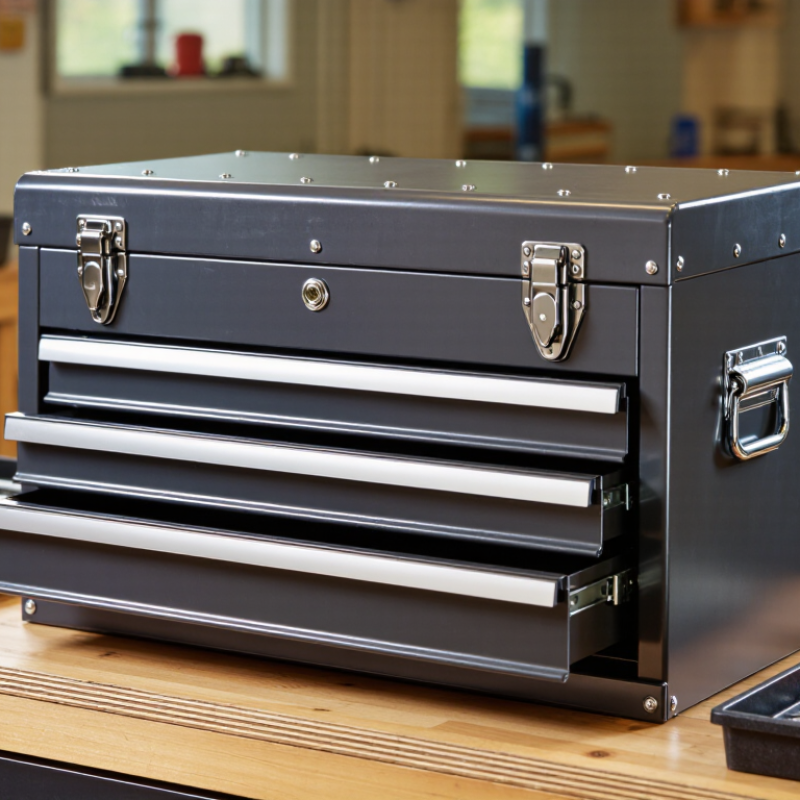
| Material and sheet thickness | Identify the metal type, nominal thickness, and whether the stated thickness applies to the body, drawers, lid, or all panels. | Compare thickness in millimetres rather than relying only on gauge labels. As a general reference, common US steel-gauge conversions are approximately 0.9 mm for 20 gauge, 1.2 mm for 18 gauge, and 1.5 mm for 16 gauge; actual specifications can vary by standard and material. | Material specification, thickness tolerance, and a product drawing showing the measured panels. |
| Dimensions and usable capacity | Distinguish external dimensions from internal storage dimensions. Check drawer opening size, usable depth, and lid clearance. | Confirm that the box fits the intended vehicle, workbench, storage space, and tools. Compare usable volume and compartment layout, not just the outside measurements. | Dimensioned drawings, internal measurements, and a stated capacity in litres or cubic feet where applicable. |
| Load ratings | Check separate ratings for each drawer, the top surface, the total box, and any wheels or handles. | Do not treat a static rating as a rolling or dynamic rating. Confirm whether the stated load assumes evenly distributed weight and whether the box must be stationary during loading. | Rated-load documentation and test conditions for drawers, cabinet, top, and mobility components. |
| Drawer slides and operation | Check slide type, extension length, drawer retention, and operation under the stated load. | Full-extension slides can improve access to items at the rear. Test drawers for binding, excessive play, and unintended opening when the box is moved. | Slide specifications, load rating per drawer, and a sample inspection or functional test report. |
| Wheels and mobility | For mobile units, review wheel diameter, material, brake arrangement, mounting points, and total load rating. | Check whether the listed capacity applies to the complete wheel set and whether brakes are fitted to the required wheels. Consider floor type, thresholds, and the weight of the loaded box. | Wheel and caster specifications, mounting details, and the complete unit's load rating. |
| Corrosion protection | Ask about surface preparation, primer, coating type, and protection of edges, seams, and internal surfaces. | Coating performance depends on preparation, application, handling, and environment. If salt-spray results are supplied, check the test method, duration, sample condition, and pass criteria; hours alone do not predict service life. | Coating specification and, where relevant, a test report identifying the method and acceptance criteria. |
| Locking and security | Check the locking mechanism, number of locking points, key management, and whether the lid or drawers lock together. | A lock can help prevent casual access but should not be assumed to provide high-security protection unless supported by a suitable security rating or test. | Locking-system description, key details, and any applicable security-test documentation. |
| Fit, finish, and safety | Inspect seams, corners, burrs, sharp edges, handles, lid stays, and pinch points. | Open and close every drawer and lid. Check that handles are secure, edges are finished, and moving parts do not create obvious snagging or pinch hazards during normal use. | Pre-shipment inspection checklist, sample photographs, and agreed quality-acceptance criteria. |
| Packaging and shipment | Review packing method, corrosion protection during transit, carton or crate dimensions, and handling instructions. | Confirm packed dimensions and gross weight for freight planning. Packaging should protect corners, coatings, locks, and wheels against movement and impact during transport. | Packing specification, packed measurements and weight, and photographs of the shipment-ready package. |
| Compliance and destination requirements | Identify requirements that apply in the destination market, especially for materials, labeling, packaging, and workplace use. | Requirements vary by product type and country. Do not assume that a general conformity statement replaces destination-specific review or required documentation. | Applicable declarations, test documents, labels, and packaging information confirmed for the destination market. |
| Warranty and replacement parts | Check warranty duration, covered components, exclusions, claim process, and availability of keys, slides, wheels, and handles. | Compare the written terms and the process for obtaining replacement parts. Confirm who pays freight and whether parts are available after the initial shipment. | Written warranty terms, spare-parts list, and service contact or claims procedure. |



 Close