2026 Best New Machinery Trends You Need to Know?
The landscape of machinery is evolving rapidly, and 2026 promises to showcase innovative trends in "Maquinarias Nuevas." Experts in the field, like Javier Rivera, a renowned machinery specialist, emphasize the importance of staying updated. He stated, "Understanding new machinery is crucial for staying competitive."
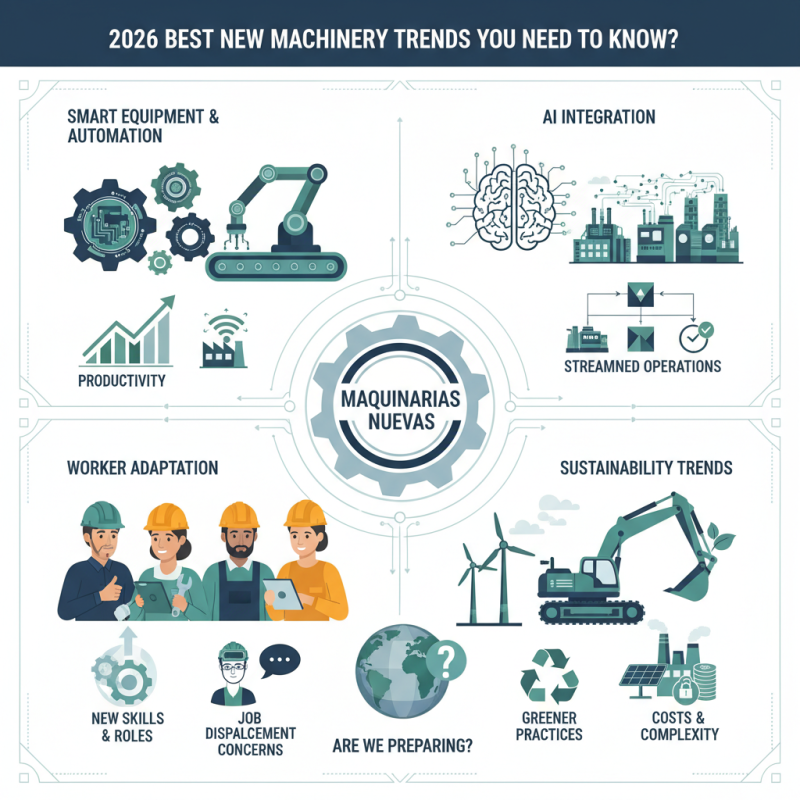
As industries adapt, new technologies emerge. Smart equipment and automation will redefine productivity levels. The integration of AI into machinery could streamline operations significantly. However, these advancements bring challenges. Workers must adapt to new skills and roles. Fear of job displacement is real, and businesses need to address these concerns thoughtfully.
Moreover, sustainability trends are reshaping the industry. Companies are under pressure to adopt greener practices. Yet, transitioning can be costly and complex. The question remains: Are we preparing adequately for the future of "Maquinarias Nuevas"? The answers will shape industries worldwide.
Emerging Technologies in Machinery for 2026
As we approach 2026, the machinery sector is primed for transformative changes. Emerging technologies play a pivotal role in this evolution. Automation continues to dominate, not just in production, but in maintenance and logistics. Smart machinery equipped with sensors can report issues in real-time. This predictive maintenance reduces downtime and enhances efficiency significantly.
Another exciting trend is the integration of artificial intelligence. Machines can learn from data patterns, optimizing performance. This technology also aids in quality control, identifying defects faster than traditional methods. However, the reliance on AI raises concerns about job displacement. The balance between innovation and employment is a topic that requires careful consideration.
Sustainability remains a hot topic as well. Eco-friendly materials and energy-efficient designs are more than trends; they are necessities. However, companies often struggle to meet these guidelines while staying competitive. Challenges abound when implementing these technologies, from training workers to initial costs. The journey toward innovation is seldom smooth, but it is essential for a brighter future in machinery.
Sustainability Trends Impacting Machinery Development
Sustainability is reshaping machinery development. Manufacturers are increasingly focused on eco-friendly practices. This trend is not just a passing phase; it’s a fundamental shift. Companies strive for reduced energy consumption. They use materials that are recyclable and less harmful.
Emissions standards are becoming stricter, influencing design choices. Engineers now prioritize creating machines that minimize waste. For instance, advanced machinery incorporates sensors for real-time monitoring. These sensors help reduce resource consumption effectively. However, challenges remain. Finding the right balance between efficiency and sustainability is complex. Not every solution is cost-effective or practical yet.
Moreover, companies often face resistance internally. Employees may struggle with adapting to eco-friendly practices. This reluctance can hinder progress. Education and training are vital for overcoming such barriers. Ultimately, while the focus on sustainability is promising, the path forward is still uncertain. The journey requires continuous effort and reflection.
2026 Best New Machinery Trends You Need to Know - Sustainability Trends Impacting Machinery Development
| Trend | Description | Impact on Development | Implementation Year |
| Eco-Friendly Materials | Use of biodegradable and recycled materials in machinery construction. | Reduces environmental impact and enhances brand image. | 2024 |
| Energy Efficiency | Development of machinery that consumes less energy through advanced technologies. | Lower operational costs and reduced carbon footprint. | 2025 |
| Automation and AI | Integration of artificial intelligence for predictive maintenance and operational efficiency. | Increases productivity and minimizes downtime. | 2026 |
| Remote Monitoring | Use of IoT devices for real-time monitoring of machinery performance. | Enhances maintenance planning and operational control. | 2026 |
| Circular Economy Practices | Design of machinery for easy disassembly and recycling at the end of life. | Promotes sustainability and resource efficiency. | 2026 |
Automation and Robotics Advances in New Machinery
In the rapidly evolving machinery sector, automation and robotics are reshaping operations. According to a recent report, over 70% of manufacturers plan to adopt robotic solutions by 2026. This trend highlights the growing importance of efficiency and precision in production lines.
Robotic arms are increasingly common in factories. They perform tasks such as welding, assembly, and painting. The International Federation of Robotics states that robot installations will reach 4 million units globally by 2024. This growth reflects a strong belief in the power of automation to enhance productivity. However, some industries face challenges in integrating these technologies seamlessly.
**Tip:** Start small with automation. Test robotic solutions on specific processes before scaling up.
Data indicates that businesses utilizing robotics can reduce costs by up to 20%. Yet, a common pitfall is neglecting employee training. As robots take on repetitive tasks, workers must adapt to more complex roles.
**Tip:** Invest in training programs. Empower employees to operate alongside new technologies.
This shift creates opportunities but also requires careful planning. Companies must consider how to balance human skills with automated processes effectively. Embracing this technology is crucial, but every organization needs a tailored strategy.
2026 Best New Machinery Trends - Automation and Robotics Advances
Smart Machinery: IoT Integration and Data Analytics
The integration of IoT in machinery marks a pivotal shift in the industry. Smart sensors collect real-time data from machines, enhancing operational efficiency. These sensors monitor performance, detect glitches, and predict maintenance needs. As machines communicate, the interaction creates a wealth of information that companies must navigate.
Data analytics plays a crucial role in this process. It turns raw data into actionable insights. Companies can optimize usage and reduce downtime. However, not all organizations are ready. Many struggle with data overload. They find it challenging to separate useful insights from noise. This challenge demands a new level of analytics capability.
These trends push boundaries, inviting both opportunities and risks. Embracing IoT requires investment and understanding. Yet, some manufacturers may resist change due to fear of high costs. This hesitation can slow down growth. Exploring these technologies is crucial, but must be approached thoughtfully. Balancing innovation with practical implementation is key to navigating this new landscape.
The Role of AI in Shaping Future Machinery Innovations
As we look to the future, artificial intelligence (AI) is revolutionizing machinery innovations. AI enhances efficiency, predictive maintenance, and design optimization. This technology analyzes vast data sets. By doing so, it identifies potential issues before they arise. Companies can significantly reduce downtime through proactive management.
Tips: Embrace data analytics. Utilize AI tools to gather insights. This can bolster your machinery's performance.
Moreover, AI-driven robotics are transforming manufacturing processes. They adapt to varied tasks without extensive reprogramming. Robots can recognize patterns and modify operations in real time. This flexibility can lead to higher productivity.
Tips: Incorporate AI in your workflow. Start small. Assess how automation can improve specific tasks. Always consider employee training on new technologies.
Incorporating AI into machinery design leads to innovations we can only imagine today. However, this shift isn’t without challenges. Ensuring security in AI systems is crucial. Understanding the limits and ethical considerations of AI remains essential as we innovate further.



 Close
Close