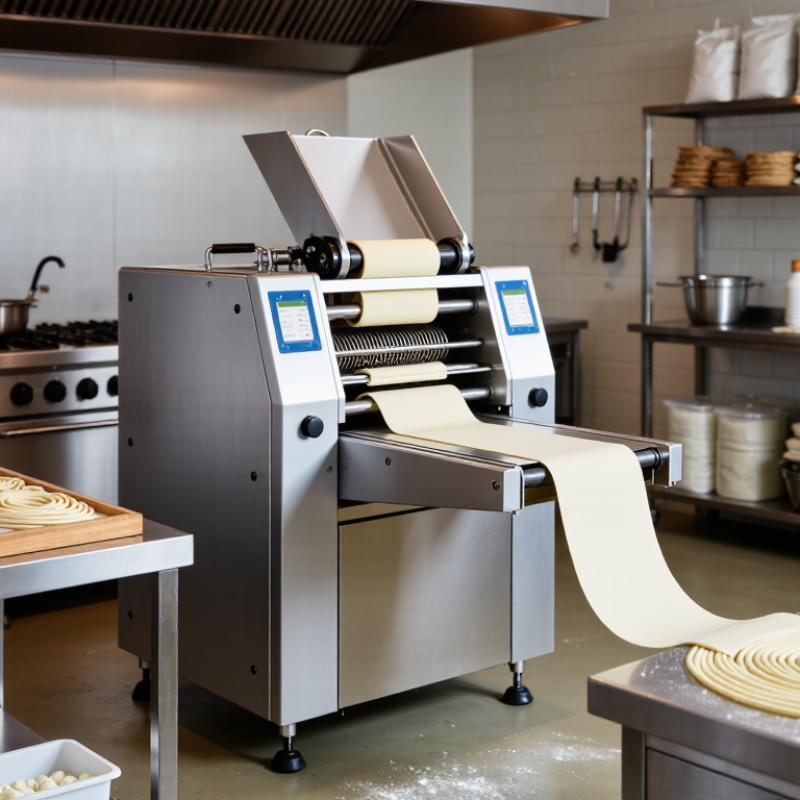
Udon noodle machines generally fall into three groups: manual or tabletop sheeters, semi-automatic sheeting-and-cutting machines, and integrated production lines. A compact sheeter presses dough through adjustable rollers, then cuts it into thick strands. It suits small kitchens and shops where batches are modest. Semi-automatic models add powered feeding or cutting, reducing repetitive work while keeping some steps in the operator’s hands. Integrated lines combine mixing, sheeting, resting, cutting, and conveying. They need more floor space and consistent dough preparation.
Some suppliers also offer extruders, which push dough through a shaped die. They can support continuous output, but traditional udon texture often depends on sheeting and controlled dough resting. FAO’s 2023 Statistical Yearbook reports roughly 770 million tonnes of wheat produced worldwide in 2021. That scale signals broad flour availability, not guaranteed udon quality; flour strength and water absorption still vary. A neat catalog photo can mislead. Compare strand thickness, dough capacity, cleaning access, and output under your own recipe before choosing.
Tips: Ask for a live test using your flour and target dough hydration. Check whether one operator can feed, cut, and clean the machine safely. A small test batch may reveal more than a long feature list.



 Close