2026 Best WPC Decking Material for Global Buyers
Global buyers are entering a more selective Wpc Decking Material market in 2026. Price still matters, but it no longer tells the whole story. Buyers now examine recycled content, slip resistance, thermal movement, color stability, warranty terms, and installation support. A deck may look attractive in a showroom, yet perform differently under intense sunlight, coastal moisture, or repeated freeze-thaw cycles.
Recent data supports this shift. Grand View Research reports continued growth in the global composite decking market, driven by residential renovation, outdoor living, and demand for lower-maintenance alternatives to timber. Fortune Business Insights also identifies durability, weather resistance, and sustainable material choices as major market drivers. These reports provide direction, not certainty. Regional construction standards and freight costs can change the final decision.
Bryan Fairbanks, President and CEO of Trex Company, has emphasized, “Consumers are looking for outdoor products that offer durability and low maintenance.” That principle remains practical for international sourcing. A reliable Wpc Decking Material should resist fading, moisture absorption, cracking, and surface wear. It should also include consistent board dimensions and clear technical documentation.
Small details matter. Check the clip system. Test a sample under direct heat. Ask for test results, not marketing promises. Some manufacturers publish impressive sustainability claims, but their recycled-content figures may need closer verification. That is where buyers must remain cautious. The best product is not always the cheapest, or the most visually dramatic. In 2026, dependable performance, transparent evidence, and long-term service will separate a suitable decking material from a costly mistake.
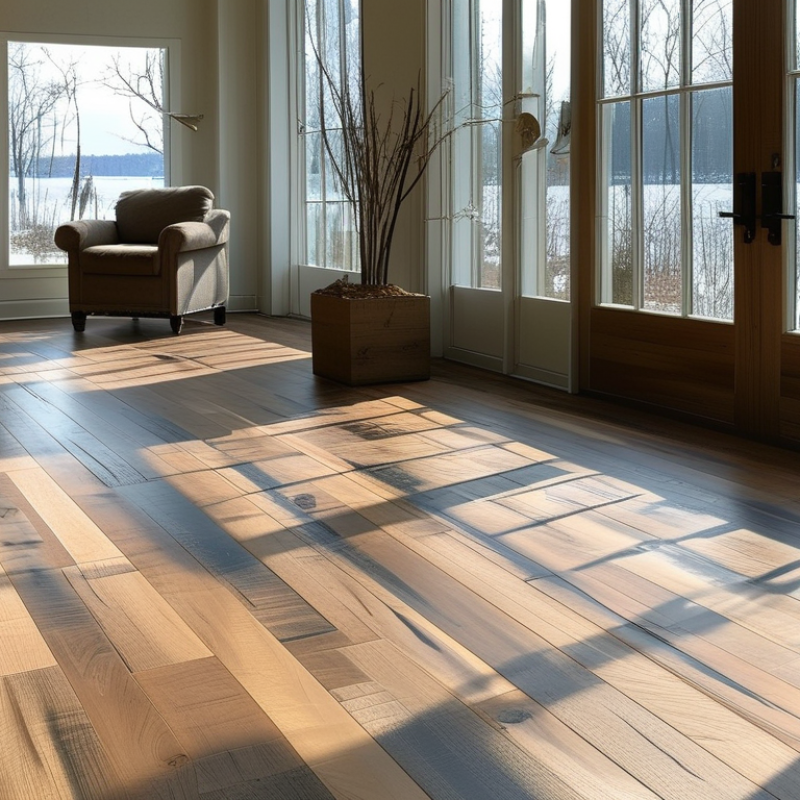
WPC Decking Composition: Wood–Polymer Ratios and Recycled Content Data
For global buyers, WPC decking quality starts with composition, not surface color. Most boards contain 50–60% wood fiber, 35–45% polymer, and 5–10% additives. Wood fiber creates a natural texture and improves stiffness. Polymer binds the fibers and limits water absorption. Additives support UV resistance, color stability, and processing performance.
Recycled content varies widely between suppliers. A practical range is 30–70% recycled material, including reclaimed wood flour and post-consumer or post-industrial polymers. However, “recycled” does not always mean fully traceable. Buyers should request a material breakdown, recycled-content percentage, batch records, and independent test results. Moisture absorption, flexural strength, slip resistance, and color retention deserve equal attention. A board with 60% recycled content may perform well, but poor fiber preparation can cause swelling or surface cracks.
I have seen attractive samples fail after repeated wetting and drying cycles. The lesson is uncomfortable. A perfect-looking ratio cannot replace production control. Different climates also change the risk. Hot, humid regions demand stronger moisture management, while cold areas expose weak boards to contraction and impact. Ask for samples from current production, not only showroom pieces. Review installation spacing, ventilation requirements, and warranty conditions before comparing prices. One detail matters: recycled content should support durability, not merely improve a product specification sheet.
2026 Best WPC Decking Material for Global Buyers - WPC Decking Composition: Wood–Polymer Ratios and Recycled Content Data
| WPC Material Type | Typical Wood Fiber
or Flour Content | Typical Polymer
Content | Typical Additives
and Fillers | Post-Consumer
Recycled Content | Common Polymer
Matrix | Typical Buyer Application |
| Wood-Rich WPC | 55–70 wt% | 25–40 wt% | 3–10 wt% | 20–60 wt% | HDPE or PP | Residential decks, garden paths and low-to-medium traffic outdoor areas |
| Balanced WPC | 45–55 wt% | 35–45 wt% | 3–10 wt% | 15–50 wt% | HDPE, PP or PVC | General-purpose decking for residential and light commercial projects |
| Polymer-Rich WPC | 30–45 wt% | 45–60 wt% | 3–10 wt% | 10–40 wt% | HDPE, PP or PVC | High-moisture climates, pool surrounds and higher-use outdoor spaces |
| Capped WPC Decking | 40–60 wt% in the core | 35–50 wt% in the core | 3–10 wt% plus polymer cap | 10–50 wt% of total product | HDPE, PP or PVC | Wet, coastal and high-UV environments where surface protection is important |
| PVC-Based WPC | 40–60 wt% | 30–50 wt% | 5–15 wt% | 0–30 wt% | PVC | Projects requiring low water absorption and dimensional stability |
Material Selection Data for Global Buyers
| Evaluation Dimension | Wood-Rich Formulation | Balanced Formulation | Polymer-Rich or Capped Formulation | Buyer Verification Point |
| Moisture Exposure | More sensitive to water absorption and swelling | Moderate moisture resistance | Generally better moisture resistance | Request water absorption and thickness-swelling test results |
| Thermal Movement | Usually lower than polymer-rich grades | Moderate and formulation-dependent | May be higher because of greater polymer content | Check installation gaps against local temperature ranges |
| Surface Protection | Usually requires effective coating, pigment and stabilizer control | Moderate protection depending on additives | Capped products provide an additional protective layer | Request UV, weathering, stain and abrasion test data |
| Recycled Content | Often includes recycled wood flour and recycled polymer | Can combine recycled wood and post-consumer plastic | May contain recycled polymer, but cap and core should be declared separately | Ask for a mass-balance declaration or third-party recycled-content certification |
| Best General Use | Dry or moderate climates with cost-sensitive projects | Most residential and light commercial applications | Wet climates, poolside areas and demanding maintenance environments | Match formulation to climate, loading, code requirements and expected service life |
Data note: Composition values are industry-typical mass-percentage ranges for extruded wood–plastic composites. Actual values vary by polymer type, wood species, moisture level, pigments, lubricants, coupling agents, stabilizers, mineral fillers, cap-layer design and recycled-feedstock availability. “Post-consumer recycled content” refers to recycled material originating from products discarded by consumers; pre-consumer production scrap should be reported separately. Buyers should verify the formulation with a current technical data sheet and an independent test report.
Weather Resistance: ISO 4892-3 UV Exposure and Moisture-Test Data
2026 Best WPC Decking Material for Global Buyers
Weather Resistance: ISO 4892-3 UV Exposure and Moisture-Test Data
Weather resistance should begin with verifiable test conditions, not attractive color samples. ISO 4892-3 exposes WPC decking to fluorescent ultraviolet lamps and controlled moisture cycles. A reliable report should identify irradiance, chamber temperature, exposure hours, and condensation settings. Without these details, test numbers are difficult to compare. Look for color change, surface chalking, cracking, and loss of impact strength after exposure.
Moisture data needs equal attention. During purchasing checks, compare water absorption, thickness swelling, and dimensional change after immersion or repeated wet-dry cycles. As practical screening references, some buyers prefer water absorption below 2%, thickness swelling below 1.5%, and color change below ΔE 5. These are not universal pass-or-fail limits. Climate, profile design, and installation gaps can alter results. Tropical rain is different from coastal salt mist.
Laboratory performance is not the whole story. I would not treat one excellent chart as proof of long service life. Ask for original test dates, specimen thickness, surface treatment, and sample photographs. Inspect the board edges too. They often reveal uneven foaming or weak skin layers. In real projects, poor drainage can damage even strong decking. A small slope, open joints, and regular cleaning matter. That part is easy to underestimate.
Safety and Durability: Slip Ratings, Water Absorption, and Wear Metrics
For global buyers, slip safety should be checked under wet conditions, not only in a showroom. EN 16165 uses pendulum testing to assess pedestrian slip resistance. A wet Pendulum Test Value around 36 or higher is often treated as a useful low-risk reference, although site conditions still matter. DIN 51130 R-ratings mainly represent footwear use on ramps. They are not a complete barefoot-decking answer. Ask for wet, barefoot data where pools or coastal homes are involved. Small details matter, including algae, dust, and worn surface texture.
Water absorption directly affects swelling, staining, and freeze-thaw durability. ASTM D570 measures percentage weight gain after water exposure, but no single number guarantees outdoor performance. Many technical reports show capped WPC boards absorbing far less water than untreated wood, often below 1% in short laboratory tests. That result can mislead. Cut ends, screw holes, and damaged caps may absorb water faster. Buyers should request immersion time, specimen condition, and edge-sealing details, not just a headline percentage.
Wear testing needs equal care. ASTM D4060 reports mass loss after controlled abrasion cycles, while EN 15534 evaluates several wood-plastic composite properties. Lower mass loss usually suggests better surface retention, but test wheels, loads, and cycle counts change the meaning. A deck surviving 10,000 laboratory cycles may still mark under patio furniture. The uncomfortable truth: laboratory data cannot fully copy real sand, wet shoes, or moving chairs. Compare complete test conditions before comparing numbers.
Global Buyer Guide: Climate Zones, Compliance Standards, and Lifecycle Cost Data
2026 Best WPC Decking Material for Global Buyers
Choosing WPC decking begins with climate, not appearance. In tropical zones, high humidity and intense sunlight demand low water absorption and strong UV stability. Coastal projects need corrosion-resistant fixings and careful drainage. In freeze-thaw regions, installers should check dimensional movement after repeated temperature changes. Arid climates still require UV testing, because dry air does not prevent surface fading.
Compliance must be verified in the destination market. Ask for test reports covering slip resistance, fire classification, water absorption, flexural strength, and UV exposure. Standards such as EN 15534 or ASTM D7032 may support evaluation, but they do not replace local building requirements. Check chemical declarations and recycled-content claims through traceable documentation. In my project reviews, incomplete fixing data caused more problems than board failure. That detail is easy to overlook.
Tips: Compare lifecycle cost, not only purchase price. A practical 15-year model should include boards, substructure, labor, cleaning, replacement clips, and disposal. Installation can represent 40–60% of the initial budget, while routine cleaning remains modest. However, cheaper boards may need earlier replacement in harsh sunlight or persistent moisture. Keep a sample outdoors for several months. It will not replace laboratory testing, but it can reveal unexpected fading, staining, or surface heat. Mistakes happen. Good buyers record them before ordering volume.
2026 WPC Decking Material Guide for Global Buyers
This comparison uses typical planning ranges for capped and uncapped WPC decking in international projects. Actual results vary with product formulation, substructure, installation quality, UV exposure, drainage, and local labor costs. Buyers should verify compliance with EN 15534, ASTM D7031, ASTM D7032, and applicable fire-classification requirements such as EN 13501-1.



 Close
Close