2026 Best Carbon Commutator Suppliers for Global Buyers
A reliable Carbon Commutator supplier can affect motor life, maintenance costs, and production consistency. Buyers need more than a low quotation. They need evidence that each component suits its operating conditions.
The International Energy Agency’s Global EV Outlook 2024 reported nearly 14 million electric-car sales in 2023, about 18% of worldwide car sales. This signals a changing motor landscape, not rising demand for carbon commutators specifically; many traction motors are brushless. The U.S. Department of Energy’s industrial motor-system assessment offers useful context on the role of motors in manufacturing, but it does not rank commutator suppliers. That distinction matters. Buyers should compare verifiable product evidence, not borrow broad market forecasts as proof of supplier quality.
For a practical shortlist, request drawings, carbon-grade specifications, segment-bonding details, runout tolerances, and test records. Ask how suppliers control brush contact, wear, heat, and batch variation. A sample tested in the actual motor can reveal issues that a catalogue will miss. Check production capacity, traceability, inspection methods, and realistic lead times before placing a large order. Regional service and clear change-control procedures also matter when designs evolve. Small details matter. No checklist is perfect; test conditions may not match field use. Treat that uncertainty openly, and weigh suppliers against your application, operating environment, and documented performance—not marketing claims alone.
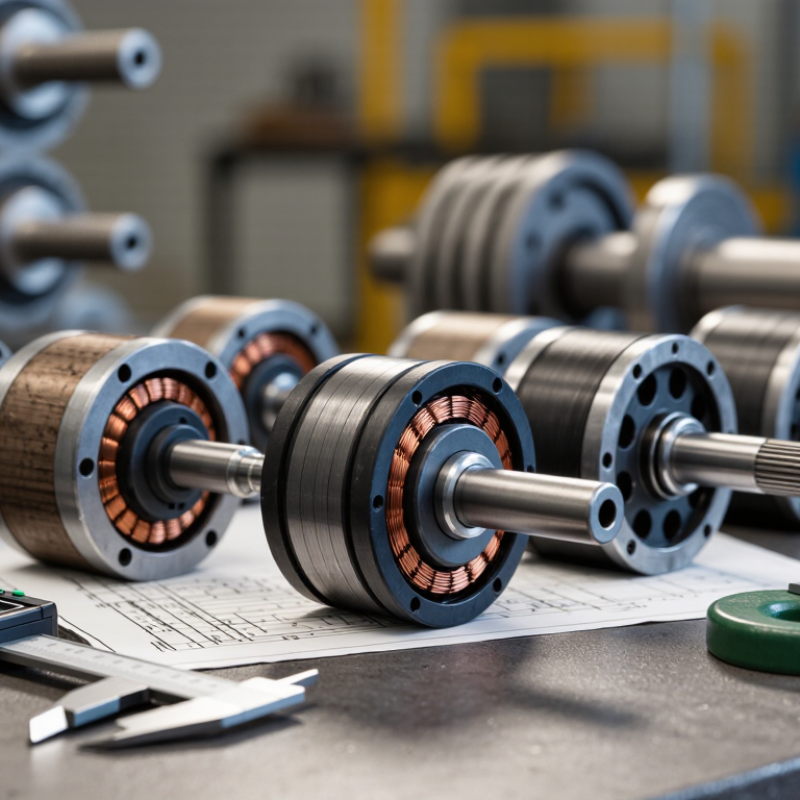
What Carbon Commutators Do in Electrical Machines
In a brushed DC motor, the commutator is usually a cylinder made from insulated copper segments. Carbon brushes press against its rotating surface and carry current between the stationary wiring and the armature. The carbon is in the brushes, not usually in the commutator itself. A small distinction, but it matters when comparing machine parts.
As the armature turns, each segment changes its connection to the brushes. This reverses current in the armature coils at the right point in the rotation, helping the motor maintain torque in one direction. In a generator, the commutator helps deliver current from the rotating armature to the external circuit. Without steady brush contact, output can fluctuate or the motor may spark more than expected. The confusing part is that people sometimes use “carbon commutator” to describe the whole contact system.
In service, technicians look for uneven segment wear, dark deposits, loose connections, and brushes that are too short. A thin film of carbon dust is common, but heavy buildup deserves attention. Brush pressure, alignment, current load, and ventilation all affect wear. A replacement part that fits on paper may still perform poorly if its dimensions or operating conditions differ. Real machines are rarely as tidy as drawings.
How Supplier Types and Manufacturing Capabilities Differ
Carbon commutator suppliers differ in what they make themselves. Specialist manufacturers may focus on commutator design, copper segment forming, mica insulation, and precision turning. Integrated motor-component factories can coordinate commutators with related parts, which may simplify fit checks. Trading suppliers may offer broader sourcing and export support, but buyers should confirm who controls production and inspection.
Look beyond catalogue claims. Ask how the supplier checks segment spacing, runout, insulation, and surface finish. A sample can look clean yet reveal little about batch consistency. Small details matter. Request drawings, material specifications, and inspection records for the exact model under review. If the application involves high speed or heat, discuss operating conditions before approving a sample; a generic test may not reflect real use. Capacity figures deserve context, too: ask about typical lead times, tooling ownership, and how defects are handled. A supplier with strong machining skills may still rely on outside partners for testing. That is not automatically a problem, but it should be visible in the process. Compare suppliers by verified capabilities, not factory size alone.
Key Criteria for Comparing Global Carbon Commutator Suppliers
2026 Best Carbon Commutator Suppliers for Global Buyers
Key Criteria for Comparing Global Carbon Commutator Suppliers
Comparing suppliers takes more than checking price and delivery time. Start with the commutator’s operating conditions: current, rotational speed, temperature, and expected service life. Ask how the supplier controls dimensions, segment alignment, and surface runout. Small inconsistencies can affect brush contact and cause uneven wear. Request inspection records for the tolerances that matter to your design, not just a general quality certificate. Details matter.
Also compare material consistency, production capacity, and traceability. A capable supplier should explain how incoming materials and finished parts are checked, and provide test data relevant to your application. Confirm whether sample approval and repeat orders follow the same process. For overseas shipments, discuss protective packaging, lead-time assumptions, and how production changes are communicated. A polished catalog is not proof of reliable manufacturing; I would want clear answers and records. Even then, no supplier can remove every operating risk.
Tips: Share a drawing and real operating conditions when requesting a quotation. Ask for a sample, measurement report, and written confirmation of key tolerances. Compare responses, not promises. Be cautious if a supplier cannot explain how a reported test relates to your equipment.
How to Verify Quality, Compliance, and Export Readiness
A carbon commutator can look sound and still wear unevenly. Ask suppliers for the carbon grade, hardness range, dimensional tolerances, and test conditions—not just a general quality certificate. Request batch-level inspection records and traceability linking each sample to its production lot. The ISO Survey 2022 reported 1,265,216 valid ISO 9001 certificates worldwide, but certification alone does not prove that a commutator meets your motor’s duty cycle. Check how the supplier measures brush contact, runout, and wear under comparable operating conditions. Ask for the actual test report. Numbers need context.
Export readiness matters too. UNCTAD’s Review of Maritime Transport 2024 notes that over 80% of world trade by volume moves by sea. Confirm the supplier can provide consistent packing lists, commercial invoices, country-of-origin documents, and shipment packaging suited to moisture and handling risks. For your destination market, verify which material declarations or conformity documents apply, and check that product descriptions match across every document. Review a redacted sample shipment file before placing a large order. It may feel tedious. It can reveal gaps early. I would also ask for a realistic production lead time and a written process for reporting defects; polished brochures rarely answer either question.
2026 Best Carbon Commutator Suppliers for Global Buyers — How to Verify Quality, Compliance, and Export Readiness
A practical evidence checklist for comparing suppliers. Bar values count the example checks listed in each category; they are not supplier ratings or universal legal requirements. Requirements vary by product and destination.
Quality: material certificates, dimensional inspection, electrical test results, and lot traceability. Compliance: applicable RoHS and REACH documentation, plus supporting safety or material documents where relevant. Export readiness: commercial invoice, packing list, certificate of origin when required, and shipping documentation.
How to Select and Qualify a Supplier for Long-Term Supply
For a long-term carbon commutator supplier, qualify the process, not just the sample. Check copper segment dimensions, mica undercut, runout, and contact resistance against your approved drawing. Ask for material certificates, batch traceability, and documented controls for changes in tooling or carbon grade. Then test a pilot lot under realistic speed, load, and temperature. A part that passes a bench check may still wear unevenly in service.
The IEA and UNIDO report that motor-driven systems use about 45% of global electricity, making dependable motor components an operational concern, not merely a purchasing detail. The World Bank’s 2023 Logistics Performance Index assesses 139 economies across six dimensions, including timeliness and tracking. Use similar discipline when reviewing a supplier’s delivery records, shipment visibility, and recovery plans. Request defect rates, corrective-action records, and capacity evidence for peak demand. Small details matter. A checklist is not a guarantee; factory conditions and production discipline can change between audits. Compare suppliers using the same test methods, and revisit performance after each production run.



 Close

