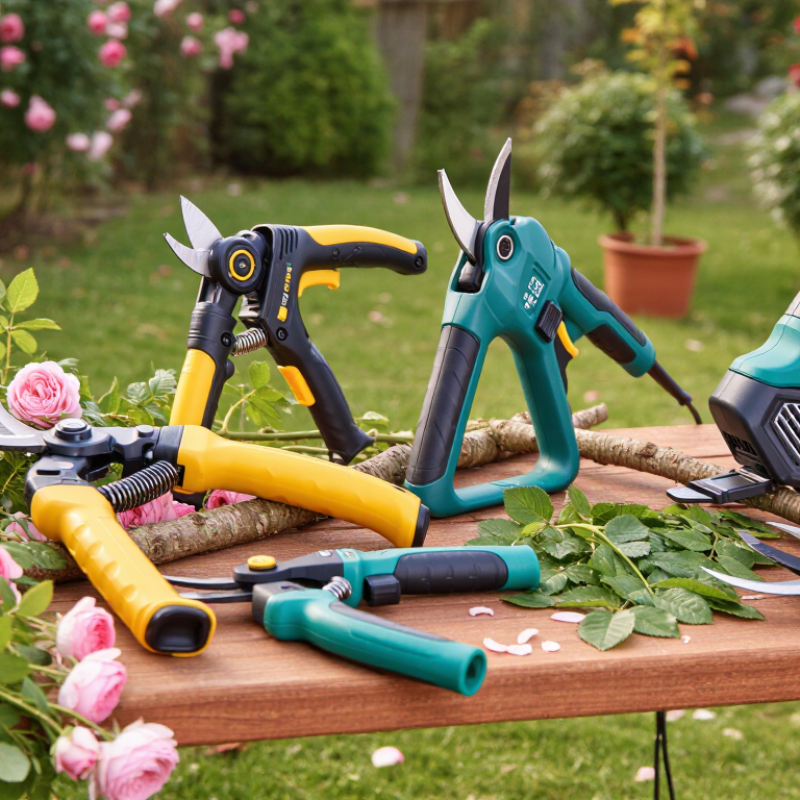
| Typical pruning task | Flowers, herbs, and thin green stems | Routine shrub, rose, and fruit-tree pruning | Frequent work on thicker woody branches | Choose for the plants and branch sizes you actually prune. |
| Maximum cutting diameter | Often around 10–20 mm | Often around 20–30 mm | Some models are rated around 30–40 mm | Published capacity is not a guarantee for every wood type; hard or dry wood can be more demanding. |
| Tool weight | Usually the easiest class to handle for extended overhead or detail work | Balances handling comfort and cutting capability | Can be heavier, especially with a larger battery | Compare ready-to-use weight, including the battery, not just tool-only weight. |
| Battery and runtime | Often uses a smaller, lighter battery | Battery size and runtime vary substantially by model | May use a higher-capacity battery or a separate battery pack | Runtime depends on branch thickness, cutting frequency, battery condition, and temperature. Check whether a spare battery is available. |
| Blade and maintenance | Look for a cleanable blade and clear maintenance instructions | Replaceable blades can help extend tool life | Frequent heavy use makes blade access and replacement especially important | Check blade material, replacement-part availability, cleaning procedure, and whether sharpening is permitted. |
| Safety features | Trigger lock and a protective blade cover are useful basics | Check for a deliberate startup sequence and a lock for storage | A blade guard and accessible power-off control are important | Follow the tool’s instructions, keep hands clear of the blade, and remove the battery before maintenance. |
| Best fit | Occasional, lighter pruning and users prioritizing low weight | Most mixed home-garden pruning needs | Larger gardens or repeated cuts near the tool’s rated capacity | Consider comfort, service support, warranty, battery compatibility, and total kit price. |



 Close