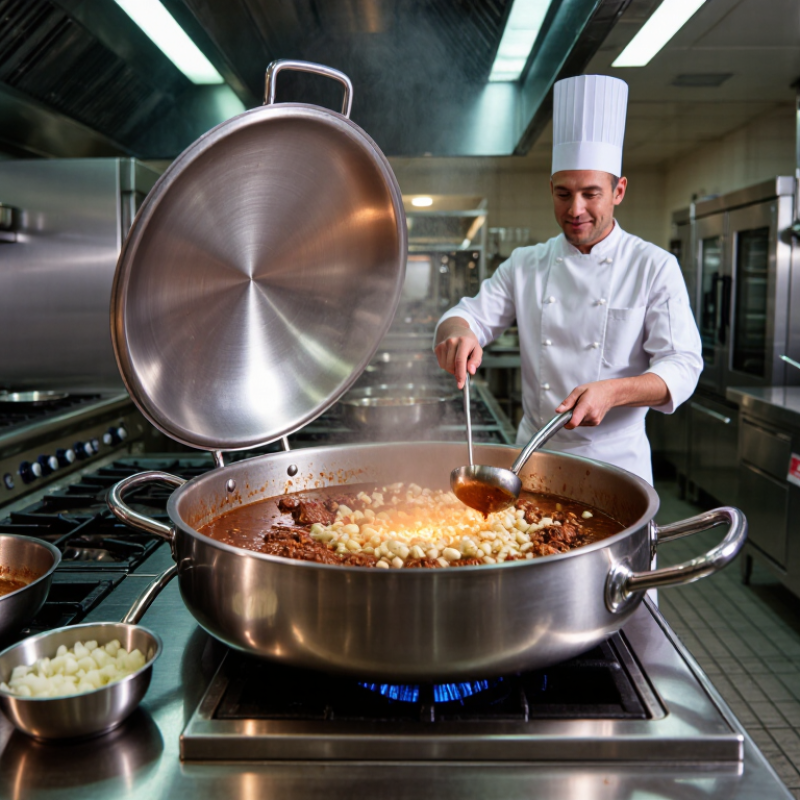
A freestanding bratt pan should fit the way your kitchen actually works, not just its floor plan. Measure doorways, turning space, and the route from delivery to installation. Check available power or gas, ventilation, and drainage with a qualified installer before comparing models. A generous pan is useful only if staff can load, stir, and empty it safely. That matters.
Let the menu guide capacity and features. A kitchen preparing large batches of stew, sauce, or braised meat may benefit from a deeper pan and controlled tilting. If the menu shifts between searing, simmering, and shallow frying, temperature control and an even cooking surface deserve close attention. Think about batch size during a busy service, too. A pan that is too small can slow production; one that is oversized may waste energy and cleaning time.
Set a budget beyond the purchase price. Include installation, utilities, routine maintenance, cleaning supplies, and likely downtime. Ask suppliers for operating details and service requirements in writing, then compare them against your expected workload. I would avoid choosing by capacity alone; it is an easy shortcut, but not always a sensible one. Staff height, controls, cleaning access, and the time needed to empty a batch can matter more than a few extra litres. A short trial with a representative menu can reveal awkward reaches or slow draining before the equipment is installed.



 Close