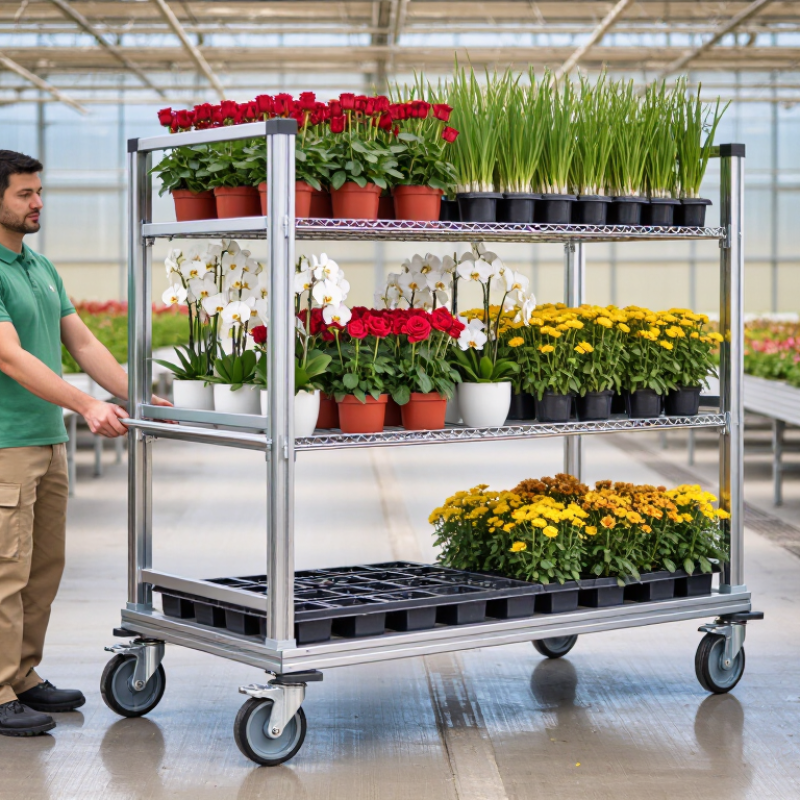
| Frame material | Hot-dip galvanized carbon steel or stainless steel | Moisture, fertilizer residue, and irrigation water accelerate corrosion on untreated steel. | Confirm that all structural parts, including cut edges and weld areas, are protected. |
| Galvanized coating | A continuous zinc coating; heavier coatings generally provide greater corrosion protection. | Zinc protects exposed steel through a barrier effect and sacrificial action. | Request coating classification, coating mass or thickness, and a salt-spray or corrosion test report where required. |
| Stainless-steel option | Use a suitable stainless grade when exposure to fertilizer salts or frequent washing is high. | Stainless steel forms a passive chromium-oxide film that helps resist atmospheric corrosion. | Check the specified grade, surface finish, weld treatment, and compatibility with cleaning chemicals. |
| Frame tube design | Closed rectangular or round tubing with sealed or properly drained ends. | Open tube ends can retain water and fertilizer solution, creating hidden corrosion points. | Inspect drain holes, end caps, welds, corners, and areas where water can collect. |
| Shelf and deck surface | Perforated, slatted, or mesh shelves with smooth, cleanable surfaces. | Open surfaces reduce standing water and improve drainage around flower pots and trays. | Avoid sharp edges, deep joints, and unprotected drilled holes that can trap moisture. |
| Caster tread | Non-marking polyurethane (PU) tread for smooth, damp greenhouse floors. | PU offers good abrasion resistance, quiet rolling, and resistance to water and many common chemicals. | Select the tread hardness and wheel width according to floor condition and cart load. |
| Caster core | Polymer or corrosion-protected metal core; sealed bearings are preferred. | The core and bearing housing are exposed to splash water and may corrode if left unprotected. | Confirm bearing seals, corrosion protection, grease compatibility, and wash-down suitability. |
| Wheel diameter | Approximately 100–150 mm for many manual flower carts; choose larger wheels for thresholds or uneven floors. | Larger wheels generally roll more easily over joints, drainage channels, and minor floor irregularities. | Measure the narrowest aisle, doorway clearance, floor gaps, and required cart height. |
| Load capacity | Rated capacity should exceed the total operating load, not only the empty-cart weight. | Wet soil, pots, water, and uneven loading can substantially increase the working load. | Use: required capacity per caster = total loaded weight ÷ 3, allowing one caster to carry less on uneven floors. |
| Swivel and brake system | Two or four swivel casters, with total-lock or directional-lock brakes as needed. | A brake helps prevent movement on sloped or wet floors during watering and plant handling. | Test steering, brake engagement, swivel clearance, and access while the cart is fully loaded. |
| Floor protection | Non-marking PU wheels with a smooth tread profile appropriate for the floor coating. | The correct tread reduces black marks, concentrated point loading, and damage to sealed concrete or resin floors. | Check wheel pressure, hardness, tread condition, and the floor manufacturer's recommendations. |
| Cleaning and maintenance | Wash off fertilizer residue, remove plant debris, dry standing water, and inspect casters regularly. | Routine cleaning limits chemical deposits and helps reveal early coating damage or bearing problems. | Create an inspection schedule based on irrigation frequency, wash-down practice, and operating hours. |



 Close