2026 Top Pneumatic Bending Machines Buying Guide?
Choosing the right Pneumatic Bending Machine in 2026 requires more than comparing prices and advertised tonnage. Buyers should examine bending accuracy, air consumption, frame strength, tooling flexibility, and after-sales support. A machine that looks powerful on paper may struggle with thin stainless steel or repeated production cycles.
This guide explains the practical factors experienced operators and purchasing teams should review before ordering. We will compare pneumatic systems, working widths, adjustable pressure controls, safety features, and maintenance requirements. Details matter. A clean workshop, stable air pressure, and correctly matched tooling can improve consistency and reduce avoidable downtime.
Real operating conditions should guide the decision. Measure your materials, typical bend angles, daily workload, and available compressor capacity. Ask suppliers for test results, technical drawings, warranty terms, and replacement-part availability. Reliable manufacturers should provide clear specifications rather than vague performance promises.
No buying guide is perfect. Application differences can change the final choice. A compact machine may suit a fabrication shop, while a reinforced model may better serve continuous industrial use. Buyers should also verify applicable workplace safety requirements and product certifications in their region. Independent inspection and hands-on trials remain valuable, especially for expensive equipment.
By combining technical evaluation with operator experience, this 2026 buying guide aims to support a safer and more informed purchase. The best Pneumatic Bending Machine is not always the largest or cheapest. It is the one that delivers stable results, manageable operating costs, and dependable support over time.
What Is a Pneumatic Bending Machine and How Does It Work?
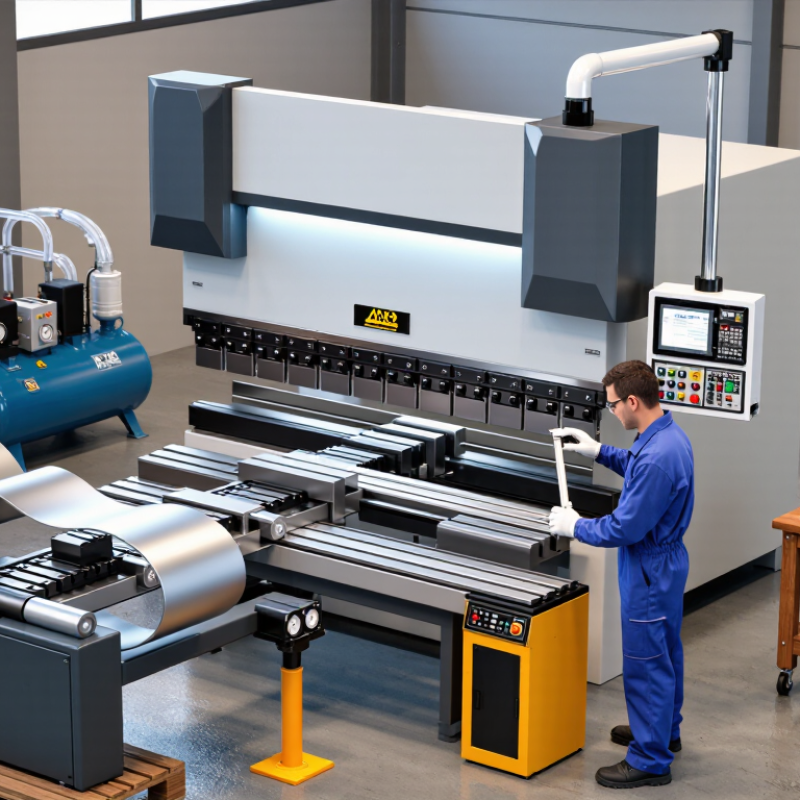
A pneumatic bending machine uses compressed air to move a punch, clamp a workpiece, or control a bending die. Its working cycle is simple: an air compressor fills a reservoir, a regulator sets pressure, and a valve directs air into a cylinder. The cylinder then creates linear force. As the punch moves, it bends sheet metal around the die. The final angle depends on pressure, stroke length, material thickness, die width, and springback.
The machine is fast and relatively clean. It also produces less hydraulic leakage risk. However, air compresses, so force control may feel less stable than hydraulic control. A pressure gauge alone cannot guarantee accurate bends. Operators should verify angle samples with a digital protractor and inspect hoses, seals, and filters.
The U.S. Department of Energy reports that compressed-air systems can waste 20–30% of generated air through leaks and poor maintenance. That loss raises operating costs quietly.
Automation is shaping purchasing decisions. The International Federation of Robotics recorded 541,302 industrial robot installations worldwide in 2023, showing stronger demand for repeatable production. A pneumatic bender can support that direction when its controls, sensors, and tooling are compatible. Not every workshop needs full automation. Real production is messier. Material variation, operator habits, and worn dies still affect results. Buyers should test representative parts before trusting catalog performance claims.
Which Materials and Bending Tasks Can It Handle?
2026 Top Pneumatic Bending Machines Buying Guide: Which Materials and Bending Tasks Can It Handle?
Pneumatic bending machines suit repetitive sheet-metal work requiring moderate forming force and consistent angles. They commonly process mild steel, galvanized steel, aluminum, and thin stainless steel. Actual capacity depends on air pressure, cylinder force, tooling width, and bend length. A practical workshop range is often 0.5–3 mm sheet, but this is not a universal rule. Always verify the manufacturer’s force chart before purchasing.
Material choice should follow the machine’s working envelope.
Mild steel is usually the easiest starting point. Aluminum bends efficiently but may mark under narrow tooling. Stainless steel needs greater force and careful springback control. The International Aluminium Institute reported more than 70 million tonnes of primary aluminum production in 2023, showing the material’s industrial importance. World Steel Association data recorded about 1.89 billion tonnes of crude steel production in 2023. These figures reflect demand, not automatic machine compatibility.
Typical tasks include straight flanges, electrical enclosures, duct sections, brackets, trays, and small chassis panels.
Pneumatic control works well for repeated bends, especially when operators use back gauges and angle checks. Still, a thickness chart can mislead. I would test the actual alloy, grain direction, and tooling combination before production. Watch for angle drift, surface scratches, and insufficient return force. Compressed-air quality matters too; moisture can reduce reliability. The safer buying decision uses sample parts, measured bend allowance, and documented cycle requirements rather than pressure ratings alone.
How to Evaluate Machine Safety, Accuracy, and Productivity?
2026 Top Pneumatic Bending Machines Buying Guide
Safety should be tested before speed. The U.S. Bureau of Labor Statistics recorded 2.6 million nonfatal workplace injuries in private industry during 2023. A pneumatic bending machine needs fixed guarding, reliable emergency stops, pressure relief, and controlled restart protection. Check whether the ram stops safely after a sensor interruption. Test lockout procedures with operators, not only technicians. A polished demonstration can hide awkward access points.
Accuracy requires more than reading the machine display. Measure several bends from the same batch, then compare angles, dimensions, and repeatability. Inspect the first, middle, and final workpieces. Material thickness, hardness, and springback can shift results. ISO 230-2 provides a recognized framework for evaluating positioning accuracy and repeatability in machine tools. Use calibrated gauges and record actual results. Do not accept “±0.1 degrees” without a defined test method.
Productivity includes loading, setup, inspection, and compressed-air use. The U.S. Department of Energy reports that compressed air can represent 10% to 30% of industrial electricity consumption. Listen for leaks around fittings and valves during idle periods. Calculate completed parts per hour, not advertised cycle time. A faster cycle may still lose money through rework or frequent adjustments. My practical concern is simple: one successful sample proves very little. Run a longer trial with ordinary operators, mixed material batches, and realistic changeovers. That is where attractive assumptions often fail.
2026 Top Pneumatic Bending Machines Buying Guide
How to Evaluate Machine Safety, Accuracy, and Productivity
The comparison uses representative buying-guide benchmarks for three common pneumatic bending machine configurations. Safety score combines guarding, emergency-stop access, two-hand control, and safety-system integration. Accuracy is based on typical repeatability specifications, while productivity is represented by the number of bending cycles per minute. Always verify the actual values against the machine’s technical datasheet and applicable local safety requirements.



 Close
Close