2026 Top Mechanic Tool Box Types for Global Buyers
Choosing the right Mechanic Tool Box can shape daily workshop performance, especially for global buyers comparing storage systems in 2026. A mechanic may open forty drawers during one shift, move between a service bay and a mobile van, or work beside a compact motorcycle lift. Each setting demands a different balance of capacity, mobility, security, and price.
Automotive repair educator ChrisFix often shares a practical principle: “Keep your tools organized, and every repair becomes easier.” That idea remains highly relevant. A rolling cabinet suits a fixed garage with heavy socket sets and power tools. A portable tool chest fits technicians who travel between vehicles. Modular systems offer flexibility, but their connectors and latches deserve careful inspection. Some buyers focus too heavily on drawer count. More drawers do not always mean better workflow.
Material thickness, caster quality, drawer slides, lock design, and replacement-part availability can matter more than appearance. Stainless steel resists corrosion, while powder-coated steel usually offers better value. Aluminum models reduce carrying weight, though they may provide less impact resistance. Electronic locks look modern, but mechanical locks can be easier to maintain in remote areas.
This guide examines the leading Mechanic Tool Box types for global buyers in 2026. It considers workshop size, climate, transport needs, tool volume, and long-term serviceability. The comparison is not perfect. Product specifications can change, and regional availability may vary. Buyers should still verify load ratings, warranty terms, dimensions, and local support before ordering. A smart choice is not always the largest box. It is the box that reduces wasted movement every day.
What Is a Mechanic Tool Box and Why Does It Matter?
2026 Top Mechanic Tool Box Types for Global Buyers
What Is a Mechanic Tool Box and Why Does It Matter?
A mechanic tool box is a structured storage system for hand tools, diagnostic equipment, and small workshop supplies. It protects tools from dust, moisture, impact, and unnecessary movement. More importantly, it reduces search time during repairs. A well-organized drawer can save several minutes on every service job.
The right type depends on workload, workspace, and transport needs. A portable box suits mobile technicians. A rolling cabinet offers greater capacity for workshops. Modular systems can combine drawers, trays, and work surfaces as needs change. Grand View Research reported continued growth in the global hand tools market, supported by automotive repair and industrial maintenance demand. That trend makes tool storage a practical purchasing decision, not just a furniture choice. However, buyers sometimes focus too heavily on drawer count. Weight capacity, caster quality, corrosion resistance, and locking design matter just as much.
Tips: Check the box with real tools before ordering. Load the heaviest drawer first. OSHA guidance on workplace material storage stresses stable placement and safe handling. A tall cabinet may look efficient, but poor weight distribution can create hazards. Measure doorways, service vehicles, and floor space carefully. Small details matter. Even experienced buyers can overlook them.
Main Types of Mechanic Tool Boxes for Different Workspaces
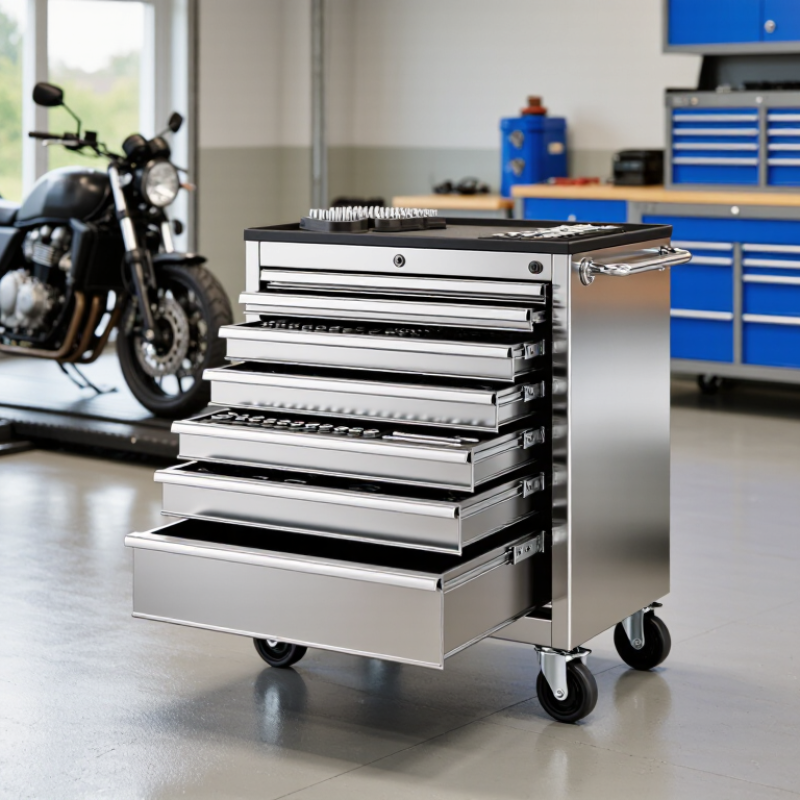
Mechanic tool boxes should match the workspace, not only the number of tools. A rolling cabinet suits permanent garages with smooth floors and frequent repairs. Its drawers organize sockets, torque tools, and diagnostic equipment.
A portable tool case works better for field technicians, mobile workshops, and maintenance teams. Choose reinforced handles, secure latches, and removable trays. Small parts disappear easily.
Wall-mounted boxes save floor space in compact workshops. They keep commonly used tools visible and reduce bending. However, the wall must support the loaded weight.
Stackable modular boxes offer flexibility for shared workspaces and changing tasks. A service cart fits busy repair bays, where tools must move between vehicles. Open shelves improve access, but they collect dust faster.
I have found that convenience can create disorder when every tool lacks a fixed place.
Tips: Measure doorways, workbench height, and storage clearance before buying.
Check drawer load ratings and wheel locks.
For humid regions, inspect metal finishes and hinge protection.
For uneven floors, larger wheels usually move more smoothly.
Keep heavy tools in lower compartments.
No layout stays perfect. Review it after several weeks of real use, then adjust the box type or internal arrangement.
How to Match Tool Box Types With Professional Needs
2026 Top Mechanic Tool Box Types for Global Buyers
In practical workshop reviews, I match the tool box to movement, tool weight, and repair conditions. A rolling cabinet suits fixed garages with many hand tools, torque equipment, and spare parts. Its drawers reduce bench clutter, but full drawers can become difficult to move. Choose reinforced casters, smooth slides, and a stable frame. Measure the floor space carefully.
For mobile technicians, a portable case works better. It protects precision tools during site visits and fits inside smaller vehicles. Field work exposes weak latches and poor seals. Check hinge strength, dust resistance, handle comfort, and internal padding before purchase. For electrical or precision maintenance, a modular drawer box offers better separation. Small compartments keep probes, bits, and fasteners visible. Do not ignore weight.
For heavy mechanical service, a workshop chest paired with a lower cabinet creates useful capacity. Modular units also let teams arrange storage around actual tasks. Measure common tools first. Record tool dimensions, lifting limits, local climate, and transport routes. Ask for clear load ratings and corrosion protection details. I have seen buyers select oversized cabinets, then leave half the drawers empty. That choice wastes floor space and complicates shipping. A smaller box may serve better, even when its appearance feels less impressive.



 Close
Close 
