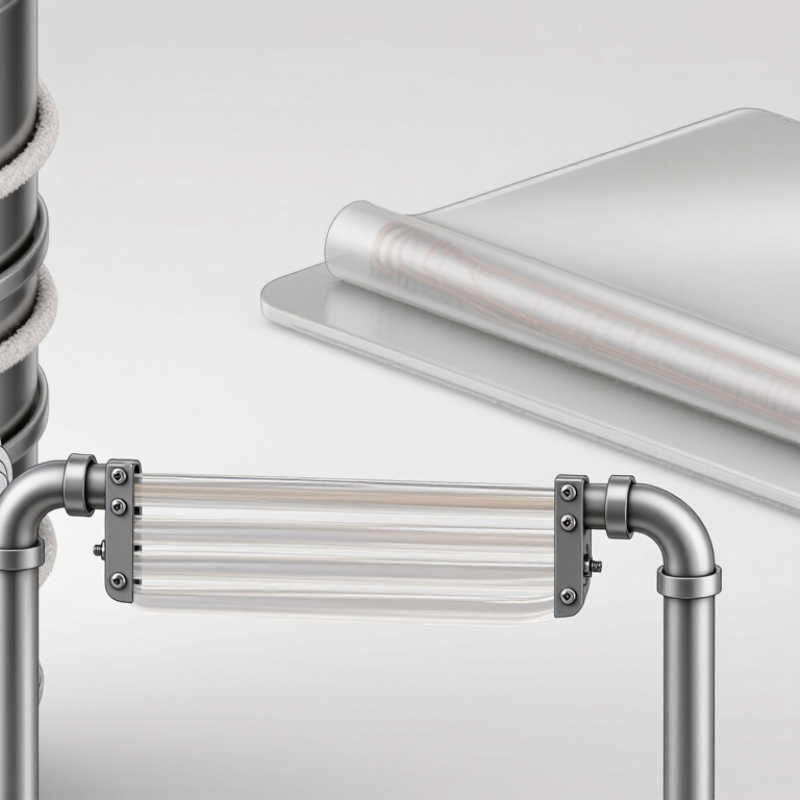
| Mica Band Heater | Resistance wire or ribbon is insulated by mica sheets and enclosed in a formed metal band, commonly with a clamping mechanism. | Electric current passes through the resistance element, producing heat through electrical resistance. | The element heats the metal sheath; tight contact transfers heat mainly by conduction to a cylindrical surface. | Plastic-processing barrels, pipes, tanks, and other cylindrical equipment. | Match the heater diameter and width to the equipment. Proper fit and clamping help maintain heat transfer. |
| Mica Strip Heater | A flat resistance element is supported and electrically insulated with mica, typically within a metal enclosure. | Current flowing through the resistance element converts electrical energy into heat. | Heat moves through the heater’s metal face and into a contacting surface by conduction; exposed surfaces can also lose heat to the air. | Dies, platens, packaging machinery, and equipment with narrow or flat heating zones. | Check the mounting method, available space, wattage, and required temperature uniformity. |
| Mica Plate Heater | A resistance element is arranged between mica insulating layers and assembled as a flat plate, often with protective metal sheets. | Electrical resistance in the element generates heat across the plate area. | Heat is conducted through the plate to a work surface or component. Heat may also transfer by convection and radiation from exposed faces. | Flat tooling, cabinets, laboratory equipment, and industrial heating surfaces. | Confirm plate dimensions, surface contact, insulation, and the temperature-control arrangement. |
| Mica Nozzle Heater | A compact, shaped mica-insulated resistance element is fitted around or near a machine nozzle, usually inside a metal cover. | The resistance element produces heat when energized by an electrical supply. | Heat passes through the heater casing into the nozzle by conduction, then from the nozzle to the material in contact with it. | Injection-molding and extrusion-machine nozzles, where compatible with the equipment design. | Verify nozzle dimensions, lead orientation, sensor position, and operating conditions before selection. |
| Custom-Formed Mica Heater | A mica-insulated resistance assembly is shaped to suit a specified component or mounting arrangement. | An energized resistance element converts electrical energy into heat; the element layout determines the heating pattern. | Transfer depends on the shape and contact area. Direct-contact surfaces transfer heat mainly by conduction; exposed areas also transfer heat to surrounding air and by radiation. | Special-purpose machinery and components that do not suit standard band, strip, or plate formats. | Provide drawings, supply voltage, power requirements, mounting details, and the intended control method. |



 Close