Our company only collects the necessary data and respects your privacy, in accordance with the General Law for the Protection of Personal Data 13.709/2018. By continuing, you confirm that you have read and accepted the Privacy Notice. Privacy Policy.

Medal Pt Br Medal Es

Medal Group

2026 Top Aluminum Casement Window Types for Global Buyers

Choosing the right Aluminum Casement Window in 2026 requires more than comparing frame colors or opening styles. Global buyers must evaluate thermal performance, coastal durability, hardware quality, glazing options, and installation conditions. A window that performs well in a dry inland climate may need different coatings and seals near saltwater.

This guide introduces the main Aluminum Casement Window types available for international projects. It considers top-hung, side-hung, French, fixed-plus-casement, and thermally broken designs. Each type serves a different purpose. Some improve ventilation, while others support wider views or stronger weather resistance. Practical details matter, including hinge load, drainage paths, gasket compression, and the space needed for safe operation.

Small choices matter.

Based on common project evaluation practices, reliable selection begins with verified specifications and realistic site requirements. Buyers should request test reports, product drawings, sample sections, finish standards, and warranty terms from qualified suppliers. Performance ratings can vary between laboratories and regions, so direct comparison requires care. No guide is flawless. A catalog may look complete yet omit installation limits, maintenance needs, or replacement lead times. This article therefore highlights both advantages and trade-offs, helping architects, contractors, distributors, and homeowners make more informed decisions. The best window is not always the most advanced model. It is the one that matches the building envelope, local climate, budget, and long-term service expectations.

2026 Top Aluminum Casement Window Types for Global Buyers

Aluminum Casement Window Basics for Global Buyers

For global buyers, an aluminum casement window is a side-hinged unit with a movable sash. The sash opens outward or inward, depending on the project and local conditions. This design provides direct airflow and usually seals tightly when closed. Common 2026 options include non-thermal-break, thermal-break, and slim-profile systems. Non-thermal-break frames fit mild climates and interior applications. Thermal-break frames use an insulating barrier between aluminum sections. They help reduce heat transfer and interior condensation. Slim profiles provide more daylight, but they may require stronger reinforcement.

Small warning.

In specification reviews, I check frame depth, sash weight, hinge capacity, gasket quality, and drainage paths. Glass selection also matters. Double glazing can improve comfort in many regions. Triple glazing may perform better, but it adds weight and cost.

Coastal projects need suitable surface treatment and reliable hardware materials. Wind, water, and air performance should come from test reports, not attractive photographs. Ask for verified values and the test conditions behind them. Regional standards differ, so one certificate may not suit every market.

Before ordering, confirm opening dimensions, sash handing, screen position, hardware finish, packaging, and replacement-part access. Use detailed metric drawings. A wider sash is not always better; heavy glass can shorten hardware life.

I have seen projects focus on appearance and overlook sill drainage. That mistake is expensive. Even experienced buyers can miss it.

Request samples or a small trial order when profiles, colors, or installation methods remain uncertain. Some decisions will still need adjustment after site feedback.

Key Types of Aluminum Casement Windows in 2026

In 2026, global buyers are comparing aluminum casement window types by climate, ventilation, and installation limits. Side-hung casements remain practical for strong airflow and easy cleaning. Top-hung types shed light rain while keeping rooms ventilated. French casements open from the center, creating a wider passage without a fixed vertical mullion. Awning casements suit kitchens and humid climates, especially above sinks or worktops. They offer controlled ventilation during light rainfall. Not always.

Thermally broken aluminum casements deserve attention in cold or hot regions. Their insulated polyamide barrier reduces direct heat transfer through the frame. The International Energy Agency’s Buildings 2024 report states that buildings consume about 30% of global final energy. Therefore, frame design should be assessed with glazing, seals, orientation, and shading. A narrow-frame design may increase daylight, but it can reduce structural tolerance on large openings. Experience from project inspections shows that poor drainage causes more complaints than expected. Water leaks often start at corners, not the visible sash.

For high-rise projects, inward-opening casements simplify external maintenance and improve worker safety. Outward-opening types can maximize indoor space, but wind exposure requires careful hardware selection. Corner and paired casements create broader views, yet their meeting joints need precise fabrication. The National Fenestration Rating Council emphasizes whole-window performance rather than center-glass values alone. Buyers should request certified air leakage, water resistance, and thermal data. I would not choose a window type from appearance alone. Site climate and installation quality can overturn the initial specification.

2026 Top Aluminum Casement Window Types for Global Buyers - Key Types of Aluminum Casement Windows in 2026
Window Type Opening Configuration Primary Ventilation Benefit Typical Glazing Options Thermal Performance Potential Weather-Resistance Characteristics Recommended Applications Key Advantages Important Buyer Considerations
Side-Hung Casement Window One or more sashes are hinged at the side and open outward like a door. Provides strong airflow across the room when the sash is opened toward prevailing wind. Double glazing Triple glazing Low-E glass Laminated glass High potential when combined with thermally broken aluminum frames, insulated glazing, warm-edge spacers, and suitable seals. Generally good compression sealing because the sash closes against the frame; outward projections require correct drainage and hardware installation. Residential façades, apartments, offices, schools, and low- to mid-rise buildings. Excellent ventilation, wide clear opening, easy exterior cleaning from inside in many designs, and good daylight access. Check wind-load calculations, opening restrictors, sash weight, hardware durability, and emergency-egress requirements.
Top-Hung Casement Window The sash is hinged along the top and opens outward from the bottom. Directs fresh air downward and can provide ventilation during light rain when properly designed. Double glazing Low-E glass Solar-control glass Moderate to high potential depending on the thermal break, glazing unit, and frame depth. The projecting top edge can help shield part of the opening from rain; effective seals and sill drainage remain essential. Bathrooms, kitchens, corridors, basements, high-level ventilation openings, and humid climates. Useful for controlled ventilation, privacy, and rain-conscious airflow. Confirm sash stay strength, drainage paths, cleaning access, insect-screen compatibility, and resistance to gusting wind.
Bottom-Hung Casement Window The sash is hinged along the bottom and opens inward from the top. Allows ventilation while limiting the outward projection of the sash. Double glazing Obscure glass Laminated glass Moderate potential; overall performance is mainly determined by frame thermal design and glazing specification. Inward opening can simplify weather protection, but the sill and interior drainage details must be carefully coordinated. Small rooms, service spaces, stairwells, utility areas, and locations with restricted exterior clearance. Compact exterior footprint and convenient ventilation where outward opening is not practical. Consider interior water management, furniture clearance, child safety, and cleaning requirements.
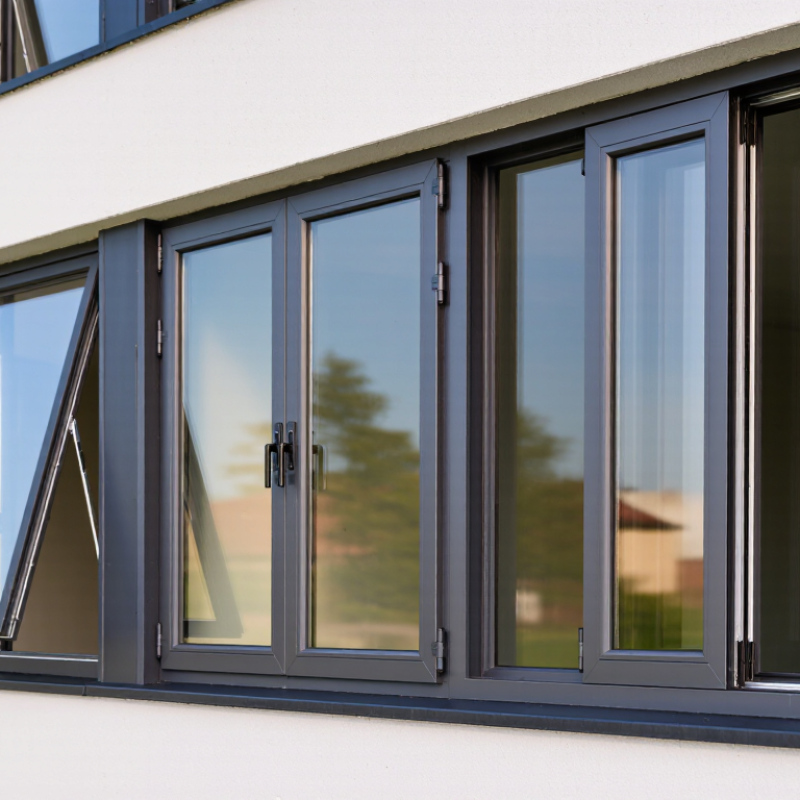
French Casement Window Two side-hung sashes meet at the center without a fixed central mullion when fully open. Creates a broad ventilation area and a wide unobstructed passage for selected designs. Double glazing Triple glazing Low-E glass Acoustic glass High potential, although the meeting stile, locking system, and perimeter seals must be properly engineered. Good when multi-point locking and continuous gaskets are used; central meeting sections require accurate fabrication and installation. Balconies, terraces, living rooms, bedrooms, and wide residential openings. Large clear opening, strong airflow, attractive sightlines, and convenient access to balconies or terraces. Verify sash alignment, hardware load capacity, opening restrictors, wind exposure, and threshold design.
Fixed Light with Casement Combination A non-opening glazed panel is combined with one or more operable casement sashes. Ventilation is supplied by the operable section while the fixed section maximizes daylight and views. Double glazing Triple glazing Low-E glass Solar-control glass High potential because fixed glazing generally has fewer moving joints; the operable section still controls whole-unit performance. Fixed panels typically offer simple perimeter sealing, while the casement section requires correctly compressed gaskets and drainage. Large façades, offices, modern homes, retail spaces, and panoramic openings. Balances daylight, views, ventilation, and façade design flexibility. Check mullion loads, glass size limitations, thermal bridging at joints, replacement access, and structural deflection.
Top-Hung Awning Casement A horizontal casement sash opens outward from the bottom while remaining hinged at the top. Provides sheltered ventilation over a relatively wide horizontal opening. Double glazing Low-E glass Obscure glass Laminated glass Moderate to high potential with thermally broken profiles and insulated glazing. Often suitable for wet climates because the projecting sash can reduce direct rain entry, subject to tested design and correct installation. Bathrooms, kitchens, coastal homes, sheltered façades, and buildings requiring frequent ventilation. Good privacy, effective ventilation, and useful weather protection in many operating positions. Confirm resistance to wind-driven rain, sash-stay capacity, drainage performance, and insect-screen arrangement.
Multi-Panel Casement Window Several connected casement sashes operate independently or in coordinated groups. Allows flexible ventilation control across a wide opening. Double glazing Triple glazing Acoustic glass Solar-control glass Moderate to high potential; more sash joints and meeting sections require careful system design. Performance depends strongly on the number of joints, locking points, gasket continuity, and installation tolerances. Large residential façades, educational buildings, offices, healthcare projects, and hospitality developments. Scalable ventilation, façade flexibility, and easier division of large openings into manageable sashes. Review maximum sash dimensions, hardware loads, mullion/transom capacity, maintenance access, and fabrication tolerances.
Tilt-and-Turn Casement Window The sash tilts inward from the top for ventilation and turns inward from the side for a wider opening. Offers two ventilation modes: secure trickle-style airflow in tilt mode and full ventilation in turn mode. Double glazing Triple glazing Low-E glass Acoustic glass High potential when using thermally broken frames, multi-point hardware, and high-performance insulated glazing. Compression seals can provide strong air and water resistance, but correct hardware adjustment is critical. Residential projects, high-rise apartments, offices, and climates requiring controlled ventilation. Versatile operation, convenient cleaning, enhanced ventilation control, and strong security potential. Confirm operating clearance, hardware quality, sash weight limits, child-safety devices, and inward-opening space.
Narrow-Frame Casement Window Side-hung, top-hung, or fixed-and-opening design using slim aluminum sightlines. Provides ventilation while maximizing visible glass area and daylight. Double glazing Triple glazing Low-E glass Can achieve good performance, but slimmer profiles may impose limits on glazing thickness, sash size, and thermal-break depth. Requires precise fabrication and installation because reduced profile width can leave less tolerance for sealing and drainage details. Contemporary homes, renovations, commercial façades, and projects prioritizing slim sightlines. Modern appearance, high glass-to-frame ratio, and improved daylight potential. Do not evaluate sightline alone; check structural capacity, thermal transmittance, condensation risk, and tested air/water performance.
Thermally Broken Aluminum Casement Window Available in side-hung, top-hung, French, fixed-combination, or tilt-and-turn configurations. Ventilation performance depends on the selected opening style; the thermal break primarily improves insulation. Double glazing Triple glazing Low-E glass Warm-edge spacer Generally the preferred aluminum solution for energy-conscious projects because the polyamide thermal barrier reduces heat transfer through the frame. Can provide strong air and water resistance when paired with suitable gaskets, drainage, locking points, and installation detailing. Cold climates, hot climates, high-rise buildings, energy-efficient homes, offices, and premium commercial projects. Improved indoor comfort, reduced condensation risk, better energy performance, and compatibility with high-performance glazing. Request whole-window performance data rather than relying only on the frame description; verify local energy and weather-test requirements.

Frame Profiles, Glass Options, and Opening Configurations

2026 Top Aluminum Casement Window Types for Global Buyers

Frame Profiles, Glass Options, and Opening Configurations

Aluminum casement windows now require more than a clean, narrow frame. Buyers should compare profile depth, wall thickness, thermal breaks, and drainage paths. A thermally broken profile limits heat transfer through the frame. However, wider profiles can reduce visible glass and daylight. That trade-off is easy to overlook.

The glass package often determines real comfort. Double glazing suits moderate climates, while triple glazing supports colder regions and stricter energy targets. Low-emissivity coatings can reduce radiant heat loss, but coating position must match the climate. Solar-control glass may lower cooling demand in strong sun. It can also create darker interiors. The International Energy Agency reports that buildings consume about 30% of global final energy, making envelope decisions commercially important (IEA, Buildings sector overview, 2023). Small errors become expensive.

Opening configuration affects ventilation, cleaning, and hardware loads. Single-leaf casements work well for compact rooms. French casements provide a wider clear opening without a central fixed mullion. Top-hung vents can release warm air while limiting rain entry. For large sashes, buyers should request air, water, and wind-load test results. NFRC guidance emphasizes certified U-factor and solar heat gain ratings rather than appearance alone (NFRC, Fenestration Product Ratings). A low U-factor is not automatically the best choice. Climate, orientation, glass area, and installation quality still matter. The specification should be reviewed again.

Performance Standards and Regional Compliance Requirements

2026 Top Aluminum Casement Window Types for Global Buyers

Performance depends on more than frame appearance. Thermally broken aluminum casement windows reduce heat transfer through polyamide separators. Non-thermal frames may suit mild climates, garages, or interior partitions. Double glazing remains practical for many regions, while triple glazing supports colder projects. Outward-opening designs can improve ventilation, but wind exposure must be checked carefully.

Regional compliance changes the specification. European projects commonly reference EN 14351-1, air permeability, watertightness, and wind resistance. North American buyers may require testing under AAMA, WDMA, or CSA procedures. Australian projects often check AS 2047 requirements. These references are not interchangeable. Confirm the current edition, testing scope, glass safety rules, and local energy values before ordering. A certificate can look impressive and still cover the wrong window size.

Tips: Request full test reports, not only performance labels. Confirm frame dimensions, hardware cycles, drainage details, and installation methods. Ask whether results apply to the exact glazing package. In coastal areas, specify corrosion-resistant finishes and inspect exposed hardware regularly. Field installers sometimes change shims or sealants, reducing tested performance. That gap is easy to overlook. Also allow for regional opening restrictions, emergency egress rules, and different documentation languages. Triple glazing is not always the best answer; weight, hinges, and installation quality can matter more.

How to Select the Right Aluminum Casement Window Supplier

2026 Top Aluminum Casement Window Types for Global Buyers

Selecting the right aluminum casement window supplier requires more than comparing catalog prices. The International Energy Agency reported that buildings consumed about 34% of global energy in 2022. Therefore, suppliers should provide tested thermal performance, not vague insulation claims. Request Uw values, thermal-break specifications, and test conditions in writing.

Check compliance with relevant standards, such as EN 14351-1, ASTM E283, E331, or E330. These tests examine air leakage, water penetration, and structural pressure.

A serious supplier should share recent laboratory reports, production tolerances, and installation guidance. Ask for full-size samples. Small samples can hide weak corner joints, uneven gaskets, or difficult hardware operation.

Material traceability also matters.

The International Aluminium Institute states that recycling aluminum can save about 95% of the energy required for primary production. Ask whether the supplier documents alloy grades, recycled content, coating thickness, and batch records. Powder coating should be verified against the required climate and exposure category, especially near coastlines. Test the details.

Price remains important, but the lowest quotation may exclude drainage design, packaging protection, or replacement hardware. I would not trust a perfect brochure without factory evidence. No supplier gets every detail right.

A practical evaluation includes a video factory audit, independent inspection, and a pilot shipment. Lead times should include tooling, approvals, testing, and possible rework. That last allowance is often forgotten.