2026 Top Odorless Silicone Tube Suppliers for Global Buyers?
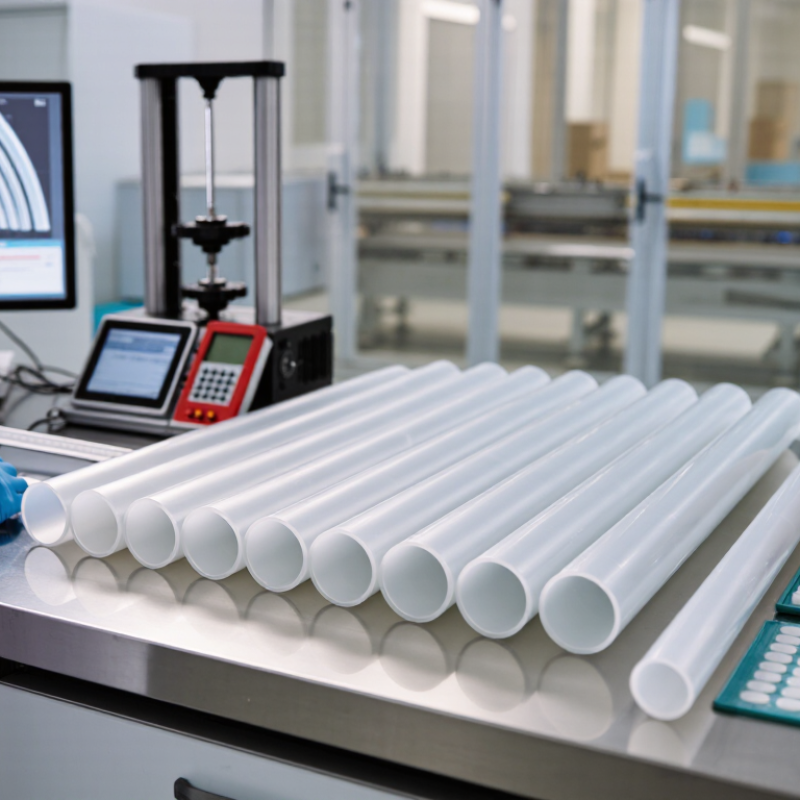
Global buyers need more than a polished catalog when sourcing Odorless Silicone Tube in 2026. They need dependable materials, stable production, and evidence behind every supplier claim. A tube may appear clean, yet still release a faint smell after heating or prolonged storage. That detail matters in medical devices, laboratory equipment, beverage systems, and sensitive consumer products.
This guide examines leading suppliers through practical purchasing criteria. These include silicone grade, platinum-cured processing, dimensional tolerance, surface finish, tensile strength, and odor testing. It also considers factory audits, batch traceability, production capacity, minimum order quantities, and export experience. Good suppliers should provide recent technical data sheets, sample approval records, and clear compliance documents. Food-contact and medical applications require additional review under the destination market’s current rules.
Small details reveal quality.
During supplier evaluation, buyers should compare samples under identical conditions. Check the tube after cutting, bending, washing, and heating. Notice whether the surface stays smooth and whether any odor returns. A supplier with responsive engineering support may be more valuable than a cheaper quotation. However, low odor does not automatically prove safety or long-term performance. That assumption deserves caution.
No ranking is perfect. Factory information can change, and some online claims remain difficult to verify. Therefore, this overview combines visible manufacturing capability with documentation quality and buyer-focused practicality. It is designed to help importers shortlist credible partners, ask sharper questions, and avoid costly surprises before placing a global order. Supplier performance still depends on testing, communication, and consistent follow-up.
What Makes Silicone Tubes Odorless and Suitable for Global Use
2026 Top Odorless Silicone Tube Suppliers for Global Buyers?
What Makes Silicone Tubes Odorless and Suitable for Global Use
Odorless silicone tubes begin with clean raw materials and controlled curing. Platinum-cured silicone usually leaves fewer residual by-products than poorly controlled peroxide curing. The result is a neutral tube, even near warm liquids. However, “odorless” is not a universal laboratory term. It can describe a sensory result, not a guaranteed chemical condition.
A 2024 global silicone market report estimated annual industry growth above 7% through 2030. This growth reflects demand from medical, food-processing, laboratory, and fluid-handling applications. Buyers should examine more than surface smell. They need volatile-organic-compound testing, extractables data, batch traceability, and documented post-curing conditions. A clean production room also matters. Silicone can absorb odors from packaging, oils, or nearby materials.
Global suitability depends on evidence. Food-contact tubes should match applicable requirements, such as U.S. repeated-use rubber provisions under 21 CFR 177.2600. Medical applications often require chemical characterization under ISO 10993-18 and biological evaluation under related ISO 10993 standards. Wall thickness, hardness, temperature range, and pressure ratings must be verified separately. One weakness remains: suppliers may advertise “odorless” without publishing test methods. Ask for sample retention records and independent reports. A tube that smells neutral today may change after sterilization, aging, or contact with chemicals. Testing should imitate actual use, not only showroom conditions.
Key Specifications to Compare Before Choosing a Supplier
2026 Top Odorless Silicone Tube Suppliers for Global Buyers?
Key Specifications to Compare Before Choosing a Supplier
An odorless silicone tube should remain neutral after production, storage, and intended use. Request a retained sample from the same production batch. A pleasant factory sample means little if packaging odors transfer during shipping. Ask whether the tube uses platinum curing or another controlled curing method. Review test data for volatile residues, extractables, and post-curing stability. Results should identify methods, test dates, and sample numbers.
Dimensions require close attention. Compare inner diameter, outer diameter, wall thickness, and tolerance ranges. A tube measuring 10 millimeters outside may still fail a tight connector. Check hardness, tensile strength, elongation, tear resistance, and compression set. Temperature ratings also need context. Continuous heat exposure differs from short cleaning cycles. Confirm pressure limits with the actual size, bend radius, and operating temperature.
Supplier reliability appears in details. Request material traceability, batch records, inspection reports, and clear change-control procedures. Verify production capacity before accepting a low price. A supplier may provide excellent prototypes but struggle with repeat orders. Ask for samples in the final packaging, not only loose pieces. Poor packaging can create odor and surface contamination. I would also compare lead times, minimum order quantities, customization fees, and replacement policies. One overlooked issue remains: laboratory testing cannot fully predict field performance. Run a small trial under real flow, temperature, and cleaning conditions before approving a long-term supply.
How to Select the Right Supplier for Your Application and Market
2026 Top Odorless Silicone Tube Suppliers for Global Buyers?
Selecting an odorless silicone tube supplier starts with your application, not a sales ranking. Medical fluid paths, food-contact lines, laboratory pumps, and cleanroom equipment require different controls. Define temperature, pressure, inner diameter, flexibility, and sterilization needs before requesting quotations. A tube that feels soft may collapse during pumping.
Ask suppliers for material specifications, batch traceability, dimensional tolerances, and odor-testing methods. Reliable manufacturers should explain their curing process and provide samples from actual production equipment. Check whether testing covers extractables, tensile strength, compression set, and color stability. A polished certificate is useful, but it does not replace a sample trial.
Market requirements also shape supplier selection. Import documents, labeling, packaging, and food-contact or medical compliance may differ between regions. Confirm production capacity, lead times, minimum order quantities, and change-control procedures in writing. Request three consecutive batches when consistency matters. One sample can look perfect.
During evaluation, inspect tubes after storage and repeated bending. Notice surface tack, smell, deformation, and connector fit. I have found that buyers sometimes focus too heavily on unit price. That decision can create higher scrap, delayed validation, or costly line adjustments. Supplier communication matters, too. If technical questions receive vague answers, treat that as a practical warning. Yet no supplier is flawless; record small gaps and decide whether their corrective response is transparent and timely.
2026 Top Odorless Silicone Tube Suppliers for Global Buyers
How to Select the Right Supplier for Your Application and Market
How to use this chart: The values show representative continuous-service temperature benchmarks commonly specified for platinum-cured silicone tubing in major application markets. Food, biopharmaceutical, laboratory, and electrical-insulation applications commonly use grades rated around −60°C to 200°C, while repeated peristaltic-pump operation is often specified around −50°C to 180°C. Buyers should confirm the exact grade, wall thickness, pressure, sterilization cycle, extractables profile, and applicable regulations with each supplier.

 Close
Close