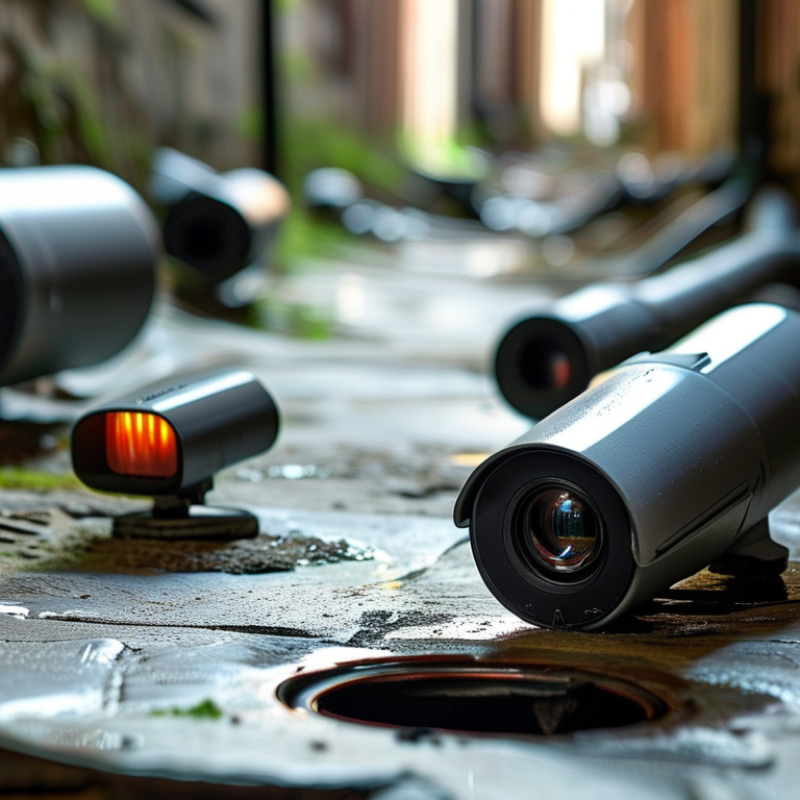
| Basic Push-Rod Camera | Approximately 50–150 mm | About 20–60 m, depending on the reel | Small fixed camera head; color video; integrated LED lighting; usually 480p to 1080p | House drains, short laterals, small commercial lines, blockage checks and routine maintenance | Portable, comparatively low cost, quick to deploy and easy for one operator | Limited inspection distance; the rod can be difficult to advance through multiple bends or heavy deposits | Plumbers, drainage contractors, property maintenance teams and small municipalities |
| Professional Push-Rod Camera | Approximately 75–250 mm | About 60–120 m, depending on rod length and pipe conditions | Self-leveling or fixed head; high-intensity LEDs; digital recording; distance counter; optional sonde | Residential sewer surveys, service connections, pre-purchase inspections and defect documentation | Better image stability, longer reach and more reliable reporting than entry-level systems | Still depends on manual pushing; cannot reliably overcome severe collapses, roots or large offsets | Professional drainage companies and inspection contractors requiring repeatable reports |
| Self-Leveling Push Camera | Approximately 75–300 mm | About 50–120 m | Rotating or weighted head that keeps the image upright; adjustable LED lighting; HD recording | Detailed assessment of cracks, open joints, service connections, corrosion and pipe deformation | Easier defect interpretation and more consistent orientation in non-horizontal pipe sections | Higher purchase cost and a larger head may reduce access in very small or sharply curved drains | Surveyors and contractors producing condition-assessment reports |
| Small-Diameter Lateral Camera | Approximately 40–150 mm | About 20–80 m | Compact flexible camera head; strong close-range lighting; often includes a locating sonde | Kitchen and bathroom branches, narrow laterals, floor drains and difficult residential access points | Fits narrow openings and negotiates tighter bends than larger push systems | Shorter effective viewing distance and less suitable for large-diameter municipal mains | Residential service specialists and emergency blockage teams |
| Crawler Camera | Approximately 150–2,000 mm, subject to crawler configuration | Typically 100–500 m of cable | Motorized tractor with pan-and-tilt or rotating camera; powerful lighting; distance measurement; optional laser or sonar | Municipal gravity sewers, industrial lines, large culverts, long-distance condition surveys and acceptance inspections | Motorized travel, stable footage, accurate distance records and suitability for long or large pipelines | Higher capital cost, heavier transport equipment and reduced performance in deep water, heavy sediment or steep grades | Municipalities, utility operators, infrastructure contractors and industrial inspection providers |
| Pan-and-Tilt Crawler Camera | Approximately 200–2,000 mm | Typically 100–500 m | Remote pan, tilt and zoom; high-resolution camera; adjustable lighting; digital overlay and measurement tools | Comprehensive structural surveys, connection identification, manhole-to-manhole inspections and engineering assessments | Views multiple directions without repositioning the tractor; produces detailed and repeatable evidence | More complex operation and maintenance; usually requires trained personnel and a suitable access chamber | Large utility owners, engineering firms and advanced inspection contractors |
| Lateral Launch Camera | Main line commonly 200–1,500 mm; lateral branch commonly 75–250 mm | Mainline cable often 100–300 m; lateral deployment varies by system | Mainline crawler with a deployable satellite camera; steerable lateral head; distance and location recording | Inspecting connected property laterals from a main sewer without entering every property or access point | Covers mainline and branching pipes in one deployment; improves network mapping efficiency | Complex and expensive; lateral launch can be restricted by offsets, tight junctions, roots or heavy deposits | Utility owners and contractors conducting network-wide surveys |
| Manhole and Open-Structure Camera | Manholes, chambers, culverts and other accessible structures | Usually 5–30 m viewing distance, depending on lighting and structure size | Pole-mounted, tripod-mounted or pan-and-tilt camera; wide-angle lens; high-output lighting | Rapid visual checks of manholes, shafts, wet wells, culverts and chamber walls | Fast setup, broad field of view and reduced need to enter confined spaces | Does not replace a traveling pipe camera for long internal pipe inspections; image quality depends strongly on lighting and water clarity | Maintenance departments, municipalities and confined-space inspection teams |
| Sonar-Assisted Sewer Camera | Medium to large pipes, commonly 300–2,000 mm | Generally 100–500 m with a crawler or float platform | Camera combined with acoustic sonar to profile submerged or obscured pipe sections | Pipes with standing water, submerged defects, sediment depth measurement and partially inaccessible lines | Provides information where optical video is blocked by water or poor visibility | Higher cost and data-processing requirements; sonar interpretation requires trained operators | Large utilities, wastewater operators and specialist survey contractors |



 Close
Close