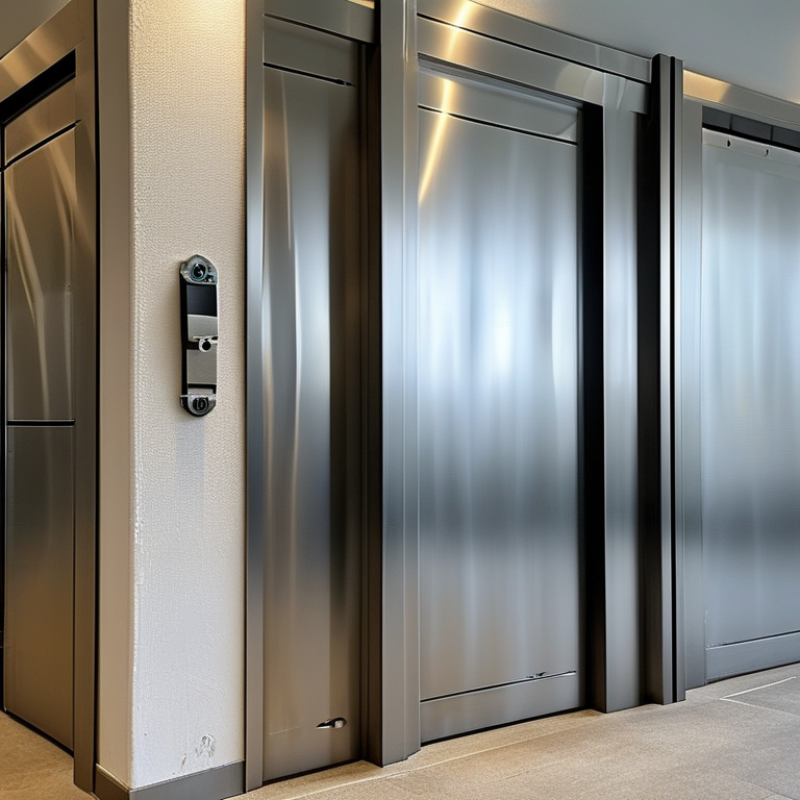
| Hollow Metal Steel Door | Steel skins formed around a steel-stiffened, honeycomb, polystyrene, or mineral-fiber core. | Resistance to forced entry, impact, and everyday abuse. | High durability; compatibility with reinforced frames, multi-point locks, door closers, and access-control hardware. | Commercial buildings, utility areas, schools, warehouses, and service rooms. | Improved fit, concealed reinforcement, tighter perimeter seals, and better compatibility with electronic access systems. |
| Multi-Point Locking Steel Door | Reinforced steel leaf and frame with several locking points distributed along the door edge. | Reduces leverage at the opening side and improves resistance to prying. | Top, center, and bottom engagement; reinforced strike areas; optional automatic locking. | Apartments, offices, high-value storage rooms, and controlled-access entrances. | More uniform load distribution, improved latch monitoring, and integration with smart credentials or door-position sensors. |
| Fire-Rated Steel Door | Steel leaf, frame, core, hinges, latch, closer, and glazing components assembled as a tested door set. | Slows the spread of fire and smoke when installed and maintained correctly. | Certified fire-resistance periods commonly range from about 20 to 180 minutes, depending on the tested assembly and local code. | Stairwells, corridors, plant rooms, electrical rooms, and fire-separated compartments. | Modern systems combine fire protection with smoke gasketing, controlled closing, access monitoring, and improved thermal performance. |
| Steel Door with Vision Panel | Steel door leaf fitted with laminated, wired, or fire-rated safety glazing in a reinforced frame. | Provides visibility while maintaining controlled access and basic forced-entry resistance. | Impact-resistant glazing options; reduced blind spots; optional fire, smoke, acoustic, or ballistic performance. | Schools, hospitals, offices, security lobbies, and busy internal corridors. | Better visibility with smaller or strategically positioned glazing, stronger glazing beads, privacy films, and sensor-ready hardware. |
| Ballistic-Resistant Steel Door | Multiple steel plates or tested ballistic panels combined with reinforced frames, hinges, locks, and protected seams. | Helps resist specified ballistic threats when the complete assembly is properly tested. | Performance depends on the selected test standard, threat type, ammunition, impact pattern, and complete door-set design. | Secure reception areas, financial facilities, critical infrastructure, and protected storage rooms. | More precise threat-specific engineering, concealed interfaces, access-control integration, and improved weight management. |
| Louvered or Ventilated Steel Security Door | Steel door with fixed, storm-resistant, or security-rated louvers designed for airflow. | Balances ventilation requirements with controlled access and physical protection. | Airflow through the opening; optional insect screens, reinforced louver blades, and corrosion-resistant finishes. | Mechanical rooms, generator rooms, plant enclosures, and service compounds. | Improved airflow design, stronger anti-tamper louvers, drainage details, and coatings suited to humid or outdoor conditions. |
| Insulated Steel Security Door | Steel skins surrounding an insulated core, with thermal breaks or insulated frames in higher-performance assemblies. | Combines physical security with reduced heat transfer and improved occupant comfort. | Lower thermal transmission; improved weather sealing; optional acoustic, fire, and smoke performance. | Exterior entrances, cold-storage support areas, industrial buildings, and energy-conscious facilities. | Better thermal breaks, adjustable seals, reduced air leakage, and compatibility with energy-management objectives. |
| Sliding Steel Security Door | Steel sliding leaf or leaves mounted on a top track, floor guide, or reinforced sliding frame. | Secures wide openings where a conventional swinging door is impractical. | Space-saving operation; optional fire-rated, acoustic, heavy-duty, or automated configurations. | Industrial entrances, loading areas, secure storage, and large service openings. | Improved anti-lift protection, monitored travel, soft-close mechanisms, obstruction detection, and automated access control. |



 Close
Close