7 Best Graphite Electrode Manufacturers Worldwide
Choosing a reliable Graphite Electrode manufacturer requires more than comparing prices or production volume. Steel mills depend on electrodes that withstand extreme heat, rapid current changes, and repeated furnace cycles. Small differences in density, electrical resistance, and oxidation control can affect energy use, electrode consumption, and operating stability.
Industry analyst Simon Moores has said, “Graphite is the new oil.” His observation reflects graphite’s growing industrial importance, but it needs context. Graphite electrodes are not ordinary carbon products. Their performance depends on needle coke quality, forming pressure, graphitization temperature, machining accuracy, and inspection discipline. Manufacturers also face changing energy costs, raw material risks, and demanding environmental expectations.
This guide examines seven leading Graphite Electrode manufacturers worldwide. The comparison considers product range, ultra-high-power capability, plant scale, technical support, quality systems, delivery reliability, and experience serving electric arc furnace operations. Public records, company information, and industry evidence support the assessment where available. Not every manufacturer reports data in the same way. That creates uncertainty.
Real-world performance matters.
A large factory does not automatically deliver the best electrode for every furnace. Local service, storage conditions, connector design, and application guidance can influence results. Some claims also deserve closer verification, especially when suppliers publish limited test data. This review therefore avoids treating reputation as proof. It recognizes strong manufacturers, but it also leaves room for correction as technology, energy markets, and steelmaking practices change.
What Graphite Electrodes Are and Why Their Quality Matters
What Graphite Electrodes Are and Why Their Quality Matters
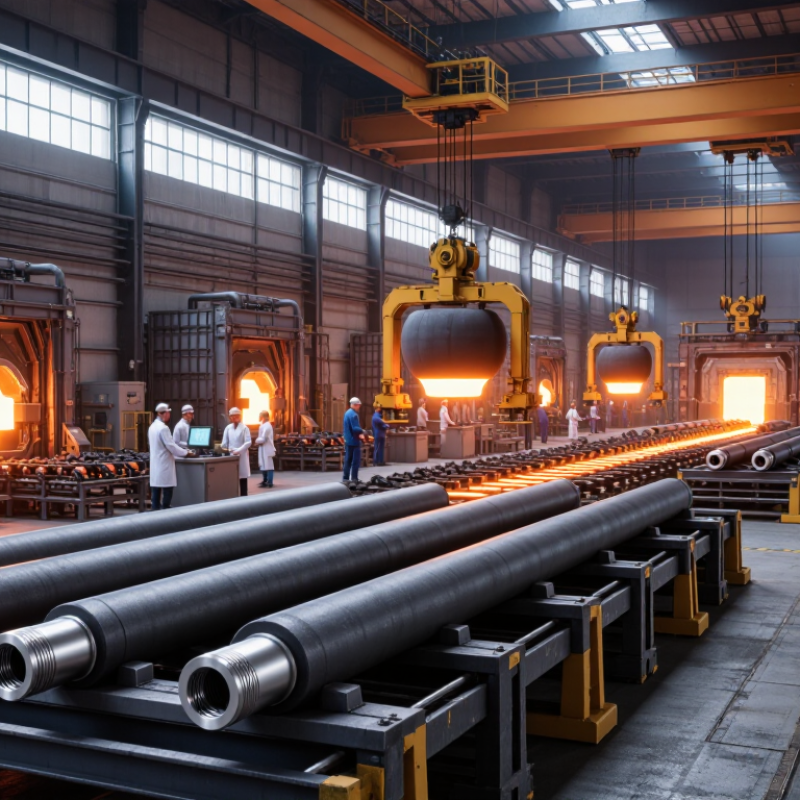
Graphite electrodes are conductive carbon components used in electric arc furnaces. They transfer intense electrical current into scrap metal or other furnace materials. Under extreme heat, their performance affects melting speed, energy use, and production stability. High-quality electrodes combine controlled density, low electrical resistance, and strong resistance to thermal shock. Their threaded connections also need precise machining. A poor fit may create hot spots, loosen during operation, or cause unexpected breakage.
In practical furnace work, quality becomes visible through small details. An electrode with uniform structure usually produces a steadier arc and fewer surface cracks. Low ash content helps reduce unwanted contamination in the melt. Reliable manufacturers also control raw materials, baking temperatures, graphitization, and inspection records. However, no electrode performs perfectly in every furnace. Power settings, scrap conditions, cooling systems, and operator habits all matter. I have seen specifications look excellent on paper, yet handling damage caused early failure. That is a useful reminder: testing should include real operating conditions.
Tips: Check resistivity, bulk density, flexural strength, and ash content before purchasing. Inspect nipple threads and electrode ends for chips or uneven machining. Store electrodes indoors, away from moisture and impact. Keep production records for consumption, breakage, and arc stability. These details make supplier comparisons more reliable and less dependent on marketing claims.
What Graphite Electrodes Are and Why Their Quality Matters
Graphite electrodes conduct electricity into electric arc furnaces used for steel and alloy production. The chart shows representative operating-current ranges for UHP electrodes at common nominal diameters. Larger diameters generally support higher current, while electrode quality affects resistance, thermal stability, consumption, and operational safety.
Values are typical industry ranges for UHP graphite electrodes; actual limits depend on furnace design, electrode quality, cooling conditions, and operating practice.
How the World’s Leading Graphite Electrode Manufacturers Are Evaluated
Evaluating the world’s leading graphite electrode manufacturers requires more than comparing annual capacity. The World Steel Association reported approximately 1.89 billion tonnes of crude steel production in 2023, with electric arc furnaces contributing about 29%. That demand makes electrode reliability commercially important. A strong manufacturer should demonstrate stable ultra-high-power performance, low electrical resistivity, controlled thermal expansion, and consistent nipple accuracy.
Testing comes first. Buyers should review ISO-certified quality systems, batch-level laboratory records, and results from independent inspections. The USGS Mineral Commodity Summaries 2025 reported global natural graphite production near 1.6 million tonnes in 2024. This figure highlights the importance of secure raw-material control, although natural graphite data does not directly measure electrode quality. Needle coke selection, graphitization temperature, impregnation depth, and machining tolerances deserve separate review.
Field experience also matters. Manufacturers should provide operating data from high-current furnaces, including electrode consumption per tonne of steel, breakage frequency, and connection failures. Delivery performance is another practical test. Can the supplier maintain dimensions during a sudden production increase? Can it trace a defective batch within hours? No scorecard is perfect. Price can look attractive until unstable joints create downtime. I would also question unusually low consumption claims unless test conditions are clearly disclosed. Reliable rankings should therefore combine laboratory evidence, furnace performance, financial resilience, technical support, and transparent reporting.
7 Best Graphite Electrode Manufacturers Worldwide - How the World’s Leading Graphite Electrode Manufacturers Are Evaluated
| Anonymous Manufacturer Profile | Primary Product Position | Available Electrode Diameter | Bulk Density
(g/cm³) | Electrical Resistivity
(μΩ·m) | Flexural Strength
(MPa) | Maximum Ash Content | Quality-System Evidence | Indicative Evaluation
Score |
| Profile 1 | Ultra-high-power steelmaking | 300–800 mm | 1.78–1.85 | 4.5–5.8 | 9.0–13.0 | ≤0.30% | ISO 9001; batch traceability | 94/100 |
| Profile 2 | High-power and ultra-high-power grades | 250–700 mm | 1.75–1.82 | 5.0–6.2 | 8.5–12.5 | ≤0.40% | ISO 9001; third-party testing | 91/100 |
| Profile 3 | Large-diameter furnace applications | 350–900 mm | 1.76–1.84 | 4.8–6.0 | 9.5–14.0 | ≤0.35% | ISO 9001; dimensional inspection | 90/100 |
| Profile 4 | Balanced HP/UHP product range | 250–750 mm | 1.72–1.80 | 5.3–6.8 | 8.0–11.5 | ≤0.50% | ISO 9001; process control records | 87/100 |
| Profile 5 | Standard and high-power electrodes | 200–600 mm | 1.70–1.78 | 5.8–7.5 | 7.0–10.5 | ≤0.70% | ISO 9001; routine laboratory testing | 83/100 |
| Profile 6 | Cost-efficient furnace operation | 200–500 mm | 1.68–1.76 | 6.2–8.0 | 6.5–9.5 | ≤0.80% | Documented internal inspection | 79/100 |
| Profile 7 | General-purpose graphite electrodes | 150–450 mm | 1.65–1.74 | 6.8–8.5 | 6.0–8.5 | ≤1.00% | Basic product conformity records | 75/100 |
Evaluation methodology: Scores are based on commonly published graphite-electrode performance indicators, including diameter range, bulk density, electrical resistivity, flexural strength, ash content, quality-control documentation, and product consistency. Actual specifications may vary by grade, diameter, nipple design, and test method.
Seven Notable Graphite Electrode Manufacturers Across Global Markets
Seven notable graphite electrode manufacturers serve demanding steelmaking markets across several regions. Their strengths differ, so buyers should examine more than production volume. Electrode quality depends on needle coke selection, mixing control, graphitization temperature, machining accuracy, and shipment protection.
A large integrated manufacturer in East Asia often provides ultra-high-power electrodes for electric arc furnaces.
A second producer in the same region may focus on stable diameters and automated nipple machining.
An established European manufacturer typically emphasizes process documentation, laboratory testing, and lower variation between batches.
A North American producer may offer strong technical support for furnace optimization and emergency replacement needs.
An Indian manufacturer can provide competitive large-size electrodes while serving rapidly expanding steel capacity.
A Middle Eastern producer may benefit from regional logistics and shorter delivery routes.
A South American manufacturer may combine local raw materials with practical support for smaller furnaces.
Reliable evaluation requires test certificates, resistivity data, bulk density, flexural strength, and thermal expansion results. Ask how each supplier manages cracks after baking and during sea transport. Factory visits can reveal dusty storage areas, weak packaging, or disciplined quality controls. That detail matters. My own preference would favor transparent batch tracking over impressive capacity claims. Still, no supplier performs perfectly in every furnace. Electrode consumption can change with scrap quality, power settings, cooling practice, and operator experience. A technically capable manufacturer should discuss these variables openly, including failures that required corrective action.
Key Products, Technologies, and Industries Served by Each Manufacturer
The seven leading graphite electrode manufacturers serve steel, foundry, chemical, and silicon industries worldwide. Large East Asian producers commonly supply ultra-high-power electrodes for electric arc furnaces. Their plants use needle coke, automated mixing, vacuum impregnation, and high-temperature graphitization. These controls improve density and reduce cracking during intense furnace cycles. Diameter options often exceed 700 millimeters. That matters in high-capacity steelmaking.
European manufacturers focus strongly on consistent machining, low electrical resistance, and engineered grades for demanding furnace conditions. Their products include regular-power, high-power, and ultra-high-power electrodes, plus nipples and connection systems. North American producers often support mini-mills and foundries with shorter lead times. Some add digital quality tracking, thermal modeling, and batch-level inspection. Traceability helps maintenance teams identify performance changes before failures become expensive.
Other suppliers in South Asia, the Middle East, and Eastern Europe compete through flexible sizes, customized nipples, and export logistics. They serve ferroalloy plants, mineral processing operations, and specialty metal producers. Some use recycled graphite in selected applications, although purity and consistency require careful verification. No manufacturer is best at everything. A low-cost electrode may demand closer monitoring, while a premium grade may not suit every furnace design. Buyers should compare resistivity, bulk density, flexural strength, nipple quality, delivery reliability, and technical support. Real furnace data remains more useful than polished brochures.
How to Select the Right Graphite Electrode Supplier for Your Needs
Selecting a graphite electrode supplier starts with your furnace, not a ranking list. Electric arc furnaces produced about 29% of global crude steel in 2023, according to World Steel Association data. That share creates strong demand for stable electrodes, but quality requirements differ by furnace power, current density, and operating cycle.
Ask suppliers for recent test reports covering bulk density, electrical resistivity, flexural strength, and thermal expansion. Compare these results with your operating conditions. A small change in resistivity can affect energy use and electrode consumption. Check nipple design, machining accuracy, joint strength, and packaging protection. Electrodes may look identical on arrival. Their performance may not be.
Material traceability matters. The USGS Mineral Commodity Summaries reports that graphite supply remains geographically concentrated, increasing exposure to transport delays and price changes. Therefore, review the supplier’s raw-material sources, production capacity, inspection process, and backup inventory. Request references from furnaces with similar amperage and steel grades. A sample trial is useful, but one successful heat is not enough evidence. Track breakage, side oxidation, consumption per ton, and connection failures across several campaigns.
Certifications can support credibility, but they do not replace plant audits. Visit the manufacturing site when possible. Inspect baking, graphitization, machining, and final testing records. Delivery reliability deserves equal attention. A cheaper electrode is not cheaper after emergency freight, downtime, or unstable arc performance. Some selection decisions still rely too heavily on price. That is a mistake worth revisiting.



 Close

