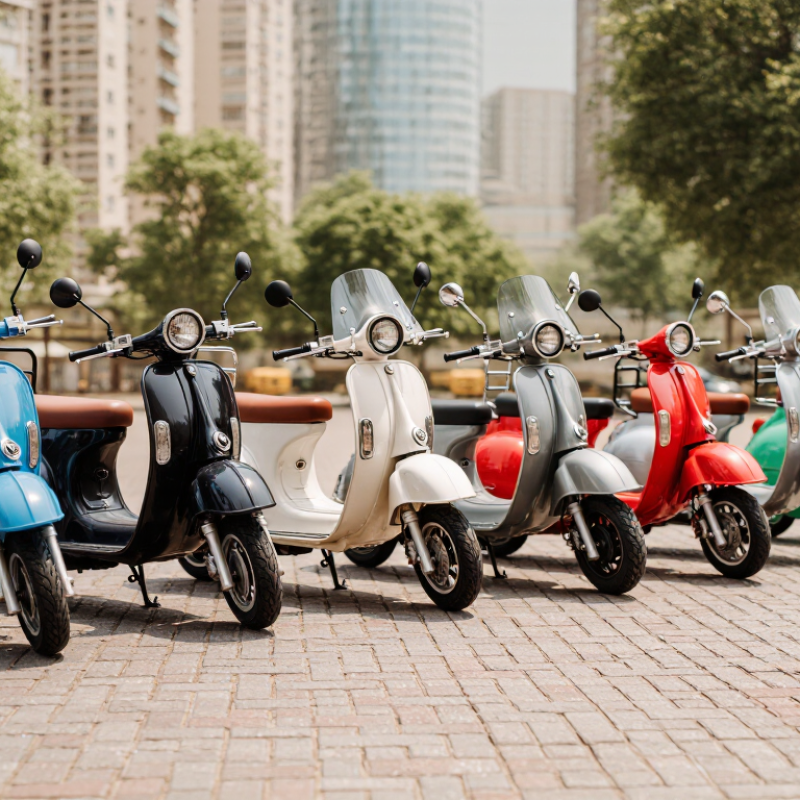
| 1. Standard 49–50 cc four-stroke | Small gasoline engine; often configured for a low-speed moped class. | Short urban trips and riders seeking a conventional step-through scooter. | Simple, familiar layout and typically modest fuel use compared with larger motorcycles. | Acceleration and hill-climbing are limited; verify the legal speed class and load rating. |
| 2. Large-wheel 49–50 cc scooter | Small gasoline engine with larger-diameter wheels than many compact scooters. | Riders who regularly travel on uneven or patched city streets. | Larger wheels can help smooth out small road imperfections. | Wheel size alone does not guarantee comfort or stability; check seat fit, suspension, and overall dimensions. |
| 3. Low-seat 49–50 cc scooter | Small gasoline engine with a lower seat profile, depending on the vehicle. | Riders who prefer to place both feet closer to the ground when stopped. | Can make low-speed manoeuvres and stop-and-go traffic feel more manageable. | Seat height and shape affect comfort; sit on the scooter and check knee room before purchase. |
| 4. Two-seat 49–50 cc scooter | Small gasoline engine; passenger use is appropriate only when the vehicle is approved and equipped for it. | Solo riders who want a longer seat or occasional passenger capability. | A passenger-ready seat and footrests offer more flexibility than a single-seat setup. | Confirm passenger approval, total load limit, braking performance, and local licence rules. A small engine may feel slow with added weight. |
| 5. Electric moped-class scooter | Battery-powered model designed to meet a local low-speed moped category; some European L1e-B models are limited to 45 km/h and 4 kW continuous rated power. | Quiet, shorter daily commutes where charging is convenient. | No tailpipe emissions during riding and fewer routine engine-related service tasks. | Real-world range depends on speed, temperature, hills, rider weight, and battery condition; check charging time and battery warranty. |
| 6. Higher-speed electric step-through scooter | Electric scooter whose speed or power may exceed a local moped limit. | Riders who need more pace than a low-speed moped class provides. | May offer stronger acceleration or better traffic compatibility, depending on its specification. | It may be legally classified as a motorcycle or another vehicle type, requiring different registration, licensing, or protective equipment. |
| 7. 125 cc step-through scooter | Small-displacement gasoline scooter, but generally above the 50 cc limit used in many moped definitions. | Riders who need more power for faster roads or longer commutes. | Typically provides more performance headroom than a 49–50 cc moped. | Often not legally a moped; motorcycle licensing, registration, and insurance rules may apply. Check local requirements. |



 Close