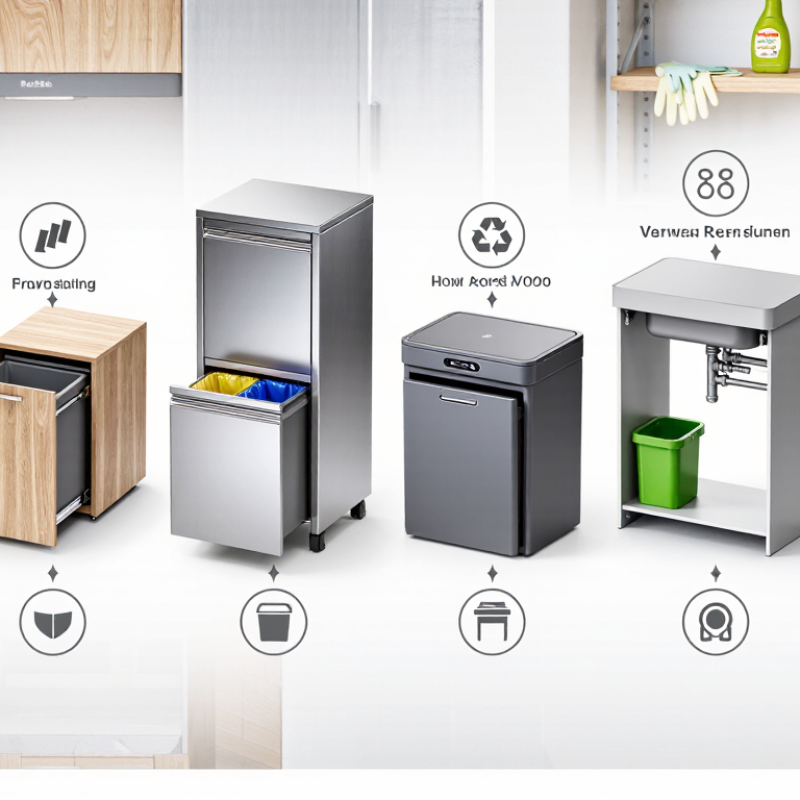
| 1. Single-Bin Pull-Out Cabinet | 30–40 L
7.9–10.6 US gal | Compact kitchens, apartments, guest rooms, and small offices. | Full-extension runners, removable bin, soft-close or damped movement, and a closed front panel that conceals waste. | Usually requires a cabinet opening approximately 300–400 mm wide and sufficient internal depth for the runner system. The cabinet floor and side panels must be rigid and level. | Wipe spills immediately, wash the container regularly, and inspect runner screws and alignment every few months. | Check actual bin dimensions, door clearance, runner load rating, and compatibility with local waste-bag sizes. |
| 2. Double-Bin Recycling Cabinet | 2 × 25–35 L
2 × 6.6–9.2 US gal | Households and offices separating general waste from recyclables. | Two removable buckets, colored or labeled handles, separate liners, and improved sorting at the point of disposal. | Commonly needs a 450–600 mm cabinet opening, adequate depth, and a reinforced base. Confirm that both bins can be removed without hitting the door or countertop. | Rinse recycling bins when needed, keep organic residue out of the recycling compartment, and clean labels and handles to prevent odor buildup. | Select compartment sizes based on local collection rules and household waste volume; recycling capacity may need to be larger than general-waste capacity in some regions. |
| 3. Triple-Sort Waste Cabinet | 3 × 20–30 L
3 × 5.3–7.9 US gal | Kitchens, shared workplaces, schools, and homes with separate recycling, residual waste, and compost collection. | Three labeled compartments, removable containers, flexible sorting layout, and efficient use of a wide base cabinet. | Requires a wide, level cabinet and careful measurement of internal dividers, door hinges, plumbing, and drawer interference. Ventilation may be useful for the compost section. | Empty the compost container frequently, clean each compartment separately, and use washable liners or moisture-resistant inserts where appropriate. | Confirm the local definitions of compostable, recyclable, and residual waste before choosing labels or compartment sizes. |
| 4. Under-Sink Odor-Control Cabinet | 20–35 L
5.3–9.2 US gal | Sink-base cabinets where space is limited and odor control is a priority. | Low-profile container, removable lid, odor-absorbing filter option, leak-resistant tray, and clearance around plumbing. | Measure the sink, drain trap, water lines, and door hinges first. Use moisture-resistant materials and avoid blocking shut-off valves or access panels. | Replace odor filters according to use, dry the cabinet base after cleaning, check for plumbing leaks, and avoid storing chemicals directly above the bin. | Prioritize corrosion resistance, waterproof flooring, easy bin removal, and access to plumbing rather than maximum capacity. |
| 5. Heavy-Duty Steel Pull-Out Cabinet | 40–60 L
10.6–15.9 US gal | Busy kitchens, commercial break rooms, workshops, and high-use service areas. | Reinforced steel frame, high-load runners, larger removable container, corrosion-resistant coating, and durable door connection. | Needs a strong cabinet base and properly anchored runners. Verify load capacity when the bin is full and allow additional clearance for heavy-duty hardware. | Remove grease and moisture promptly, lubricate compatible moving parts sparingly, tighten hardware, and inspect coating damage for corrosion. | Compare net usable volume rather than exterior size, and verify the material grade, coating, runner rating, and replacement-part availability. |
| 6. Freestanding Pedal-Operated Cabinet | 40–70 L
10.6–18.5 US gal | Rental properties, offices, public-facing areas, and rooms where permanent cabinet modification is undesirable. | Hands-free foot pedal, enclosed body, removable inner bin, non-slip base, and flexible placement. | Requires a stable, level floor and enough space for the lid or access door to open fully. Keep it away from emergency exits and high-traffic pinch points. | Clean the pedal and lid mechanism, inspect hinges and dampers, empty before overfilling, and use liners that fit without obstructing the lid. | Consider floor protection, noise during operation, accessibility needs, local fire-safety rules, and ease of relocating the unit. |
| 7. Modular Cabinet with Compost Insert | 30–50 L total
7.9–13.2 US gal | Sustainability-focused homes and kitchens with a separate food-scrap collection system. | Adjustable internal modules, small sealed compost insert, removable containers, flexible sorting, and space-efficient organization. | Requires accurate cabinet measurements and a layout that permits the compost insert to be removed independently. A ventilated or moisture-resistant section is recommended. | Empty food scraps frequently, wash and dry the insert, replace compostable liners according to local requirements, and monitor moisture and odors. | Check whether local composting facilities accept the intended liners and food waste, and choose modular parts that can be replaced separately. |



 Close
Close