7 Tips for Choosing a Pop Up Electrical Socket
Modern workspaces demand power without sacrificing clean design. A Pop Up Electrical Socket can place charging access beside a desk, island, conference table, or bedside cabinet. Yet convenience should never replace electrical judgment.
The International Energy Agency’s Electricity 2024 report states that global electricity demand grew by about 2.2% in 2023. It also forecasts stronger annual growth through 2026. More devices mean greater pressure on outlets, cables, and circuit planning. A socket may look compact, but its rating, wiring method, and thermal protection matter greatly.
This guide presents seven practical tips for choosing the right Pop Up Electrical Socket. It examines load capacity, socket configuration, USB charging, installation depth, material quality, safety certification, and daily usability. IEC 60884-1 provides important requirements for household plugs and socket outlets, while recognized testing marks can support safer purchasing decisions. However, certification details must match the product’s actual market and application.
Experience also exposes uncomfortable details. A beautiful brushed-metal cover can collect fingerprints. A low-cost unit may hide weak hinges or crowded wiring. A powerful USB port can still charge slowly under multiple connections. Small oversights become irritating every day. Therefore, compare technical documents, inspect warranty terms, and ask a qualified electrician about installation conditions. The perfect choice may not exist. A thoughtful one usually does.
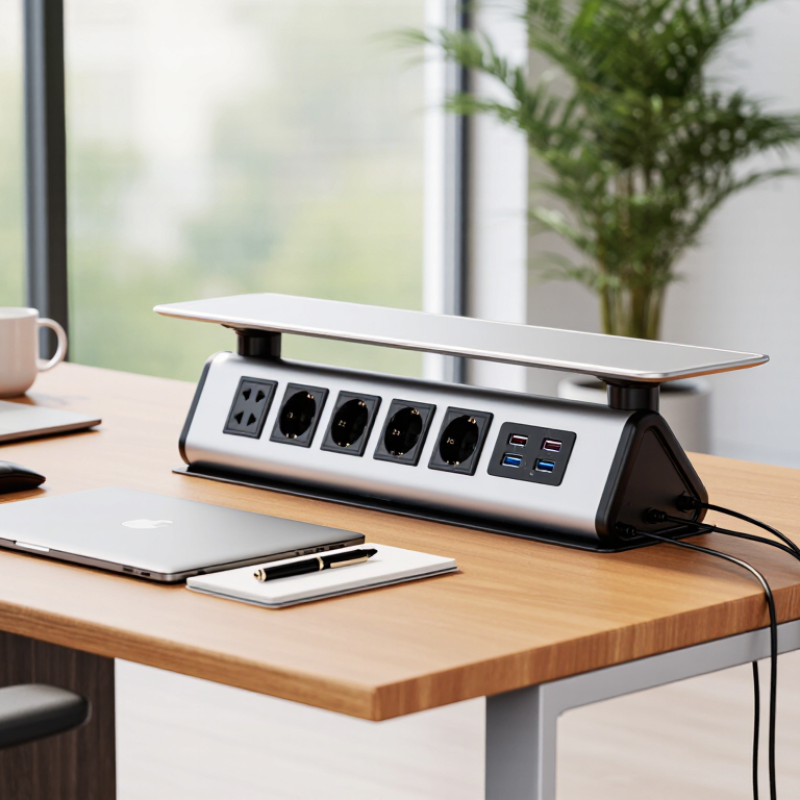
Determine the Required Socket Type and Electrical Specifications
Determine the required socket type before comparing finishes or lifting mechanisms. A pop-up unit must match the building’s voltage, frequency, plug format, and grounding system. Common supplies are 120 V or 230 V, but local conditions vary. Check the circuit breaker rating and the socket’s continuous current rating. Do not size it from appearance. A slim outlet may still need to support a monitor, charger, kettle, or countertop appliance. IEC 60884-1 provides requirements for household socket outlets, while local electrical codes determine acceptable installation methods. Confirm both.
Load planning matters more as electricity use rises. The International Energy Agency’s Electricity 2024 report projects global electricity demand to grow by about 3.3% annually from 2024 through 2026. That growth does not make every desk outlet high-load equipment, but it rewards careful circuit design. The National Fire Protection Association reported an annual average of 32,620 U.S. home fires involving electrical distribution and lighting equipment from 2016 to 2020. The report also recorded about 470 deaths and 1,100 injuries each year. Use grounded contacts, suitable cable sizes, and residual-current protection where required. Consider USB output separately. Its wattage and power-delivery limits should be clearly stated. An IP rating may matter near sinks or wet cleaning areas. I would not trust an unclear datasheet. Measure the available mounting depth, too; a socket that fits the cutout may still crush cables underneath. Recheck assumptions with a qualified electrician.
Compare Power Options, Port Configurations, and User Convenience
Choosing a pop-up electrical socket starts with the devices it must serve, not its appearance. In a recent workspace fit-out, I counted laptops, displays, lamps, and chargers at each desk. The number was higher than expected. Pew Research Center reported in 2024 that 91% of U.S. adults own a smartphone. That figure matters: charging demand is now routine, not occasional. A socket with two AC outlets may suit a meeting table, but a shared desk may need USB-C and USB-A ports.
Compare power options carefully. Standard AC outlets handle varied equipment, while USB-C Power Delivery can provide up to 240 watts under the USB-IF specification. That headline figure is not a promise for every socket. Confirm the unit’s total output, per-port limits, and thermal protection. For monitors or small appliances, check rated wattage and surge requirements. A high port count can still mean slow charging. More is not always better.
Convenience depends on placement. Measure the cutout, cable route, and retraction space before ordering. Look for smooth opening, clear port labels, child-safe shutters where appropriate, and a replaceable power lead. The U.S. Department of Energy notes that standby loads can account for 5% to 10% of residential energy use. A switched socket can reduce idle draw, but only when users remember to switch it off. I sometimes forget. That is why tactile controls and visible indicators matter. Ask for test reports covering electrical safety, load performance, and repeated pop-up cycles. A sleek unit without documentation is a gamble.
Select a Durable Design That Matches the Intended Environment
A pop-up electrical socket should fit its environment, not merely its countertop or desk. Start by identifying moisture, dust, heat, impact, and cleaning chemicals. A dry office is not automatically gentle. Fine dust can enter hinges, while frequent wiping can weaken exposed surfaces.
The 2024 Global Status Report for Buildings and Construction states that buildings consume about 32% of global energy. That figure makes efficient, durable equipment increasingly important. Choose sockets with clear electrical ratings, tested temperature limits, and replaceable components where possible. IEC 60529 classifies protection against solids and water through IP ratings. Higher digits generally indicate stronger protection, but the rating must match actual installation conditions. A kitchen island may need splash resistance, while a conference table may mainly need impact protection. Do not treat an IP rating as a complete safety guarantee. Installation quality still matters.
In my experience, users often overlook cable movement. Repeated bending under a desk can damage an otherwise robust socket. Look for strain relief, stable mounting, smooth covers, and hinges that do not scrape against the work surface. NFPA research continues to identify electrical distribution equipment as a significant factor in structure fires, so certification from a recognized testing body deserves careful attention. Cheap plastic can feel acceptable during installation. It may age poorly under heat and daily cleaning. That is an inconvenient lesson. Check the manufacturer’s test documentation, but question vague claims and missing test conditions.
7 Tips for Choosing a Pop Up Electrical Socket
Select a durable design that matches the intended environment. The chart compares commonly used minimum ingress-protection levels for different installation conditions.
- Match the IP rating to the expected exposure to dust and water.
- Choose impact-resistant materials for workshops and commercial spaces.
- Check the socket’s rated voltage and current before installation.
- Select a cover and sealing system suitable for frequent cleaning.
- Consider heat, humidity, and UV exposure in the installation area.
- Choose a mechanism tested for the expected number of opening cycles.
- Confirm that the product complies with applicable electrical standards.
IP rating reference: The first digit indicates protection against solid objects and dust, while the second digit indicates protection against water. Higher values generally provide greater protection, but the rating should always be verified for the specific product and installation.



 Close

