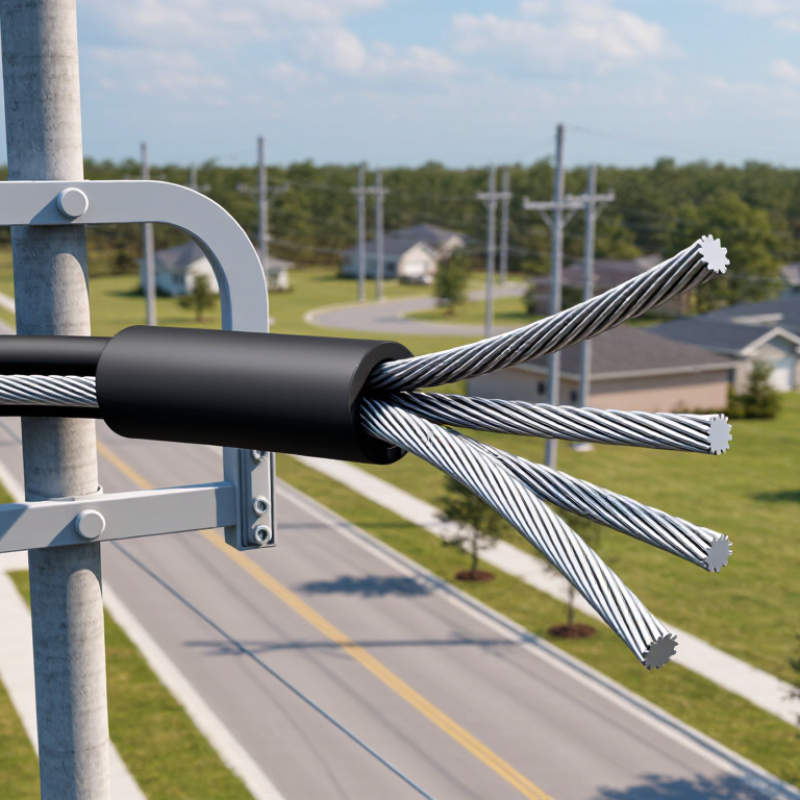
| 230/400 V low-voltage distribution | Overhead public distribution networks supplying homes and small businesses | Insulated phase conductors are assembled into a compact overhead bundle to carry low-voltage electricity from a distribution transformer along a street or route. | 230/400 V is a common nominal three-phase, four-wire system in many regions. Actual network voltage and installation requirements depend on local standards. |
| Rural distribution feeds | Villages, farms, and properties spread across rural areas | Used for overhead low-voltage extensions where connecting customers by underground cable may be impractical or costly. | Route length, expected demand, voltage drop, mechanical loading, and clearances must be considered when designing the line. |
| Service drops | The final overhead connection between a distribution line and a building’s service point | Suitable ABC configurations can carry power from the network toward a customer connection, subject to the local utility’s accepted design. | Connection details, support hardware, conductor sizing, and the point of attachment are specified by local rules and the utility. |
| Residential street extensions | New housing areas or additions to existing overhead networks | Provides a bundled overhead option for extending low-voltage distribution along roads and between support structures. | Insulation can reduce the likelihood of some accidental conductor contacts, but the line remains electrically hazardous and must not be touched. |
| Areas with limited installation access | Routes where overhead construction is more feasible than trenching | Allows conductors to be installed above ground using suitable poles, fittings, and tensioning methods. | Designers must account for wind, temperature, span length, vegetation, clearances, and inspection or maintenance access. |



 Close