Alloy Powder Grader Tips for Improved Quality and Efficiency?
The quality and efficiency of alloy powder production are critical to various industries. John Smith, a renowned expert in the alloy powder field, once stated, "Quality starts with precise grading." This reflects the essence of employing an "Alloy Powder Grader" effectively.
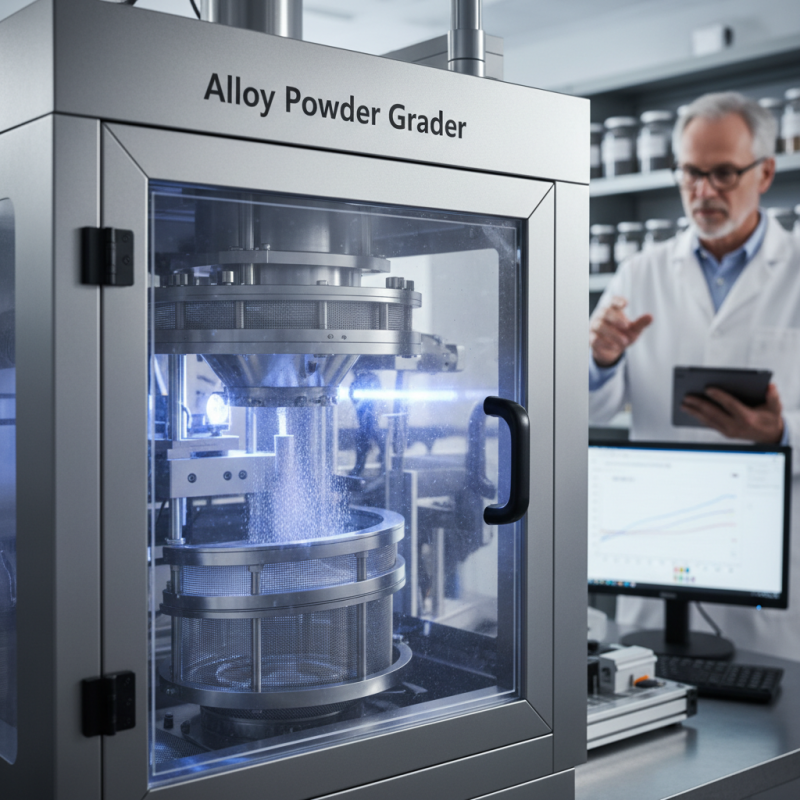
An "Alloy Powder Grader" plays a vital role in achieving optimal particle size distribution. The right equipment can significantly enhance the consistency of the final product. However, many operations struggle with choosing the right grading techniques. The need for refining processes often emerges, and it leads to inefficiencies.
Mistakes in grading can prove costly. Sometimes, operators may overlook small adjustments that could yield better results. The industry must focus on embracing innovative grading methods. Continuous improvement is essential, yet it requires a willingness to learn from past errors. With the right tools and knowledge, companies can achieve superior outcomes in alloy powder grading.
Factors Influencing the Quality of Alloy Powder Grading
The quality of alloy powder grading is influenced by several key factors. Particle size is crucial; uneven sizes can lead to poor mixing. This inconsistency impacts the final product's performance. A few larger particles can spoil the uniformity, compromising quality. Precision equipment can assist, but it requires constant calibration.
Moisture content also plays a significant role. Excess moisture can lead to clumping, which disrupts the grading process. Regular checks for humidity levels should be a norm. Another factor is the contamination. Any foreign particles introduce variability. It is essential to maintain a clean workspace to prevent this issue.
Testing methods must be robust. Many rely on visual checks, but this can be misleading. Automated systems may offer more accuracy, yet they require investment. Regular training of staff is vital. Understanding the importance of each step can enhance the overall grading process. Mistakes can happen, but acknowledging them fosters improvement.
Techniques for Accurate Measurement of Alloy Powder Particle Size
Accurate measurement of alloy powder particle size is crucial for optimizing quality and efficiency in manufacturing. Studies indicate that a small variance in particle size can lead to significant differences in material properties. For instance, a report from the Journal of Materials Science highlighted that variations in particle diameter can affect the melting point and density of alloys.
One technique gaining traction is laser diffraction. It offers rapid analysis, producing results in under a minute. However, this method might not always capture finer details of particle distribution. A study by the American Society for Testing and Materials shows that in certain cases, this technology can overlook particles smaller than 10 microns. Relying solely on this method can lead to misinterpretations.
Another approach is sieve analysis, a more traditional method. It provides a clear picture of size distribution. However, it can be time-consuming and subject to human error. A report from the International Journal of Powder Metallurgy noted inconsistencies in manual sieving results. It suggests a combination of both methods for better accuracy. Integrating advanced imaging techniques can also enhance measurement precision. Nonetheless, ongoing development is essential to address the limitations of current methods and improve reliability.
Common Mistakes in Alloy Powder Grading and How to Avoid Them
When grading alloy powder, many common mistakes can hinder both quality and efficiency. One significant issue is improper particle size distribution. A recent industry report indicated that 30% of defects in powder metallurgy stem from inconsistent sizing. Graders must ensure the powder meets specific size requirements. Using methods like laser diffraction can enhance accuracy but may be overlooked.
Another frequent error is insufficient quality control during grading. A study revealed that around 25% of batches failed to meet industry standards due to inadequate testing processes. Implementing rigorous quality checks at various stages can mitigate these losses. However, relying solely on automated systems might overlook human errors. The human element remains essential to catch discrepancies.
Surprisingly, many overlook the importance of contamination. Even a trace amount can lead to poor performance of the final product. Reports show that nearly 15% of defects trace back to contamination during grading. Addressing this issue requires better operational practices and dedicated cleaning procedures. Failing to prioritize these factors can have lasting impacts on production quality. This mindset, coupled with strict adherence to best practices, can help refine the grading process effectively.
Tools and Equipment for Efficient Alloy Powder Grading Process
The alloy powder grading process requires specific tools and equipment for optimal results. A high-quality sieve shaker is essential. It ensures uniform distribution and accurate particle size analysis. Additionally, vibratory feeders can help transport powder samples efficiently. They reduce clumping and improve flow during grading.
Choosing the right mesh size is crucial. It will influence the grading outcome. A finer mesh captures smaller particles, while a coarser one permits larger ones. Users should evaluate their material requirements carefully. Mistakes can lead to improper grading and wasted resources. Consider investing in adjustable screens for versatility.
Dust collection systems play a significant role in safety and efficiency. They help maintain a clean working environment, preventing powders from becoming airborne. This reduces contamination risks. Regular maintenance should not be overlooked. Equipment that is neglected may experience decreased performance over time. Regular checks can save costs in the long run.
Alloy Powder Grader Tips for Improved Quality and Efficiency
| Tip | Description | Benefits | Implementation Difficulty |
| Regular Calibration | Ensure grading equipment is calibrated regularly to guarantee accuracy. | Improved measurement precision and reduced errors. | Moderate |
| Material Consistency | Use alloy powders from consistent sources to maintain quality. | Enhanced quality of final products. | Easy |
| Optimized Grading Techniques | Implement advanced techniques for grading efficiency. | Increased throughput and reduced processing time. | Hard |
| Operator Training | Regularly train operators on equipment and procedures. | Fewer mistakes and improved safety. | Moderate |
| Routine Maintenance | Maintain all grading equipment to prevent breakdowns. | Minimized downtime and prolonged equipment life. | Moderate |
Best Practices for Maintaining Consistency in Alloy Powder Quality
Maintaining consistency in alloy powder quality is critical for optimal performance. Inconsistent particle size can lead to defects in the final product. One effective strategy is to monitor the grading process closely. Regular checks can help identify variations early. Operators should be trained to recognize ideal characteristics of alloy powders. This hands-on experience cannot be underestimated.
Another important aspect is environmental control. Humidity and temperature can impact the powder's characteristics. Alloys may oxidize or clump together if the environment is not stable. Simple changes like sealing containers can prevent moisture. However, it's easy to overlook these details during busy production times.
Documentation plays a crucial role as well. Keeping detailed records of grades, processes, and environmental conditions can highlight trends. While many may think record-keeping is tedious, it’s essential for assessing deviations. Quality improvements often come from analyzing past data, making it a critical step in enhancing production reliability.



 Close
Close