| Material Type | Water-soluble synthetic polymer | Anionic polyacrylamide, commonly abbreviated as APAM, is a water-soluble polymer containing acrylamide units and negatively charged carboxylate groups. | Used as a flocculant, thickening aid, filtration aid, and rheology modifier in water and process-treatment systems. |
| Chemical Structure | Acrylamide-acrylate copolymer or partially hydrolyzed polyacrylamide | The polymer backbone is formed from acrylamide-based repeating units. Anionic groups are introduced through copolymerization with acrylic acid or acrylate monomers, or by partial hydrolysis of polyacrylamide. | The negatively charged sites promote interaction with positively charged particles and dissolved multivalent ions. |
| Appearance | Dry powder, granule, or aqueous solution | Commercial APAM is commonly supplied as a white to off-white powder or granular solid. It can also be prepared as a diluted aqueous solution before use. | Dry products are convenient for storage and transport; solutions allow direct dosing into treatment equipment. |
| Charge Type | Anionic | When dispersed in water, the polymer carries a net negative charge because of its carboxylate or related anionic groups. | Particularly suitable for suspensions containing positively charged or metal-hydroxide particles. |
| Anionic Degree | Low, medium, or high | The anionic degree indicates the approximate proportion of charged groups along the polymer chain. The boundaries between low, medium, and high grades are not universal and vary by supplier and application. | Charge selection is matched to particle surface chemistry, water composition, pH, and the required settling or dewatering performance. |
| Molecular Weight | Low, medium, or high | APAM grades are also classified by molecular-weight range. Higher molecular weight generally provides longer polymer chains and stronger bridging potential, while lower molecular weight may provide faster dispersion and different flow behavior. | High-molecular-weight grades are often selected for flocculation and solid-liquid separation; lower grades may be used where viscosity or rapid mixing is important. |
| Main Manufacturing Route | Free-radical polymerization | Acrylamide and an anionic comonomer, such as acrylic acid or an acrylate salt, are polymerized in an aqueous or other controlled reaction system using a suitable initiator. | The process creates polymer chains with a controlled balance of molecular weight, charge density, and product form. |
| Post-Treatment | Drying, grinding, screening, and packaging | After polymerization, the gel or polymer mass is typically dried under controlled conditions, milled or granulated, screened to obtain a suitable particle size, and packaged as a dry product. | These steps improve handling, dissolution consistency, and dosing control. |
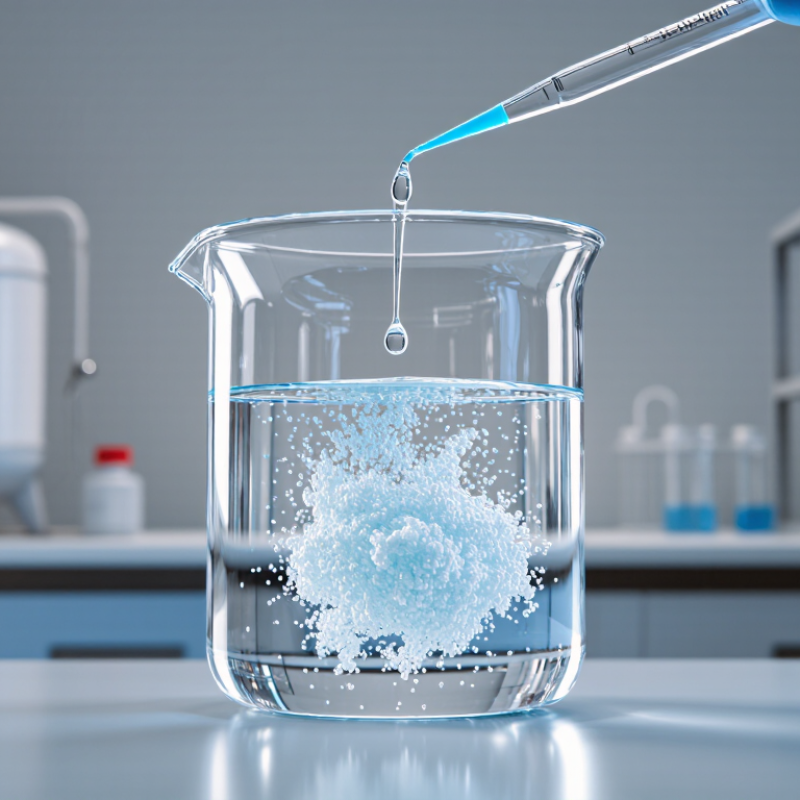
| Dissolution Behavior | Slowly dissolving in water | APAM should generally be added gradually to water with gentle agitation. Excessive shear, very high temperature, or poor dispersion can reduce dissolution quality or damage polymer chains. | Proper preparation helps prevent fish-eyes, clumping, incomplete activation, and unstable treatment results. |
| Flocculation Mechanism | Adsorption, charge interaction, and polymer bridging | The polymer adsorbs onto particle surfaces and can connect multiple particles into larger, stronger flocs. Electrostatic interactions and bridging effects both contribute to separation. | Improves the settling, clarification, thickening, and filtration of suspended solids. |
| Municipal and Industrial Wastewater | Solid-liquid separation | APAM can assist in aggregating suspended solids and improving the removal of sludge particles from treated water. | Used in sludge thickening, sludge dewatering, dissolved-air flotation support, and clarification processes. |
| Mining and Mineral Processing | Tailings and concentrate treatment | The polymer can promote aggregation of fine mineral particles and improve the separation of solids from process water. | Applied in tailings thickening, sedimentation, filtration, and process-water clarification. |
| Paper and Pulp Processing | Retention and drainage aid | APAM can interact with fibers, fillers, and fine particles in papermaking systems. | May improve retention of fine materials, drainage, formation control, and recovery of process water. |
| Oil and Gas Operations | Water treatment and mobility control | Selected polyacrylamide formulations can modify water viscosity and influence the movement of water through porous formations. Application performance depends strongly on salinity, temperature, hardness, and reservoir conditions. | Used in some enhanced-oil-recovery programs and in treatment of produced water, subject to process-specific evaluation. |
| Soil and Construction Applications | Erosion and sediment control | APAM can bind or aggregate fine soil particles and reduce the transport of suspended sediment in water runoff. | Used in selected irrigation, land-management, earthwork, and construction-site sediment-control practices. |
| Key Selection Factors | Charge density, molecular weight, pH, salinity, and dosage | Performance depends on the polymer grade and the characteristics of the treated water or slurry, including particle concentration, particle size, temperature, pH, and dissolved salts. | Jar tests, settling tests, or dewatering trials are commonly used to determine the most suitable grade and dose. |
| Handling Considerations | Spill and slip control | Dry APAM powder and concentrated solutions can make floors and equipment extremely slippery when wet. Dust generation should also be minimized during handling. | Use appropriate ventilation, protective equipment, careful housekeeping, and controlled dosing procedures. |



 Close