| Clear (Natural) | Transparent to slightly silver or gray; the aluminum’s natural metallic appearance remains visible. | The aluminum is anodized to form an oxide layer, then commonly sealed without adding a colorant. | Maintains a clean metallic look and improves resistance to corrosion and surface wear. The final shade can vary with alloy and surface preparation. | Window and door frames, architectural profiles, trim, and general-purpose extrusions. |
| Black | Deep black, usually with a metallic sheen; gloss level depends on the original surface finish. | Color is commonly introduced by dyeing the porous anodic layer before sealing. | Offers a strong, consistent dark appearance. Color uniformity can be affected by alloy, profile shape, and processing conditions. | Architectural frames, lighting components, equipment housings, and decorative trim. |
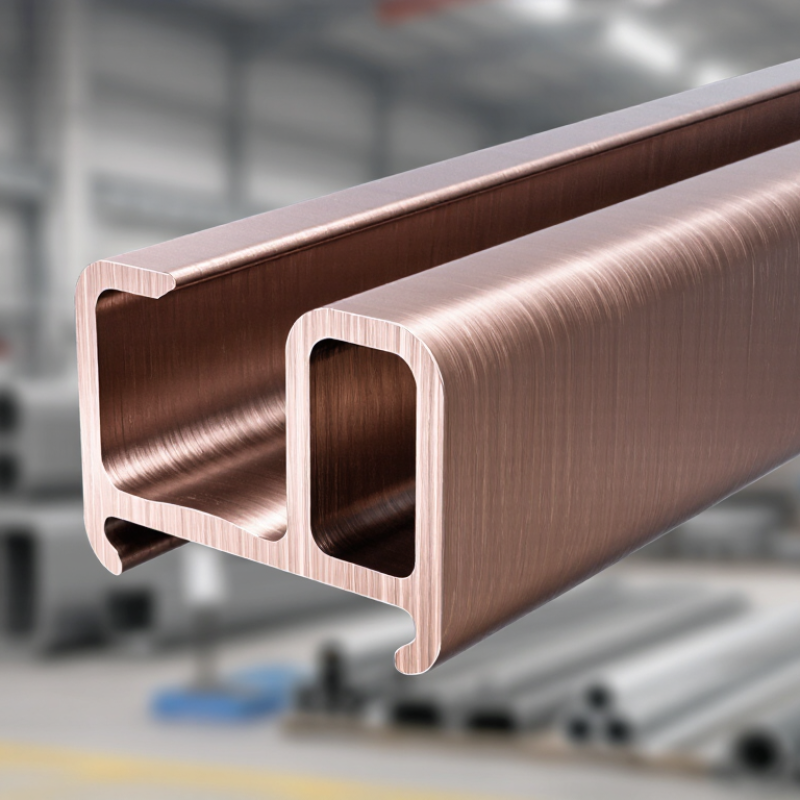
| Bronze | Ranges from light bronze to dark brown, depending on the process and color specification. | Often produced through electrolytic coloring after anodizing; dye-based methods may also be used. | Provides a warm metallic appearance. Different shades may be specified, but matching across batches requires controlled processing. | Building facades, window systems, doors, and other architectural profiles. |
| Champagne | Light warm gold or pale bronze with a subtle metallic appearance. | Usually created with a light electrolytic color or a suitable dye, followed by sealing. | A softer alternative to darker bronze or black. The exact tone varies by supplier process and aluminum alloy. | Interior trim, architectural framing, furniture components, and decorative profiles. |
| Gold | Yellow-gold to bronze-gold; metallic character remains visible. | Commonly achieved by coloring the anodic layer with dyes or an electrolytic coloring process. | Creates a decorative colored finish while retaining the underlying anodized surface. Color and brightness depend on the process and substrate. | Decorative trim, display systems, furniture details, and selected architectural features. |
| Other Colors | May include red, blue, green, and other dyed shades; availability depends on the anodizing process. | Typically produced by dyeing the porous anodic layer before sealing. | Color choices and lightfastness vary. Some dyes are less suitable for prolonged outdoor exposure, so confirm the application requirements with the finisher. | Indoor fixtures, consumer products, signage components, and specialized design applications. |



 Close