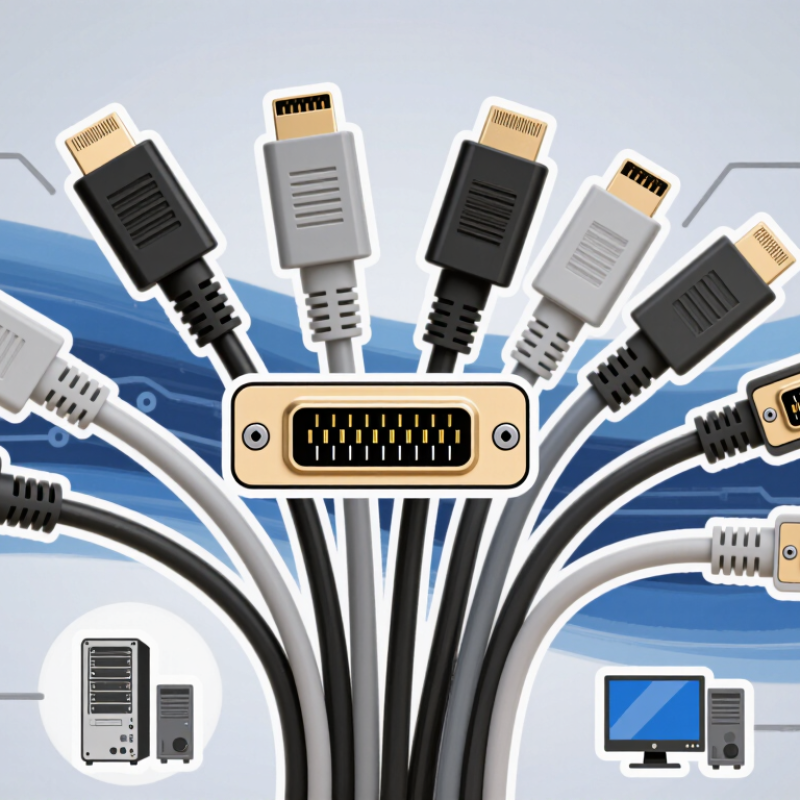
| 100-pin connector | Count the contacts and inspect the connector shape, keying, gender, and any part number. A 100-pin count by itself does not establish the connector family. | Uncommon or application-specific equipment; the exact use depends on the device and its documentation. | There is no generally applicable SCSI speed that can be inferred from “100-pin.” Do not assume it is a standard 100-pin SCSI interface without confirming the equipment specification. | Match the device documentation and connector drawing or part number. Confirm electrical signaling, cable pinout, supported bus mode, and termination requirements. |
| 50-pin narrow SCSI | Usually a 50-contact connector; external versions often have a broad Centronics-style shell or a compact high-density shell. | Older narrow SCSI devices, peripherals, and host adapters. | Commonly associated with narrow SCSI. SCSI-1 and SCSI-2 implementations vary; Fast SCSI can reach a theoretical maximum of 10 MB/s on a narrow bus. | Check the exact connector shell, pinout, cable length, and whether the bus requires active or passive termination. |
| 68-pin wide SCSI | 68 contacts, commonly in a high-density or very-high-density connector shell. The shell style helps identify the physical plug but does not determine the speed. | Wide SCSI host adapters, disk arrays, and other wide-bus devices. | Used across several generations, including Ultra, Ultra2, Ultra160, and Ultra320 implementations. Their theoretical maximum transfer rates range from 40 to 320 MB/s, depending on the SCSI generation. | Verify the generation supported at both ends, single-ended versus differential signaling, connector gender, and termination. A cable’s connector fit alone is not proof of electrical compatibility. |
| 80-pin SCA | An 80-contact single-connector interface, typically found on the rear of a hot-plug SCSI drive. It combines data and other drive connections in one connector. | Backplane-connected SCSI disk drives, often in server or storage enclosures. | SCA identifies a drive-connection arrangement, not one particular transfer speed. The supported SCSI generation depends on the drive and backplane. | Usually requires a compatible backplane or a purpose-built adapter. Confirm SCA variant, drive interface, and enclosure compatibility; it is not a direct substitute for a 100-pin cable. |
| 50-pin to 68-pin adapter or cable | Different connector counts at the two ends indicate a physical conversion, but not necessarily a compatible electrical or bus configuration. | Connecting some narrow devices to a wide SCSI bus. | A narrow device remains limited to its supported narrow SCSI mode. The adapter does not increase the device’s transfer rate. | Check pin mapping, signal type, termination, and whether the host adapter supports the connected narrow device. |



 Close