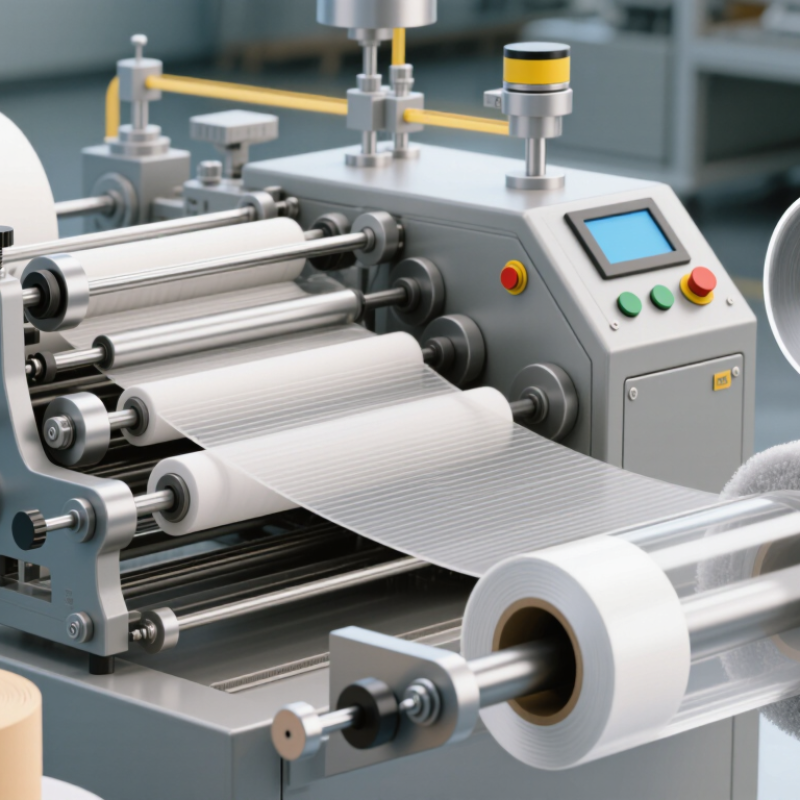
| Slot-die coater | Feeds adhesive through a precision die onto a moving web or surface. | Continuous coating where controlled, repeatable application and efficient material use are priorities. | Metered delivery can support uniform coatings; the enclosed feed path can reduce exposure to air and help limit material loss. | Requires suitable adhesive flow properties, careful die setup, and control of web speed, tension, and coating conditions. |
| Knife-over-roll coater | A blade sets the adhesive layer as material passes over a supporting roll. | Flexible production runs that use different substrates or require adjustable coating thickness. | Relatively straightforward to adjust and can handle a range of coating formulations and layer thicknesses. | Coating uniformity depends on blade condition, gap setting, substrate flatness, and process stability. |
| Comma-roll coater | A precision roll meters adhesive against a moving substrate. | Continuous coating of films, papers, and other flexible materials when a smooth, consistent layer is needed. | Offers controllable metering and is suited to production lines designed for roll-to-roll processing. | Roll alignment, surface condition, adhesive rheology, and web handling all affect the final coating. |
| Gravure coater | An engraved roll picks up adhesive from a reservoir and transfers it to the substrate. | High-volume runs requiring repeatable, relatively thin applications, such as laminating or tape-related processes. | Engraved cells provide a defined transfer pattern and support consistent output in a well-controlled process. | Roll engraving must match the application; cleaning and viscosity control are important, particularly when changing formulations. |
| Roll coater for hot-melt adhesive | Applies heated, molten adhesive through a roll-based coating arrangement. | Processes using hot-melt adhesives where rapid bonding and avoidance of solvent-based drying are priorities. | Can apply hot melt without a solvent-evaporation drying stage; cooling is generally part of the process. | Needs temperature-controlled adhesive delivery and equipment designed for hot materials. Adhesive open time and cooling conditions affect bonding. |
| Spray coater | Atomizes adhesive and deposits it onto a surface through one or more spray heads. | Complex shapes, localized application, or surfaces that are difficult to coat with a roll or blade. | Can reach contours and selected areas without requiring a flat, continuous web. | Overspray, ventilation, masking, and transfer efficiency need attention. Nozzle selection and maintenance influence application consistency. |



 Close