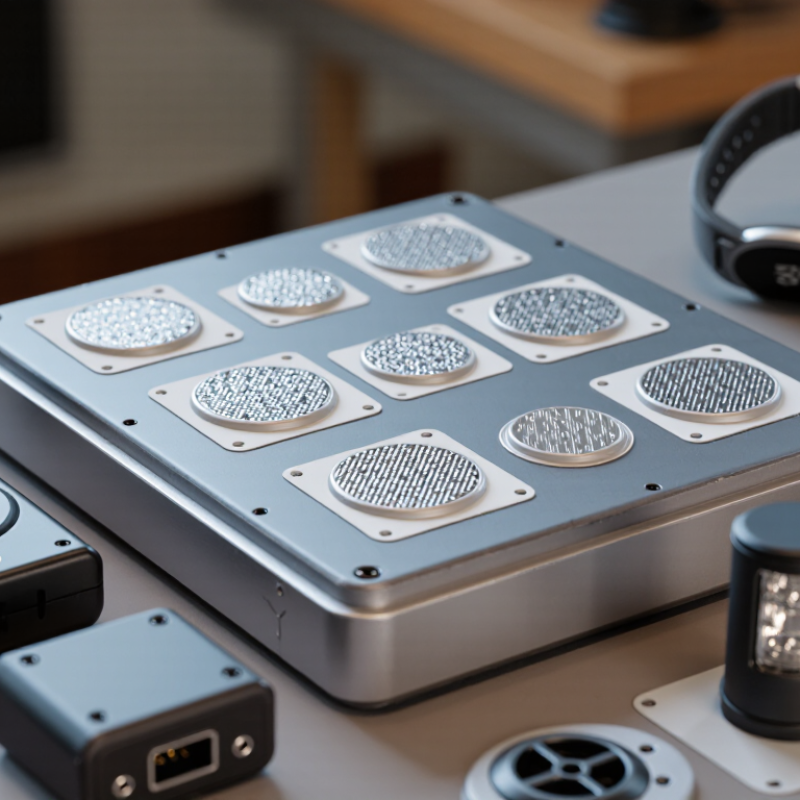
| General-purpose hydrophobic adhesive vent | Microporous, water-repellent membrane with a pressure-sensitive adhesive perimeter. | Allows air and pressure equalization while helping resist liquid-water entry when correctly installed. | Outdoor electronics enclosures, sensor housings, and sealed lighting assemblies. | Check membrane compatibility, adhesive bond to the enclosure surface, vent location, and exposure to dust, water, and temperature. | Review airflow and water-entry test data for the specific part and test conditions; evaluate the finished enclosure. |
| Oleophobic adhesive vent | Water-repellent membrane treated or selected to resist wetting by oils and other low-surface-tension liquids. | Provides pressure equalization with added resistance to certain oils or chemical splashes. | Equipment exposed to lubricants, oily handling, or selected industrial contaminants. | “Oleophobic” does not mean resistant to every oil or chemical. Confirm compatibility with the actual fluid, concentration, temperature, and exposure duration. | Request fluid-specific compatibility and ingress test results; test the adhesive and membrane together. |
| High-airflow adhesive vent | Large-area or low-resistance vent construction using a permeable membrane and adhesive mounting layer. | Supports faster pressure equalization where enclosure pressure changes rapidly. | Enclosures subject to fast temperature changes, altitude changes, or frequent pressure cycling. | Compare airflow at the same pressure differential and test method. A larger airflow rating alone does not establish water protection. | Check airflow-versus-pressure data and water-entry performance for the exact vent size and mounting arrangement. |
| Low-profile adhesive vent | Thin vent element designed for limited mounting depth, typically with an adhesive attachment area. | Provides a compact route for pressure equalization without a protruding threaded fitting. | Compact handheld devices, slim control units, and space-constrained housings. | Confirm available bonding area, surface flatness, installation clearance, and resistance to handling or abrasion. | Verify dimensions and adhesive-bond performance on the production enclosure material. |
| High-temperature adhesive vent | Vent membrane, carrier, and adhesive selected for a specified elevated-temperature operating range. | Maintains vent attachment and function in applications with higher thermal exposure. | Industrial equipment, vehicle electronics, and enclosures near warm components. | Temperature limits depend on the full construction, especially the adhesive. Consider temperature cycling, humidity, and long-term aging. | Review continuous and intermittent temperature limits, aging data, and bond testing under the intended conditions. |
| Acoustic-transmitting adhesive vent | Acoustically permeable membrane supplied with an adhesive perimeter for mounting over an enclosure opening. | Allows sound to pass while helping protect an opening from environmental contaminants. | Devices with microphones, speakers, alarms, or acoustic sensors. | Balance acoustic transmission with environmental protection. Performance can vary with frequency, opening design, and membrane placement. | Check frequency-dependent acoustic data and ingress results on the assembled device. |
| Adhesive vent patch or die-cut vent | Membrane supplied as a shaped patch, often with a liner for handling and application. | Provides a ready-to-apply vent format for a defined enclosure opening or surface. | High-volume assembly lines and products with non-standard opening shapes. | Specify patch geometry, alignment features, adhesive coverage, liner handling, and application pressure. | Validate placement repeatability, adhesion, and enclosure performance after the production assembly process. |



 Close