Our company only collects the necessary data and respects your privacy, in accordance with the General Law for the Protection of Personal Data 13.709/2018. By continuing, you confirm that you have read and accepted the Privacy Notice. Privacy Policy.

Medal Pt Br Medal Es

Medal Group

10 Best Aftermarket RC Parts to Upgrade Your RC Car

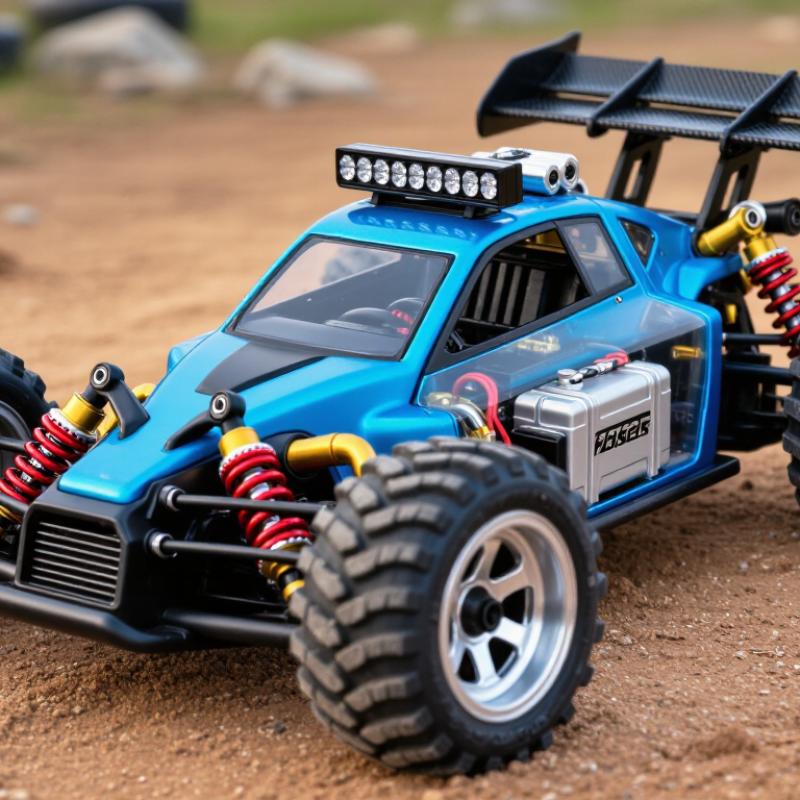
Upgrading an RC car can make it more capable, durable, or simply more enjoyable to drive. The best changes depend on how and where you use it. A car that runs across packed dirt may need different tires from one driven on smooth pavement. Aftermarket Rc Parts can improve handling, power delivery, suspension response, and appearance, but compatibility matters just as much as the advertised performance.

A stronger motor may sound appealing, yet it can add heat and strain the battery or drivetrain. Better shocks can help keep the tires planted, though their setup still needs adjustment for your vehicle and terrain. Small details count. Check part dimensions, connector types, voltage ratings, and manufacturer guidance before buying. Fit matters. A poorly matched component can waste money or make a car harder to control.

This guide explores ten popular upgrade categories, from tires and suspension components to batteries, motors, and body accessories. For each, consider the driving benefit, installation effort, and possible trade-offs. Some upgrades are easy to notice; others make a modest difference that depends on your setup. That part is easy to overlook. Change one component at a time, inspect the car after installation, and test it at a manageable speed. Your experience may differ from another driver’s, especially across different models and surfaces. The aim is not to build the most expensive RC car, but to choose parts that suit the way you actually drive.

10 Best Aftermarket RC Parts to Upgrade Your RC Car

Choose 10 Upgrades by Scale, Chassis Fit, and Manufacturer Ratings

Choosing aftermarket RC parts starts with scale, not popularity. A 1:10 shock may look close to a 1:12 unit, yet mounting holes and travel can differ. Check your chassis manual for dimensions, wheelbase, mounting points, and battery space. Then compare each part’s stated fitment and operating limits. For motors, match voltage and current ratings to your electronic speed controller. For tires, check wheel diameter and hex size. A higher rating alone does not guarantee better performance.

Circana reported that U.S. toy sales reached $28.3 billion in 2023, down 8% from 2022. That broad market report does not rank RC upgrades, so treat it as context—not a parts-buying guide. Manufacturer specifications are more useful for fit and limits, but they may not show how a part behaves on your terrain. A stiffer suspension can feel precise on smooth pavement and harsh on loose gravel. I’d be cautious about assuming “more powerful” always means more suitable.

Tips: Measure twice. Compare the part’s scale, chassis fit, and manufacturer-rated limits before ordering. Check fastener locations and clearance around moving parts. Keep one stock component as a reference; it helps when a listing’s fit description is vague.

10 Best Aftermarket RC Parts to Upgrade Your RC Car

Upgrade Typical scale Chassis fit to check Practical benefit Key specification to match Selection rating
Brushless motor and ESC 1/10, 1/8 Motor-mount pattern, available space, and drivetrain load capacity Can increase acceleration, speed, and motor efficiency when correctly matched Motor size and KV, ESC current rating, battery voltage, and connector type ★★★★★ (5/5)
LiPo battery pack 1/10, 1/8, 1/16 Battery tray length, width, height, and strap position Provides a rechargeable power source with a high power-to-weight ratio Cell count and voltage, capacity, discharge rating, plug, and physical dimensions ★★★★★ (5/5)
High-torque steering servo 1/10, 1/8 Servo dimensions, mounting ears, spline count, and steering-link geometry Improves steering force and can help maintain control with larger tires Torque, speed, operating voltage, case size, and servo-horn compatibility ★★★★☆ (4/5)
Replacement tires and wheels 1/10, 1/8, 1/16 Wheel hex size, offset, body clearance, and intended vehicle type Changes grip and handling to suit surfaces such as dirt, pavement, or grass Wheel diameter, tire compound or tread, inner diameter, and hex measurement ★★★★★ (5/5)
Oil-filled shock absorbers 1/10, 1/8 Shock length, mounting-hole size, and upper and lower attachment points Helps control suspension movement and maintain tire contact over uneven ground Extended and compressed length, spring rate, and shock-oil viscosity ★★★★☆ (4/5)
Sealed ball-bearing set 1/10, 1/8, 1/16 Wheel, transmission, and differential bearing locations Reduces friction compared with worn or contaminated plain bushings Exact inner diameter, outer diameter, and width for each bearing position ★★★★☆ (4/5)
Metal driveshafts or universal joints 1/10, 1/8 Axle length, joint type, pin diameter, and hub or differential connection Can improve durability under higher loads when the original shafts are a weak point Overall length, joint style, material, and compatibility with the existing drivetrain ★★★☆☆ (3/5)
Upgraded differential gears 1/10, 1/8 Differential case, gear mesh, tooth count, and front or rear position Can strengthen a drivetrain or change power distribution when the gear set is correctly selected Gear type, tooth count, pitch or module, and differential-case fit ★★★☆☆ (3/5)
Aluminum shock towers 1/10, 1/8 Chassis mounting holes, shock positions, and body clearance Offers a rigid replacement for a damaged or flex-prone tower Vehicle-specific hole pattern, thickness, and front or rear fitment ★★★☆☆ (3/5)
Motor cooling fan 1/10, 1/8 Motor diameter, fan-mount space, and airflow clearance Improves airflow over the motor; cooling effectiveness depends on setup and conditions Fan dimensions, voltage range, mounting style, and connector ★★★☆☆ (3/5)

Fitment varies by vehicle and part. Confirm measurements and compatibility against the specific product listing before ordering. Ratings shown are editorial selection scores, not manufacturer ratings; manufacturer ratings differ by product and are not standardized across brands.

Power Upgrades: LiPo (2S = 7.4 V; 3S = 11.1 V), Motor, ESC, Gearing

A LiPo battery can make an RC car feel much quicker, but voltage must match the electronics. A 2S pack is 7.4 V nominal; a 3S pack is 11.1 V. Check the motor and ESC limits before switching. More voltage can raise motor speed and heat, especially on long runs. Start with a fully charged, correctly rated pack, then check temperatures after a short drive. Warm is expected. Too hot to touch is a warning.

The ESC must support the battery’s cell count and the motor’s current demand. A higher-current ESC may help, but it cannot protect an unsuitable motor or gearing. Gearing matters. A larger pinion can increase speed, yet it also loads the motor; a smaller pinion often improves acceleration and reduces heat. Make one change at a time. That takes longer, but it shows what actually helped. I would not chase top speed after one quick test; a cool-running car is usually more dependable. Track runtime, surface, and temperature, since grass and loose dirt can strain the drivetrain more than smooth pavement. Recheck connectors and battery straps, too. Small details matter.

Control and Suspension: Servo Torque (kg·cm), Shocks, Springs, Shock Oil (cSt)

A steering servo should match the car’s tires, weight, and steering load, not just its speed rating. Its torque is often listed in kg·cm, measured at a stated voltage. Check that voltage before comparing figures; a higher number at one voltage may not apply to your setup. If the wheels hesitate on carpet or with larger tires, more torque can help. Too much servo can still strain linkages or drain the battery faster. Small adjustments matter.

Shocks control how quickly the suspension moves. Shock oil viscosity, listed in cSt, affects damping: thicker oil generally slows compression and rebound, while thinner oil allows quicker movement. Spring rate supports the vehicle and shapes how much it settles; preload changes ride height, but does not change the spring’s rate. On a bumpy track, overly thick oil may make the car skip instead of absorb impacts. That feels wrong.

Change one setting at a time. Start with the same oil in all four shocks, then test over a familiar stretch of bumps. Note whether the chassis bottoms out, bounces after landing, or leans too much in turns. Adjust spring rate or preload for stance and support; adjust oil when suspension movement feels too fast or slow. Record the temperature and surface, since both affect handling. A setup that works on smooth pavement may disappoint on loose dirt. And sometimes the “better” setup is simply the one you can drive consistently.

Traction and Drivetrain: Tires, Wheels, Bearings, Driveshafts, Differentials

Tires are the first upgrade to consider when your RC car spins its wheels or slides through corners. Match the tread to the surface: shallow pins suit hard-packed dirt, while wider, deeper lugs can bite into loose soil. On dusty pavement, an overly aggressive tread may feel less predictable. Start with one tire change, then compare handling on the same short course. It is easy to blame the tires when worn suspension parts are the real problem.

Wheels should fit the car’s hub, axle, and body clearance. Check for rubbing by turning the wheels fully and compressing the suspension by hand. Smooth bearings reduce drag, but dirt and moisture can shorten their life. Clean and inspect them regularly; a gritty bearing may need replacement, not extra oil. Small details matter. Driveshafts also deserve attention. If acceleration produces clicking or visible wobble, inspect the joints and confirm that replacement shafts match the original length and connection points.

A differential helps balance power between wheels, especially through turns. A tighter setup can improve drive on loose ground, while a freer one may feel smoother on firm surfaces. Change one setting at a time and note the result. I would not chase maximum grip everywhere; a setup that works on carpet may behave poorly on gravel. Record tire type, surface, and adjustments after each run. Sometimes the “upgrade” makes the car slower, and that is useful information.

10 Best Aftermarket RC Parts to Upgrade Your RC Car — Traction and Drivetrain

Typical RC Tire Size Ranges

These approximate diameter and width ranges show common tire sizes used on several RC vehicle classes. Check wheel compatibility, body clearance, and suspension clearance before choosing a tire; exact fitment varies by model and setup.

Protection and Setup: Chassis, Bumpers, Cooling Fans, Current and Temperature Checks

A tougher chassis and well-fitted bumpers can protect an RC car from routine impacts, but added weight may change how it handles. Choose a chassis plate that matches the car’s mounting points, then check that screws sit flush and do not rub against wiring. A front bumper should absorb light knocks without blocking steering or airflow. Small details matter. After a few runs, inspect the plate for bends and the bumper for loosened fasteners. Protection is useful, but it cannot make every crash harmless.

Cooling fans help move air across the motor or electronic speed controller, especially during slow, demanding runs. Confirm the fan’s voltage rating and connector before installation, and keep wires clear of gears and suspension arms. After a short test run, check motor and controller temperatures with an infrared thermometer; compare readings under similar conditions rather than relying on a single number. An inline current meter can reveal unexpected power draw, though its readings depend on where and how it is connected. I have found that a fan can sound reassuring while airflow is poorly directed. That is easy to miss. Recheck temperatures, current, and fasteners after changing gearing or adding heavier parts, and record the results in a simple run log.