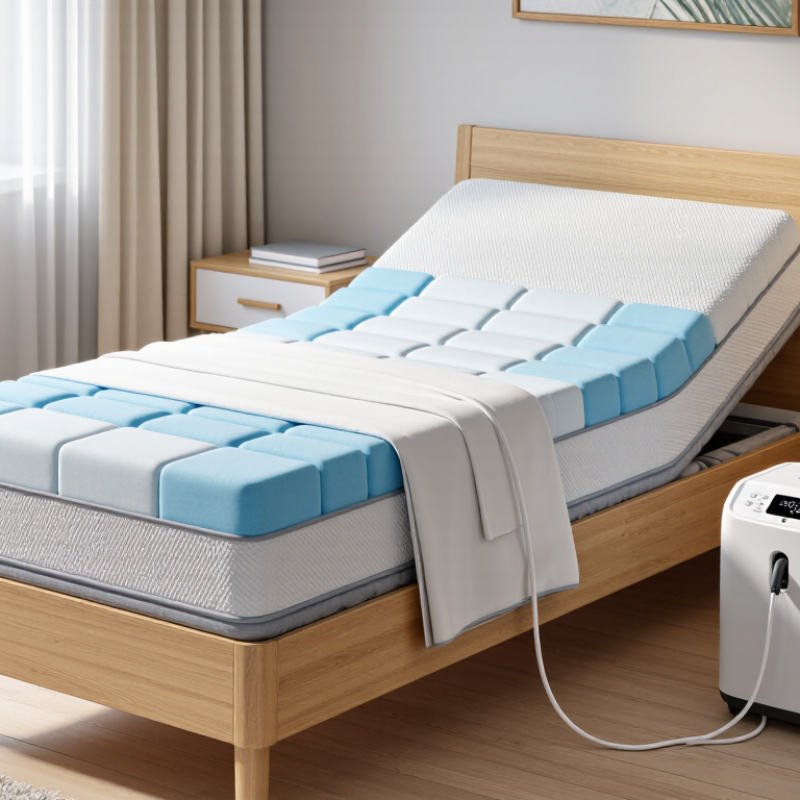
| 01 | Full replacement alternating-pressure mattress | An air-cell mattress replaces the usual mattress. A pump alternately inflates and deflates groups of cells to redistribute supporting pressure. | People at elevated pressure-injury risk who spend extended periods in bed, when selected as part of a care plan. | Bed-frame compatibility, patient weight limits, cell layout, setup instructions, and alarm functions. | Designed as a complete mattress system; confirm whether a separate base mattress is required. |
| 02 | Alternating-pressure overlay | A powered air-cell layer sits on top of a compatible mattress and cycles pressure between cell groups. | Situations where an overlay is appropriate and the existing mattress and bed remain suitable. | Overlay dimensions, attachment method, stability, height added to the bed, and compatibility with the underlying surface. | An overlay does not automatically make an unsuitable or damaged mattress safe to use. |
| 03 | Alternating pressure with low-air-loss function | Alternating cells redistribute pressure; airflow through or around the mattress surface may help manage heat and moisture. | People whose care assessment identifies both pressure redistribution and support for skin microclimate management. | How airflow is delivered, cover breathability, moisture-management instructions, and cleaning requirements. | Low-air-loss features do not replace regular skin checks or moisture and continence care. |
| 04 | Alternating system with a removable, breathable cover | The pump cycles air cells beneath a fitted cover; the cover is intended to protect the mattress while allowing appropriate airflow. | Care settings where routine cleaning and cover handling are important. | Whether the cover is removable, approved cleaning methods, seam placement, and replacement guidance. | Use only covers and laundering methods approved for the specific mattress system. |
| 05 | Wide or bariatric alternating-pressure system | A wider mattress system uses alternating air cells to redistribute pressure across its supported surface. | People who need a wider sleeping surface or a higher load capacity than a standard system provides. | Rated weight capacity, usable width, bed-frame capacity, transfer space, and caregiver access. | Confirm the capacity of the mattress, bed frame, and related equipment as a complete setup. |
| 06 | Alternating system with selectable cycle settings | The pump changes which cell groups are inflated over a repeating cycle; some systems offer more than one cycle setting. | Care teams that need settings adjusted under the guidance of a qualified clinician. | Available settings, default setting, control clarity, and instructions for changing settings safely. | There is no single cycle setting that is suitable for everyone; follow the device instructions and care plan. |
| 07 | Alternating system with adjustable pressure controls | Pump output is adjusted to support the person while the system continues its alternating inflation pattern. | Situations where the support level needs to be tailored to the person and mattress design. | Adjustment range, weight guidance, comfort checks, and whether changes should be made by trained staff. | Too little or too much support can affect comfort and positioning; use the manufacturer’s guidance. |
| 08 | Alternating system with heel-focused pressure relief | The mattress may include cell design or positioning features intended to reduce pressure around the heel area while the system cycles. | People whose individual assessment identifies the heels as an area needing particular attention. | Whether the heels are actually suspended or merely supported, positioning instructions, and skin-monitoring needs. | A mattress feature is not a substitute for clinician-directed heel offloading when that is required. |
| 09 | Alternating system with a static or nursing mode | Some pumps allow the alternating cycle to pause or provide a more stable surface temporarily for care tasks. | Care routines that require a stable surface for repositioning or other bed-based tasks. | How the mode is activated, its time limit, alarm behavior, and how to return to alternating operation. | Check that the system is returned to the prescribed operating mode after care tasks. |
| 10 | Alternating system with power-failure alarm or backup provision | The mattress relies on a powered pump to inflate and cycle its cells; some systems include alarms or a specified backup procedure. | Environments where staff need clear notification and instructions if power or pump operation is interrupted. | Alarm type, battery availability if applicable, backup duration if specified, and emergency instructions. | Do not assume a battery backup is included; verify the exact system’s documentation. |



 Close