| Dedicated transfer line | Stable, standardized parts such as automotive components, fittings, and appliance parts | High, steady demand for a limited product range | Low; tooling and station setup are optimized for specific parts | Consistent cycle times, repeatable quality, and efficient production at scale | High initial investment; product changes can require substantial retooling | Maximize output and unit-cost efficiency for long product runs |
| Modular assembly line | Consumer goods, electrical products, and assemblies with common process steps | Medium to high, especially when demand is predictable | Medium to high; stations can be rearranged or expanded as needs change | Supports phased investment and makes capacity adjustments easier | Rebalancing stations and coordinating modules require careful process planning | Increase capacity while retaining room for product or process updates |
| Flexible manufacturing system | Machined components and product families that share equipment but require different routings | Medium to high across a mix of products | High when products, fixtures, and programs are designed for quick changeovers | Can switch between product variants with less manual intervention than a dedicated line | Software, integration, and system planning add complexity; utilization must justify the investment | Handle product variety without giving up automated production |
| Robotic cell or robot-based line | Pick-and-place, machine tending, welding, palletizing, and repetitive assembly tasks | Low to high, depending on cycle time, number of robots, and material flow | Medium; reprogramming and end-of-arm tooling may be needed for new tasks | Automates repetitive or ergonomically demanding work and can be configured for different tasks | Requires safety measures, programming, and reliable part presentation | Improve labor productivity, consistency, or worker safety at key operations |
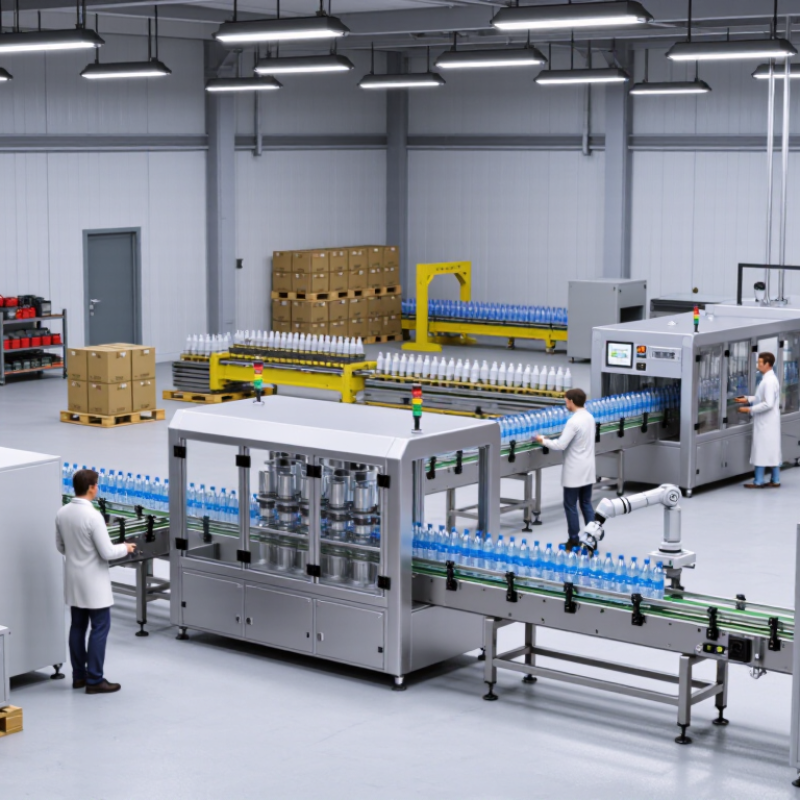
| Automated packaging line | Food, beverages, personal-care products, and other goods requiring filling, sealing, labeling, or case packing | Medium to high when product and package formats are standardized | Low to medium; format parts and settings may need to change between package sizes | Connects packaging steps and helps maintain consistent package handling and presentation | Container, closure, and label variation can affect speed and require change parts | Reduce packaging bottlenecks and keep pace with upstream production |
| Automated batch or process line | Liquids, powders, chemicals, and food products made through mixing, heating, dosing, or other process steps | Batch-based; capacity depends on vessel size, process time, and cleaning requirements | Medium; recipes can vary, but cleaning and product-contact requirements matter | Improves repeatability in recipe execution, process control, and material handling | Cleaning, validation, and changeover time can limit available production time | Improve batch consistency, traceability, and process control |
| Hybrid line with manual and automated stations | Products with a mix of repetitive tasks and steps requiring inspection, judgment, or delicate handling | Low to medium, or variable demand that does not justify full automation | High; staffing and work allocation can often be adjusted by station | Allows targeted automation without requiring every operation to be automated | Output may depend on staffing, line balancing, and consistent work methods | Automate the highest-value tasks while preserving operational flexibility |



 Close