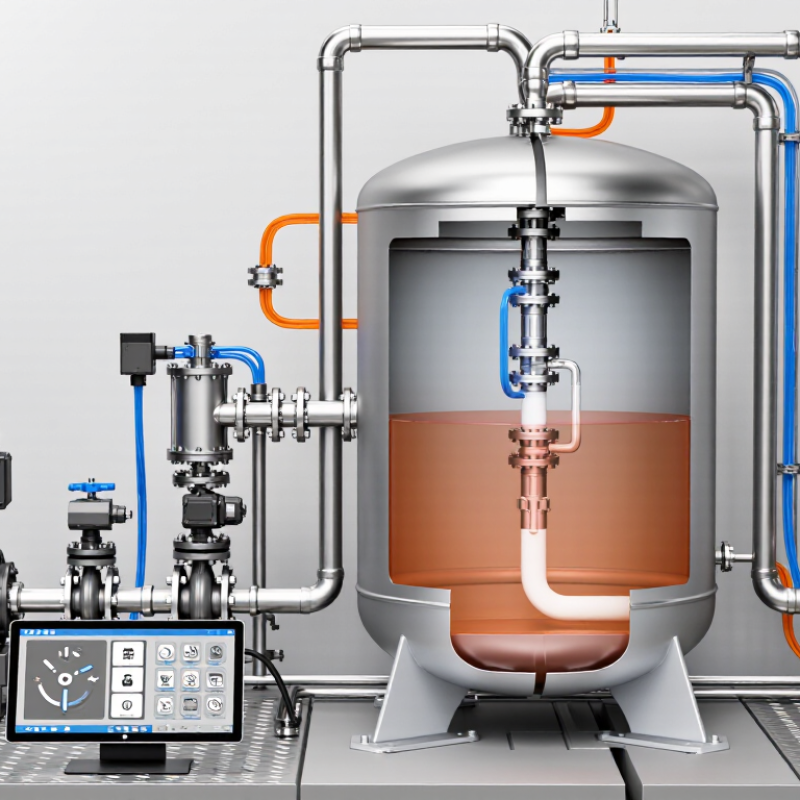
| Batch measurement: load cells | Load cells under a vessel measure weight. The controller stops filling when the measured mass reaches the target, with allowance for material that continues flowing after shutoff. | Recipe-based batching, changing liquid densities, and applications where the target is specified by mass. | Check vessel support design, vibration, pipe forces, temperature effects, calibration access, and the required weighing range. | Mechanical forces and vibration can affect readings; installation and calibration quality matter. |
| Batch measurement: flow meter | The meter measures flow in the filling line, and the controller totals the measured flow until the preset volume or mass is reached. A shutoff valve or pump then stops delivery. | Repeatable transfers through a fixed pipework route, especially where the product and flow conditions are well defined. | Match meter technology to fluid conductivity, viscosity, temperature, pressure, flow range, and required hygienic or hazardous-area rating. | Meter performance depends on correct sizing, installation, product properties, and calibration. |
| Tank level measurement | A continuous level instrument measures the liquid surface or hydrostatic head. The control system uses the level signal to manage filling and prevent overfill. | Storage tanks, replenishment control, and processes where tank level—not a precisely measured batch quantity—is the primary control variable. | Consider foam, vapor, turbulence, tank geometry, density, sensor mounting, and whether contact with the liquid is acceptable. | Level alone does not directly measure transferred mass; tank shape and product conditions can affect interpretation. |
| Independent high-level protection | A separate high-level switch or approved overfill protection device detects a high level and initiates an independent alarm or shutdown action. | Recommended wherever an overfill could cause a spill, equipment damage, environmental release, or personnel hazard. | Determine the required safety function through a site risk assessment; verify device suitability, testing, and shutdown response. | A protective switch is not a substitute for correct operating controls, inspection, and proof testing. |
| Control system: PLC and HMI | A programmable logic controller reads instruments, runs the filling sequence, checks permissives, and commands pumps and valves. The human-machine interface displays status, alarms, and authorized settings. | Automated single-tank or multi-tank systems requiring repeatable sequences, alarm handling, and operator visibility. | Define I/O, communications, recipe controls, alarm behavior, access permissions, event records, and integration needs. | Control logic cannot compensate for unsuitable instruments or poorly defined operating procedures. |
| Final control element: valve or pump | A controller starts or stops a pump, actuates a valve, or adjusts a control valve to regulate flow. A fast-fill/slow-fill sequence can reduce overshoot in batch filling. | All automated filling systems; the choice depends on the source, required flow, fluid properties, and process layout. | Check wetted-material compatibility, pressure and flow ratings, leakage requirements, actuator type, and safe response on power loss. | Shutoff delay and liquid remaining in the line can cause overshoot unless accounted for. |
| Interlocks and permissives | Logic permits filling only when required conditions are satisfied, such as a valid destination, available capacity, and acceptable equipment status. Faults trigger a defined stop or alarm response. | Systems with multiple tanks, shared transfer lines, hazardous products, or a need to prevent incorrect routing. | Document each permissive, alarm, reset condition, and failure response; validate the sequence during commissioning. | Excessive or unclear interlocks can make operation confusing and encourage workarounds. |
| Recommended solution by application | For mass-based batches, use load-cell weighing with PLC control and independent overfill protection. For controlled in-line transfers, use a properly selected flow meter with totalizing control and independent overfill protection. Use level control for tank replenishment where a precise batch quantity is not the main requirement. | Choose according to whether the process needs mass batching, measured transfer, or inventory-level control. | Confirm the target quantity, fluid properties, required repeatability, process hazards, cleaning needs, and applicable local requirements before selecting equipment. | There is no single best arrangement for every tank; performance depends on the application, installation, calibration, and maintenance. |



 Close