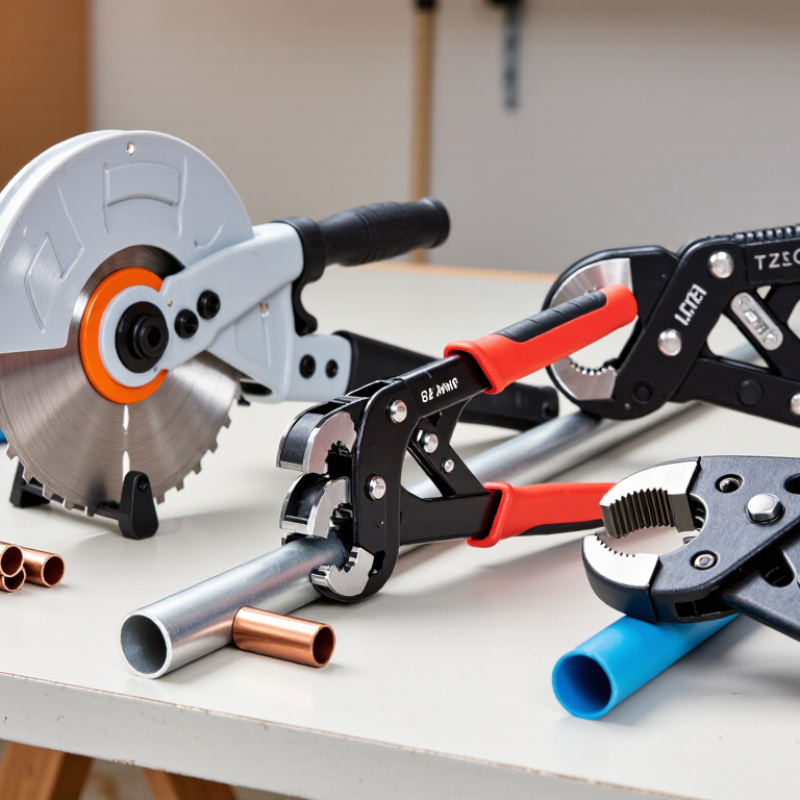
| Rotary wheel pipe cutter | Copper, aluminum, and compatible plastic or steel tubing, depending on the cutter and wheel | High when the wheel is sharp, aligned, and advanced gradually; a small internal or external lip may remain | Can produce a straight, controlled cut with little material distortion | Requires multiple turns and the correct wheel for the material; excessive tightening can deform thin-wall tubing | Clean, precise cuts on accessible tubing where a smooth edge matters |
| Ratcheting Plastic Pipe Cutter | Commonly used for compatible plastic pipe, such as PVC, CPVC, or PEX; check the tool’s specifications | High on suitable pipe when the blade is sharp and the pipe is supported; may leave a lip or slight deformation | Fast, portable, and easy to use without rotating the tool around the pipe | Not intended for metal pipe; results can worsen with a dull blade or pipe that is not held square | Quick cuts on compatible plastic pipe in confined spaces |
| Heavy-duty ratcheting cutter | Selected larger or thicker-walled plastic pipe, within the tool’s rated capacity | Good when the pipe is secured and the blade is maintained; a finishing check may still be needed | Leverage reduces hand effort and supports repeatable cuts | Capacity and compatible materials vary by model; can compress or crack pipe if misused | Repeated cuts on larger compatible plastic pipe |
| Hacksaw or powered saw | Many metal and plastic pipe types with an appropriate blade | Variable; commonly leaves saw marks and burrs that need finishing | Versatile and useful for larger diameters or materials that a rotary cutter cannot handle | Cut squareness depends on setup and technique; usually requires deburring and edge cleanup | Large pipe, restricted tool access, or materials outside a cutter’s rating |
| Thin-wall tubing cutter | Thin-wall metal tubing, when the cutter wheel is specified for that material | High with light, even wheel pressure; excessive pressure can cause a raised edge or deformation | Compact and capable of controlled cuts on small tubing | Not suitable for every pipe wall thickness or material; check capacity before use | Small-diameter tubing and precision work |
| Best all-around choice | Choose according to pipe material, outside diameter, and wall thickness | A sharp, correctly matched rotary cutter is a strong option for many metal tubing jobs; a purpose-made ratcheting cutter is often more appropriate for compatible plastic pipe | Matching the cutter to the pipe generally matters more than choosing a single universal design | No cutter type guarantees a completely burr-free edge in every material and application | Buy based on the pipe specification, available workspace, and the edge finish required |



 Close