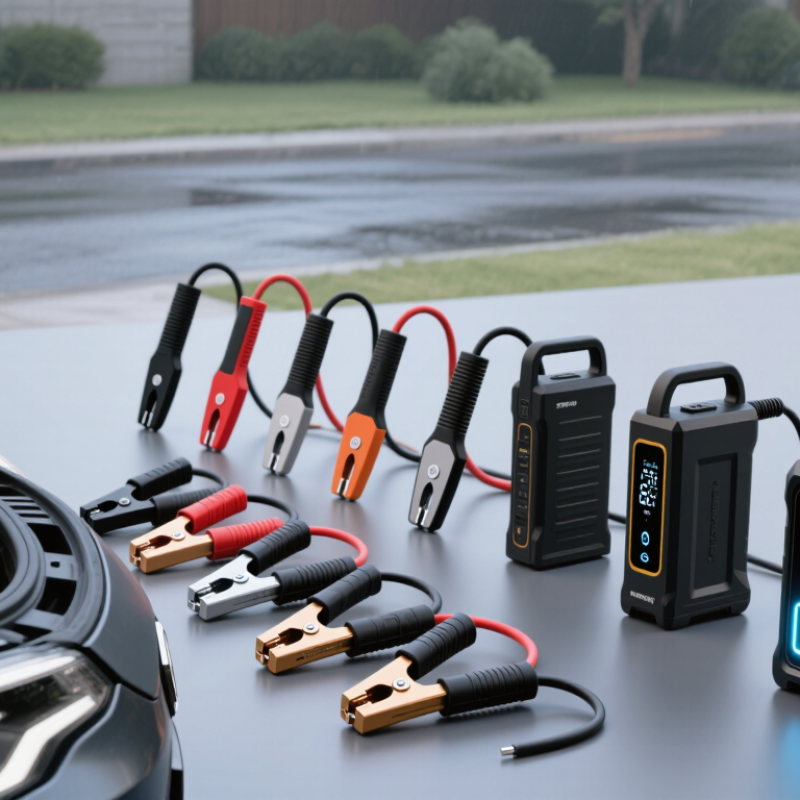
| 1. Compact lithium-ion pack | About 500–1,000 A | Small gasoline cars and occasional emergency use | Small, rechargeable pack; usually includes reverse-polarity and short-circuit protection | Light and easy to store in a glove box or small kit | Limited reserve and less suitable for large engines or repeated starts |
| 2. Everyday mid-capacity lithium pack | About 1,000–2,000 A | Most small and midsize gasoline vehicles; check the maker's engine-size guidance | Portable battery pack, clamp leads, and often USB charging ports | A practical balance of size, price, and starting capability | Advertised peak current alone does not guarantee performance in cold weather |
| 3. High-output lithium pack | About 2,000–3,000 A | Larger gasoline vehicles and some light-duty diesel applications, subject to the product rating | Higher-output cells, heavy-duty clamps, and electronic protection circuitry | More starting headroom while remaining portable | Typically costs more and may be bulkier than basic packs |
| 4. Heavy-duty lithium pack | About 3,000–5,000 A | Large engines when the specific unit is explicitly rated for them | Higher-capacity pack, robust leads, and commonly a status display or work light | Useful for demanding applications without a wheeled unit | Ratings and real-world results vary considerably; verify engine compatibility carefully |
| 5. Lithium pack with air compressor | Often about 1,000–2,000 A | Drivers who also want a portable tire inflator | Jump leads plus a 12 V compressor, hose, and pressure gauge or digital display | Combines two roadside tools in one unit | Heavier and more complex; compressor duty cycle and inflation speed matter |
| 6. Lithium pack with larger reserve capacity | Commonly about 1,000–2,500 A | Frequent travel, multiple devices, or more than one starting attempt between charges | Often around 15,000–25,000 mAh as stated by the manufacturer; may include USB outputs | More stored energy for accessories and repeated use | Capacity figures may use different cell-voltage conventions and are not directly comparable |
| 7. Ultracapacitor jump starter | Varies by design; compare the maker's vehicle compatibility rating | Drivers who prefer a unit that can draw energy from a weak vehicle battery or an auxiliary source | Stores energy in capacitors rather than a conventional rechargeable lithium battery | Can recharge quickly when a suitable energy source is available | Usually has little stored energy for USB charging and may need a minimum input voltage |
| 8. Lead-acid portable booster | Often about 1,000–2,000 A, depending on rating method | Garages, workshops, or users who value a conventional, high-capacity battery design | Sealed lead-acid battery, heavy cables, and frequently a built-in voltmeter or work light | Robust format with substantial stored energy in many models | Much heavier than lithium alternatives and needs periodic charging |
| 9. Wheeled workshop booster | Commonly rated around 1,500–3,000 A; check cranking and peak ratings separately | Home garages and service bays where portability by hand is less important | Large battery, long cables, wheels, and often a mains charger | Long leads and a large reserve suit repeated workshop use | Bulky and inconvenient to keep in a passenger car |
| 10. Professional high-duty booster | Manufacturer-dependent; some units list ratings above 3,000 A | Commercial fleets and frequent service work, only when matched to the vehicle | Heavy-duty cables and clamps; may use a large lead-acid battery or a high-output lithium system | Designed for more demanding and frequent use than a basic emergency pack | Higher cost and weight; confirm duty cycle, charging requirements, and service support |



 Close