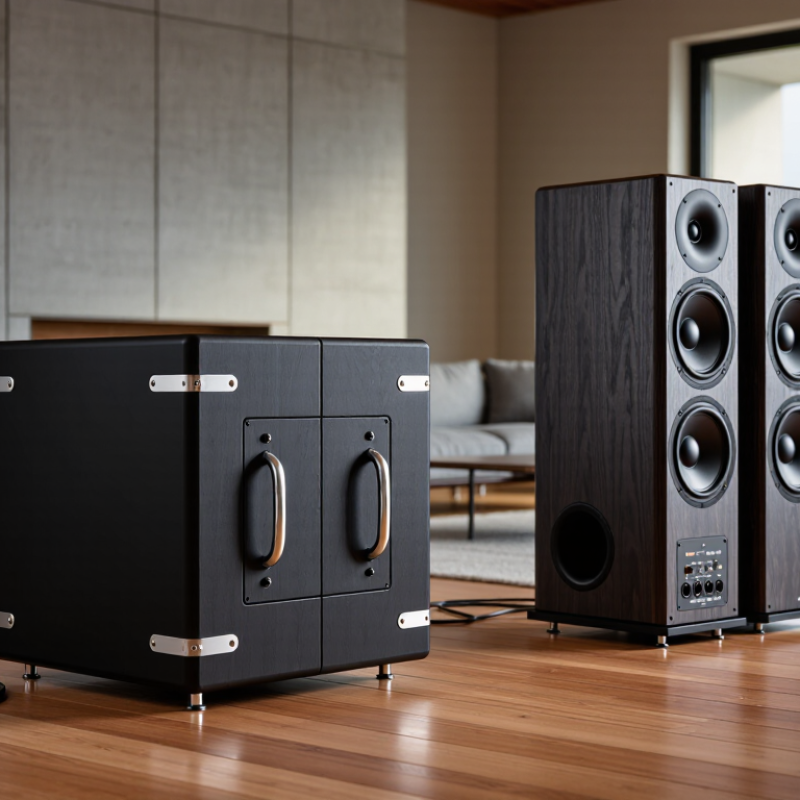
| Woofer Size and Configuration | Common professional configurations include 12-inch or 15-inch woofers, with larger systems using multiple drivers for higher output. | Driver size and quantity influence low-frequency extension, maximum sound pressure, and coverage requirements. | Confirm driver diameter, number of drivers, enclosure design, and whether the system is intended for portable, installed, or touring use. | High Priority |
| Frequency Response | A practical full-range system commonly targets approximately 45 Hz–18 kHz or wider, depending on cabinet size and design. | A wider and more controlled response helps reproduce bass, vocals, and high-frequency detail with fewer audible gaps. | Review frequency-response test conditions, tolerance limits, measurement distance, and whether the figure is quoted at a usable output level. | High Priority |
| Continuous and Peak Power | Continuous power should be considered more important than an inflated peak-power figure. The amplifier and driver ratings should be properly matched. | Continuous power is a more useful indicator of sustained performance and thermal reliability during events or extended operation. | Ask for RMS or continuous ratings, limiter settings, amplifier efficiency, and thermal-protection information. | High Priority |
| Maximum Sound Pressure Level | Professional portable systems often target approximately 125–135 dB peak SPL, depending on cabinet size, driver sensitivity, and measurement method. | Higher output capability provides more headroom and reduces audible distortion in large venues. | Check whether the SPL value is peak or continuous, the measurement distance, frequency weighting, and distortion limit used during testing. | High Priority |
| Amplifier and DSP Integration | High-quality active systems generally include matched amplification, electronic crossover protection, equalization, limiting, and overheating protection. | Proper DSP integration improves system balance, protects the drivers, and allows consistent performance at different volume levels. | Look for adjustable EQ, delay, crossover controls, presets, limiter behavior, and firmware-update support where applicable. | Essential |
| Cabinet Construction | Durable plywood or reinforced composite enclosures are commonly preferred for frequent transport and professional use. | A rigid, well-damped cabinet reduces unwanted resonance and withstands repeated handling better than a weak enclosure. | Inspect panel thickness, internal bracing, grille protection, corner reinforcement, handles, wheels, and fastener quality. | High Priority |
| Low-Frequency Extension and Control | A useful Woofer System should deliver strong bass without excessive boominess, rattling, port noise, or loss of clarity. | Controlled bass improves music reproduction and allows the system to work effectively with or without a separate subwoofer. | Test bass at low, medium, and high volume levels using familiar recordings with kick drum and bass-guitar content. | Essential |
| Distortion and Noise | Low harmonic distortion, minimal cabinet noise, and a quiet signal path are key indicators of a refined system. | Low distortion preserves vocal intelligibility and prevents listening fatigue, especially at high output levels. | Listen for buzzing, port chuffing, rattling, harshness, hiss, and sudden tonal changes when the limiter engages. | Essential |
| Connectivity | Useful professional connections may include balanced analog inputs, link outputs, Bluetooth for selected applications, and optional digital control. | Flexible connectivity simplifies integration with mixers, microphones, instruments, playback devices, and additional speakers. | Verify connector types, input sensitivity, signal-link options, wireless range, and compatibility with the intended mixer or controller. | Medium Priority |
| Coverage and Dispersion | Uniform horizontal and vertical dispersion is generally more valuable than maximum volume alone. | Even coverage helps listeners hear a consistent tonal balance across the venue and reduces the need for excessive volume. | Review the horn or waveguide design, stated dispersion pattern, cabinet angle options, and performance in the target room. | High Priority |
| Portability and Installation Features | Practical features may include ergonomic handles, pole-mount sockets, rigging points, monitor angles, and transport wheels. | Good physical design reduces setup time and supports safer transport and installation. | Check total weight, balance, handle placement, mounting points, load ratings, and whether accessories are included. | Medium Priority |
| Power Supply and Protection | A dependable power section should support stable operation with over-current, over-voltage, thermal, and short-circuit protection. | Protection circuits help prevent failures caused by demanding loads, unstable power, or prolonged high-volume operation. | Confirm input-voltage range, power-cable quality, protection functions, cooling design, and serviceability of the power module. | Essential |
| Manufacturing Consistency | Consistent component matching, assembly quality, and final testing are important when purchasing multiple units. | Pair-to-pair consistency makes system tuning easier and reduces differences in volume or tonal balance. | Request production inspection records, frequency-response matching procedures, burn-in practices, and serial-number traceability. | High Priority |
| Compliance and Safety Documentation | Products should be supplied with applicable electrical-safety, electromagnetic-compatibility, and material documentation for the target market. | Verified compliance supports safer operation, smoother customs clearance, and easier commercial deployment. | Check test reports, declarations, user manuals, warning labels, power specifications, and documentation validity for the destination country. | Essential |
| Warranty and After-Sales Support | A clear written warranty, replaceable components, technical documentation, and responsive service are important for commercial users. | Reliable support reduces downtime and makes long-term ownership more predictable. | Confirm warranty duration, covered parts, spare-driver availability, repair procedures, response times, and service responsibilities. | Essential |
| Total Cost of Ownership | The best-value system balances purchase price with durability, energy use, repairability, accessories, and expected service life. | A lower initial price may not represent better value if the system requires frequent repairs or early replacement. | Compare delivered cost, accessories, replacement parts, freight protection, power consumption, warranty coverage, and maintenance needs. | High Priority |



 Close