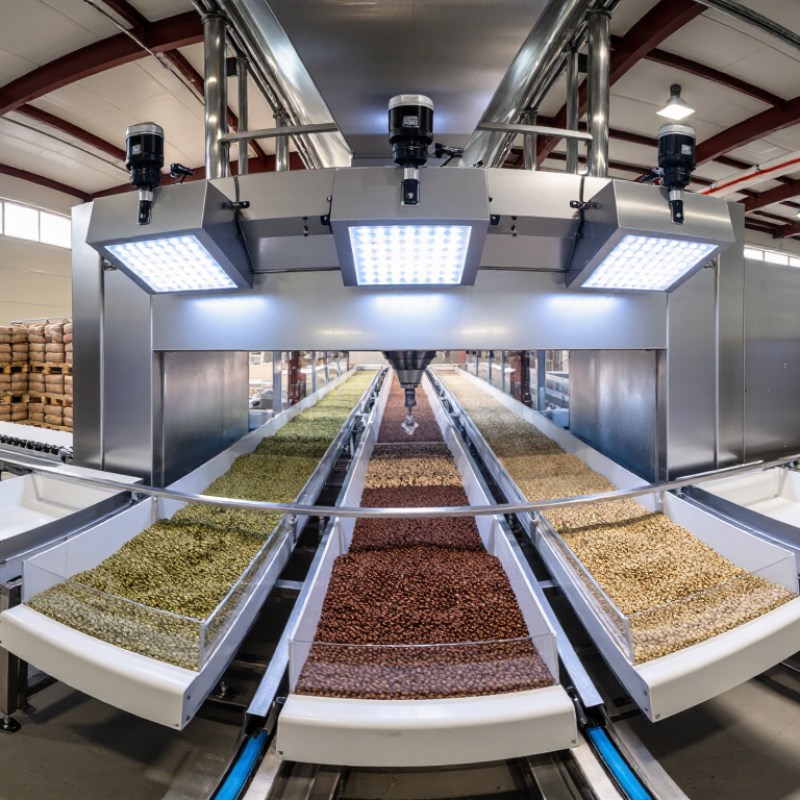
| Feed and presentation | Moves coffee beans into a controlled, single-layer stream so the inspection system can view individual beans. | Consistent feeding and adjustable settings for the bean size and product being sorted. | Uneven feeding or overlapping beans can reduce sorting accuracy. |
| Optical inspection | Uses cameras and controlled lighting to inspect visible color differences; some systems also assess shape or other optical characteristics. | Clear detection of the defects relevant to the intended product, with settings that can be tested on representative samples. | Performance depends on lighting, product presentation, software settings, and the contrast between acceptable and defective beans. |
| Defect identification | Can be configured to detect visible defects such as discolored, immature, insect-damaged, or broken beans, as well as certain contrasting foreign materials. | Confirm that the machine can distinguish the specific defects found in the coffee lot. | Defects hidden inside a bean or not distinguishable by the installed sensors may not be detected. |
| Rejection mechanism | Typically uses timed air jets to divert selected beans from the accepted product stream into a reject outlet. | Reliable ejection timing, adjustable reject settings, and accessible reject collection. | Air pressure and timing need to match the bean flow; incorrect settings can eject acceptable beans or miss defects. |
| Green coffee use | Sorts unroasted beans to remove visible color defects and selected foreign materials before further processing. | Test with the actual green coffee variety, moisture condition, and defect profile. | Different lots can require different settings; one recipe may not suit every origin or grade. |
| Roasted coffee use | Can separate visibly unevenly roasted or otherwise discolored beans when the machine is designed and configured for roasted coffee. | Verify performance on roasted beans, since their color range and surface appearance differ from green coffee. | Roasting level, surface oils, and bean variation can affect optical contrast and feeding behavior. |
| Capacity and accuracy | Processes a continuous stream, with output and sorting results affected by the machine configuration and operating conditions. | Compare measured throughput, accepted-product quality, and good-bean rejection using the same test lot and agreed settings. | There is no single capacity or accuracy figure that applies to every coffee type and defect mix. |
| Best-fit selection | Matches the inspection and ejection system to the coffee product, target defects, required output, and available production space. | Prioritize a sample trial, repeatable results, cleaning access, adjustment range, and support for the intended application. | The “best” machine depends on the buyer’s product and quality targets rather than a universal model ranking. |



 Close