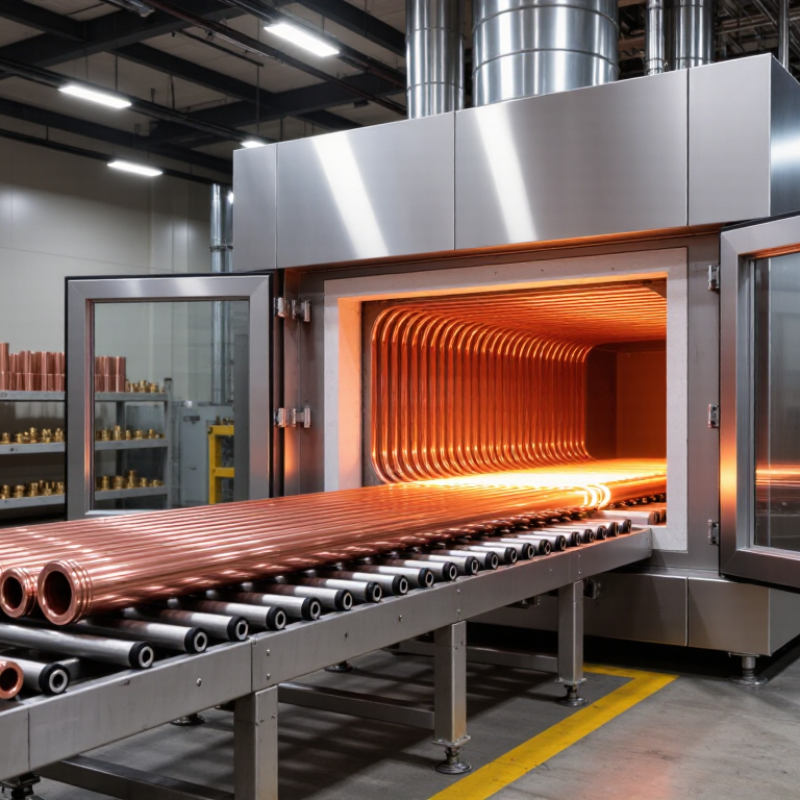
Compare furnace temperature uniformity before looking at headline capacity. Copper joints need enough heat to activate the brazing filler, but excess heat can distort thin walls or burn nearby components. Ask for temperature mapping across the usable zone, not just one sensor reading. A thermocouple placed near the center may miss cooler edges. Small details matter.
Next, match the furnace atmosphere and process style to the actual parts. Bright, clean copper often depends on controlled atmosphere quality, stable gas flow, and well-sealed doors or entry curtains. Review oxygen and moisture monitoring, plus how the system responds when doors open or production slows. On paper, this looks simple. In production, it rarely is. A conveyor furnace may suit steady, high-volume runs; a batch furnace can offer flexibility for mixed part sizes and frequent recipe changes. Neither is automatically better.
Ask suppliers for trials using your own assemblies, filler metal, and loading pattern. Check joint appearance, filler flow, cycle time, and distortion after cooling. Also compare usable work-zone dimensions, loading access, maintenance needs, and energy use under realistic conditions. A quoted rate may assume tightly packed parts and uninterrupted operation. That assumption deserves a hard look. Leave room for future part changes, but avoid paying for capacity your line cannot feed.



 Close