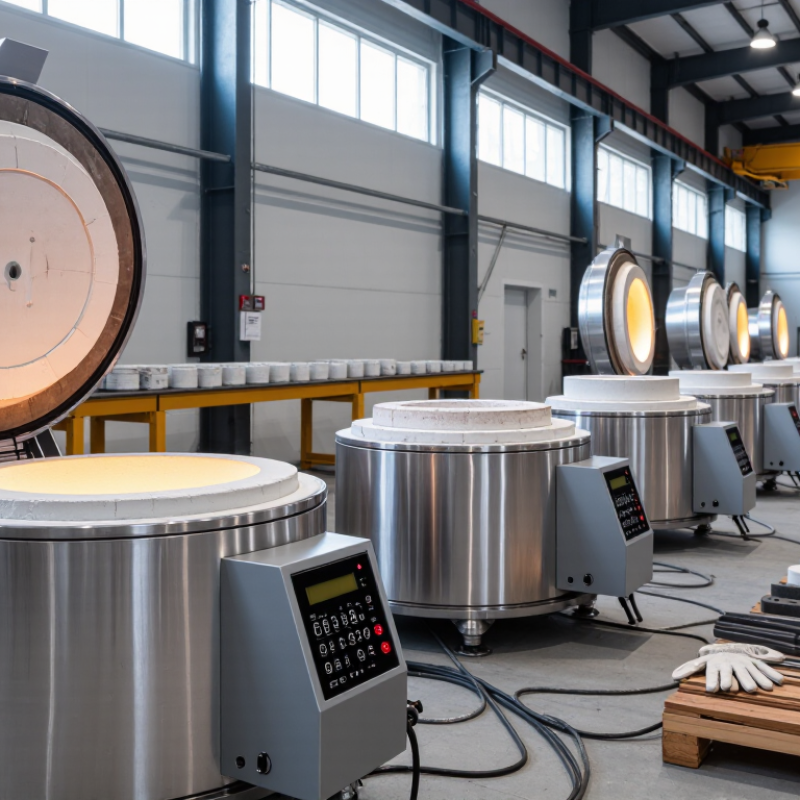
| Resistance-heated crucible furnace | Small to medium batch melting and holding, particularly where straightforward operation and a relatively even furnace chamber are priorities. | Electric elements heat the chamber and crucible. Temperature can be controlled with a thermocouple and controller; actual melt uniformity depends on furnace design, loading, and operating practice. | Costs depend on electricity use, heat-up frequency, insulation, lid-opening time, and holding duration. Avoiding long idle holds and using suitable insulation can reduce energy use. | No combustion at the point of use, but hot surfaces, electrical hazards, molten-metal splash, crucible failure, and moisture-related metal ejection remain serious risks. | Often simple to operate, but heat-up and recovery can be slower than some induction systems. Elements and crucibles require inspection and replacement. |
| Induction crucible furnace | Frequent melting, faster batch turnover, and applications that benefit from electromagnetic stirring; commonly used for conductive metals within the system’s design limits. | An alternating magnetic field induces heating in the metal. Melting rate and stirring depend on power, frequency, charge, and furnace design. A compatible crucible and correctly designed power system are essential. | Assess electricity consumed per kilogram of acceptable metal, including power-supply losses, cooling, and holding. Short, well-planned melt cycles can help; frequent starts, low utilization, and extended holding can reduce cost advantages. | Requires electrical safeguards, cooling-system monitoring where applicable, and controls for electromagnetic-field exposure. Standard molten-metal precautions still apply, including dry charge and tools. | Higher equipment and electrical-infrastructure requirements may be justified by throughput. Performance depends strongly on metal, charge geometry, and operating schedule. |
| Tilting electric crucible furnace | Operations that need controlled pouring into molds or ladles and want to reduce manual handling of a hot crucible. | May use resistance or induction heating. Pour control depends on the tilt mechanism, operator training, furnace layout, and the receiving vessel. | Operating cost follows the heating method and production schedule. Include tilt-system inspection, maintenance, and any energy used by auxiliary equipment in a full comparison. | Requires a clear pour zone, guarding or interlocks as appropriate, stable receiving equipment, and procedures for spill response. Tilting does not remove the risk of splashing or spills. | Can improve pouring ergonomics, but adds mechanical components and maintenance needs. Confirm that the tilting range and discharge arrangement suit the process. |
| Electric holding crucible furnace | Keeping already-molten metal at a controlled temperature near a casting or forming operation. | Designed primarily for temperature maintenance rather than rapid melting. Holding performance depends on insulation, lid design, temperature control, and metal withdrawal rate. | Compare energy per hour of holding and metal temperature stability. Long holding times, exposed surfaces, and repeated lid opening can increase energy use and metal losses. | The metal remains a persistent heat and splash hazard. Provide suitable access control, temperature monitoring, ventilation, and safe procedures for skimming or withdrawal. | Well suited to steady production but may be inefficient when used for sporadic batches or as a substitute for a furnace designed for rapid melting. |



 Close