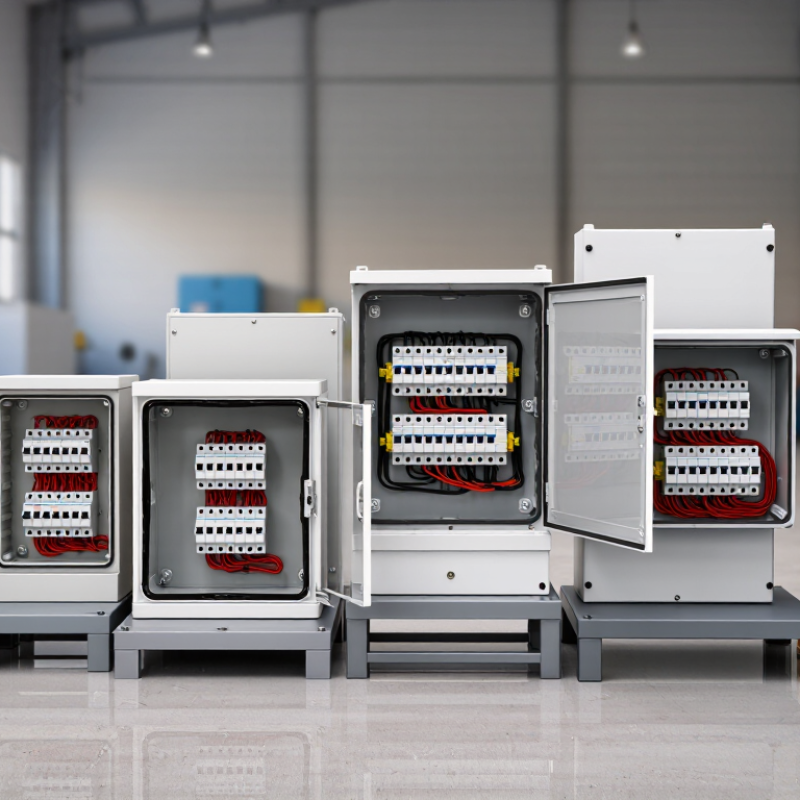
| 1. Residential DIN-rail distribution board | Typically 4–36 DIN modules; circuit current depends on the selected breakers, busbars, and assembly design. | Homes, apartments, and small commercial premises. | Overcurrent protection, neutral and earth terminals, insulated covers, and optional residual-current protection or surge protection. | Usually for indoor installation; select an enclosure rating appropriate to the room and installation conditions. | IEC 61439-3 for distribution boards intended to be operated by ordinary persons; IEC 60529 for IP ratings. Requirements vary by market. | Residential projects needing a compact, modular board. |
| 2. Flush-mounted residential distribution box | Commonly 8–48 DIN modules, subject to enclosure dimensions and the chosen protective devices. | New-build housing and renovations where wiring is concealed in walls. | Covered live parts, secure device mounting, circuit identification, and space for correctly rated protective devices. | Generally intended for dry indoor locations; the finished installation and door must maintain the required protection level. | IEC 61439-3 and IEC 60529; confirm local wiring rules and any national product requirements. | Projects prioritizing a neat, low-profile indoor finish. |
| 3. Weather-resistant outdoor distribution enclosure | Often configured for 4–36 modules or a small number of molded-case circuit breakers; current capacity is assembly-specific. | Outdoor lighting, gates, small pumps, and building service circuits. | Gasketed door, protected cable entries, suitable terminals, and correctly coordinated overcurrent and earth-fault protection. | IP ratings such as IP54 or IP65 are available in some designs; the actual rating depends on the complete enclosure, glands, and installation. | IEC 60529 for IP classification; IEC 61439 for the low-voltage assembly where applicable. Check UV, corrosion, and temperature suitability separately. | Installations exposed to rain, dust, or wash-down conditions when the specified rating matches the environment. |
| 4. Industrial metal distribution cabinet | Commonly designed around 125–630 A incomers, with outgoing circuits selected to suit the load and fault level. | Factories, workshops, commercial buildings, and machinery supply. | Metal enclosure, main isolator or circuit breaker, busbar protection, earthing provisions, and optional interlocks or metering. | Indoor and outdoor versions are available; corrosion protection and IP rating should be specified for the installation site. | IEC 61439-1 and IEC 61439-2 for power switchgear and controlgear assemblies; IEC 60529 for IP rating. Verify assembly design and test documentation. | Sites requiring higher current capacity, robust construction, or multiple outgoing feeders. |
| 5. Temporary construction-site distribution box | Often supplied with a 16–125 A incoming connection and several socket outlets; final ratings depend on the supply system and configuration. | Construction sites, events, maintenance work, and temporary power distribution. | Appropriately rated residual-current protection, overcurrent protection, protective earthing, durable sockets, and a lockable or impact-resistant enclosure. | Choose a rating and construction suitable for outdoor exposure, dust, impact, and expected handling; plugs and sockets also need suitable protection. | IEC 61439-4 for assemblies for construction sites; IEC 60309 for industrial plugs and socket-outlets where applicable; local temporary-installation rules. | Temporary installations needing portable, clearly protected power outlets. |
| 6. Floor-standing modular distribution cabinet | Typically engineered for 400–1,600 A, with capacity dependent on busbar design, temperature rise, and fault withstand. | Large commercial buildings, campuses, and industrial distribution rooms. | Segregated sections may be specified; common provisions include a main protective device, busbar covers, earthing, and accessible cable compartments. | Usually installed indoors; enclosure protection and ventilation must suit the room and heat load. | IEC 61439-1 and IEC 61439-2; verify rated current, short-circuit withstand, temperature-rise performance, and forms of internal separation if required. | Projects needing expandable feeder capacity and organized cable management. |
| 7. Photovoltaic DC combiner box | Designed for a specified number of PV strings; input voltage and current limits must match the modules, string layout, and inverter. | Solar PV systems where multiple DC strings are combined before the inverter. | May include string fuses, DC-rated isolator, surge protective devices, and polarity or circuit labels; components must be rated for PV DC use. | Outdoor versions are common; select an enclosure and cable entries suitable for UV exposure, temperature, and site conditions. | IEC 61439-2 may apply to the assembly; IEC 60529 for IP rating; IEC 61643-31 for PV surge protective devices. Confirm national PV installation requirements. | PV installations requiring appropriately protected and organized DC string connections. |



 Close