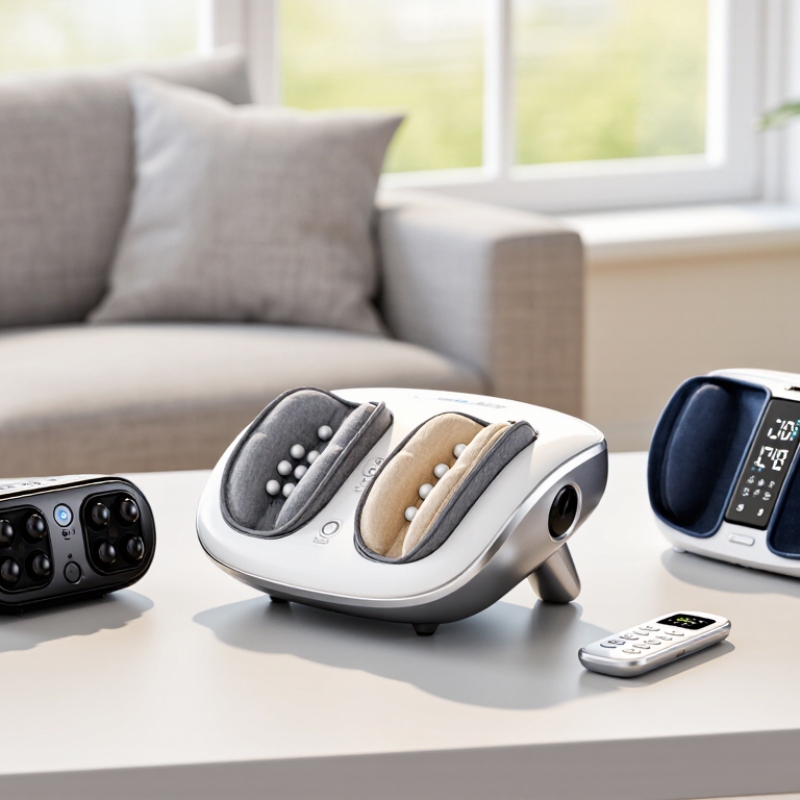
| 1. Shiatsu-style foot massager | Rotating or kneading nodes apply pressure to the soles. | Usually the soles; some models also reach the sides or heels. | Available on some models. | People who prefer a firm, kneading sensation. | Intensity settings, foot-space dimensions, and whether the pressure feels comfortable. |
| 2. Air-compression foot massager | Inflatable chambers gently squeeze and release around the feet. | Coverage depends on the chamber layout; many focus on the top and sides of the foot. | Model-dependent; compression does not necessarily include heat. | People who prefer a wrapping sensation over strong kneading. | Adjustable pressure, fit, and any health-related instructions in the manual. |
| 3. Foot roller massager | Foot movement across ridged or smooth rollers creates localized pressure. | Primarily the arches and soles; the user controls pressure and movement. | Generally not included. | Simple, manual use and targeted pressure. | Stability, roller texture, and whether the pressure is comfortable for your feet. |
| 4. Vibrating foot massager | Motor-driven vibration provides a broad, pulsing sensation. | Often focused on the soles; coverage varies with the platform design. | Some models offer a separate heat function. | People who want a less targeted sensation than kneading nodes provide. | Vibration levels, operating noise, and the device’s footprint. |
| 5. Heated foot massager | Uses a warming element, sometimes combined with kneading or vibration. | Depends on the design; warmth may be concentrated around the soles or foot chamber. | Included; temperature control and heat intensity vary. | People who value warmth alongside a massage function. | Independent heat controls, automatic shutoff, and safety guidance. |
| 6. Foot spa with bubbles | A basin holds water; bubbles or water movement provide a gentle sensory experience. | The feet are immersed; some basins include raised surfaces or rollers. | Some models maintain or warm water; capabilities differ. | People who prefer a soak as part of their foot-care routine. | Basin capacity, splash control, drainage, and cleaning requirements. |
| 7. Under-desk foot massager | A low-profile platform may provide vibration, rolling, or both. | Usually the soles while seated. | Uncommon; check the individual model. | People who want a compact device for seated use. | Clearance under the desk, stability, controls, and power-cord placement. |
| 8. Manual acupressure mat | Raised points apply pressure when you stand or shift your weight on the mat. | The areas of the soles in contact with the mat. | Not included. | People seeking a non-electric, easy-to-store option. | Surface firmness, non-slip backing, and comfort during use. |
| 9. Foot-and-calf massager | May combine foot kneading or compression with calf air compression. | Feet and lower legs, depending on the model’s height and fit. | Available on some models. | People who want coverage beyond the feet. | Calf circumference limits, device size, pressure settings, and ease of entry. |
| 10. Multi-mode enclosed foot massager | May combine rollers, kneading, air compression, and vibration in selectable modes. | Often covers the soles and sides; some designs include the heel or top of the foot. | Frequently offered as an optional feature, but not universal. | People who want several massage styles in one device. | Available modes, washable or removable liners, fit, controls, and storage space. |



 Close