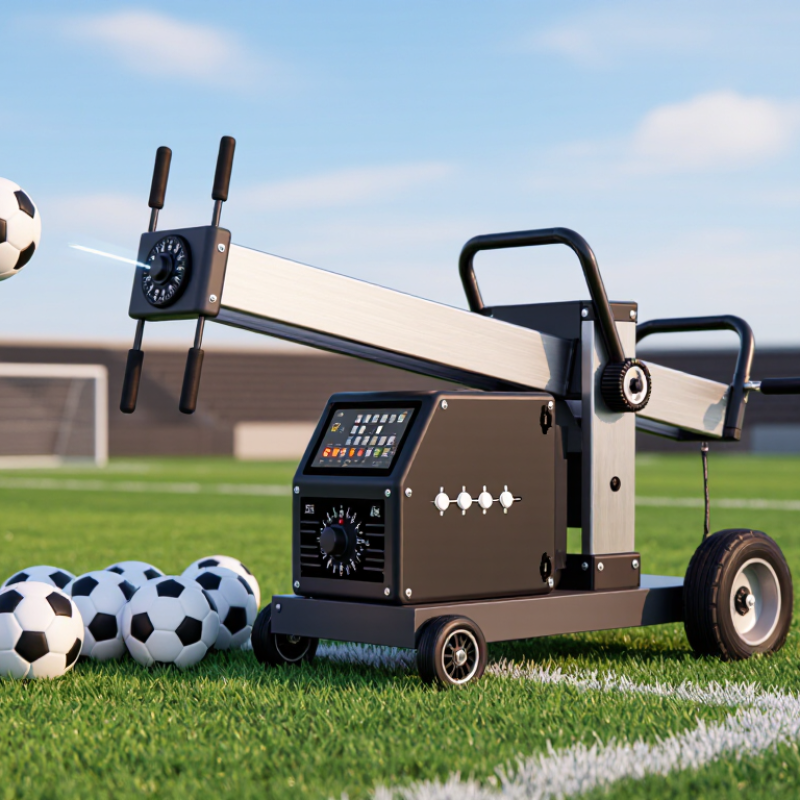
| Ball compatibility | Supported ball sizes, materials, and recommended inflation pressure. Ask whether the machine can feed both size 4 and size 5 balls. | Compare the stated compatibility with the balls used in your training program. For reference, a standard size 5 ball has a circumference of 68–70 cm and a mass of 410–450 g. | Request a feed test using your own ball type and confirm the ball specifications against the applicable rules or standard. |
| Ball speed and measurement | Minimum and maximum launch speed, adjustment increments, and the point or method used to measure speed. | Compare the usable speed range for your players and drills. Do not compare headline speeds unless suppliers use the same measurement method. | Ask for a demonstration and a written test record that states the measurement method and operating conditions. |
| Spin and delivery control | Available delivery types, such as straight, driven, or spin-based delivery; controls for speed, spin, and direction. | Check that the controls support the specific drills you need and can be adjusted independently where required. | Request video or a live demonstration of each listed delivery mode using the intended ball. |
| Elevation and direction adjustment | Elevation and direction ranges, adjustment method, and whether settings can be programmed or repeated. | Compare the actual adjustment range and repeatability, rather than relying only on descriptions such as “multi-angle.” | Ask the supplier to demonstrate several settings and provide the corresponding specification sheet. |
| Feeding system and capacity | Ball capacity, feed interval, reload method, and procedures for clearing a jam or misfeed. | Compare capacity and reload time with the length of your drills and the number of operators available. | Run repeated feed cycles and ask how the supplier defines a successful feed and handles misfeeds. |
| Power and operating time | Power input, battery type (if applicable), charging time, stated operating time, and replacement-battery availability. | Check that the power configuration matches the destination country and the expected session length. | Request electrical ratings and battery documentation; confirm plug and voltage requirements before ordering. |
| Portability and setup | Machine dimensions, net weight, wheels or handles, setup steps, and packed dimensions. | Compare the machine’s transport and storage requirements with your field, facility, and shipping arrangements. | Request dimensioned drawings, packing details, and a setup demonstration. |
| Safety features | Emergency stop, guards around moving parts, start-up warnings, and instructions for safe operation and maintenance. | Compare documented safeguards and operating instructions for the people who will use and maintain the machine. | Inspect the machine and manuals. Verify any claimed safety certification with the issuing body and confirm it applies to the destination market. |
| Quality control and testing | Incoming-part checks, final inspection, functional test procedure, and records provided with the shipment. | Compare the clarity of the supplier’s inspection process and whether each unit is function-tested before dispatch. | Request a sample inspection report and agree on the pre-shipment acceptance test in writing. |
| Warranty, spares, and service | Warranty duration and exclusions, spare-parts list, parts lead time, troubleshooting support, and repair guidance. | Compare written coverage and the availability of essential replacement parts, not just verbal service promises. | Request warranty terms, a priced spare-parts list, and a named service contact in the quotation or contract. |
| Price and shipment terms | Unit price, included accessories, packaging, production lead time, payment terms, and the quoted shipping or delivery term. | Compare quotations on the same configuration and delivery basis; account for freight, duties, and required accessories separately. | Use a written, itemized quotation and confirm the agreed delivery term and included items before payment. |



 Close