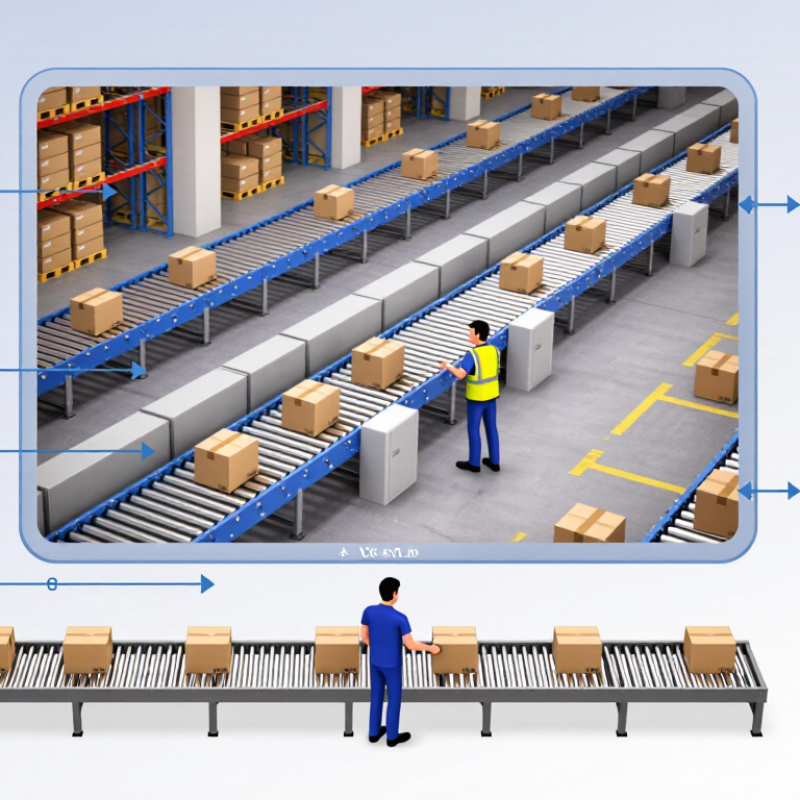
| Straight gravity roller conveyor | Rigid-bottom cartons, totes, and containers that can bridge the roller gaps. | Packaging lines, shipping areas, accumulation lanes, and short transfers. | Roller diameter and spacing; conveyor width; frame rating; unit-load weight; and the number of rollers supporting the load at any time. | Simple layout, no powered drive, and straightforward access for cleaning and maintenance. | Small, soft, or uneven-bottom items may not travel reliably. Slope and speed need to suit the load and operator requirements. |
| Skate-wheel gravity conveyor | Lightweight cartons and other rigid-bottom packages with a stable base. | Temporary packing stations, order-picking areas, and lightweight transfer paths. | Wheel spacing; wheel-bed width; load support; frame capacity; and whether the package base is wide enough to contact multiple wheels. | Lightweight sections are easy to reposition, and the open surface provides access to the conveyed load. | Less suitable for heavy loads, narrow bases, or packages with irregular bottoms. Wheels may need more frequent inspection in demanding environments. |
| Flexible gravity roller conveyor | Cartons and totes with sufficiently rigid, flat bottoms. | Loading docks, temporary work areas, and layouts that change with the task. | Extended and compressed length; usable width; curve radius; roller spacing; load rating; and the support requirements specified for the operating position. | Can be repositioned and extended or compressed to suit changing transfer distances. | Capacity and stability depend on the actual configuration and support conditions. Flexible sections are not a substitute for a fixed, accurately aligned conveyor where precise positioning is required. |
| Gravity roller curve | Rigid-bottom packages that remain stable while changing direction. | Connecting conveyor runs where a layout needs a turn without a powered drive. | Curve angle and radius; roller arrangement; inside and outside guide rails; package footprint; and load behavior through the turn. | Changes direction without a powered transfer unit when the package and layout are suitable. | Packages may drift toward the outside of a turn. Narrow, unstable, or irregular loads may require guides or a different transfer method. |
| Ball-transfer table | Flat-bottomed items that can be manually pushed or rotated across the surface. | Workstations, packing benches, and multidirectional manual transfers. | Ball spacing; tabletop dimensions; load distribution; rated capacity; and compatibility between the load base and ball pattern. | Allows manual movement in multiple directions across the table surface. | Requires a suitable flat base and operator input. It is not a continuous, controlled downhill conveying solution. |
| Gravity chute | Items specifically suited to sliding on the selected chute surface. | Controlled drops between elevations, subject to item and facility requirements. | Chute angle; surface material; side containment; item dimensions and weight; impact at discharge; and guarding. | Can provide a simple, non-powered route between different elevations. | Sliding friction and impact vary by item and surface. Testing and appropriate containment are important before use. |
| Selection note: These are conveyor configurations, not a ranking of named manufacturers. Gravity-conveyor ratings and suitable operating slopes are design-specific; verify them against the supplier’s current technical documentation and the actual load, layout, support spacing, and operating conditions. |



 Close