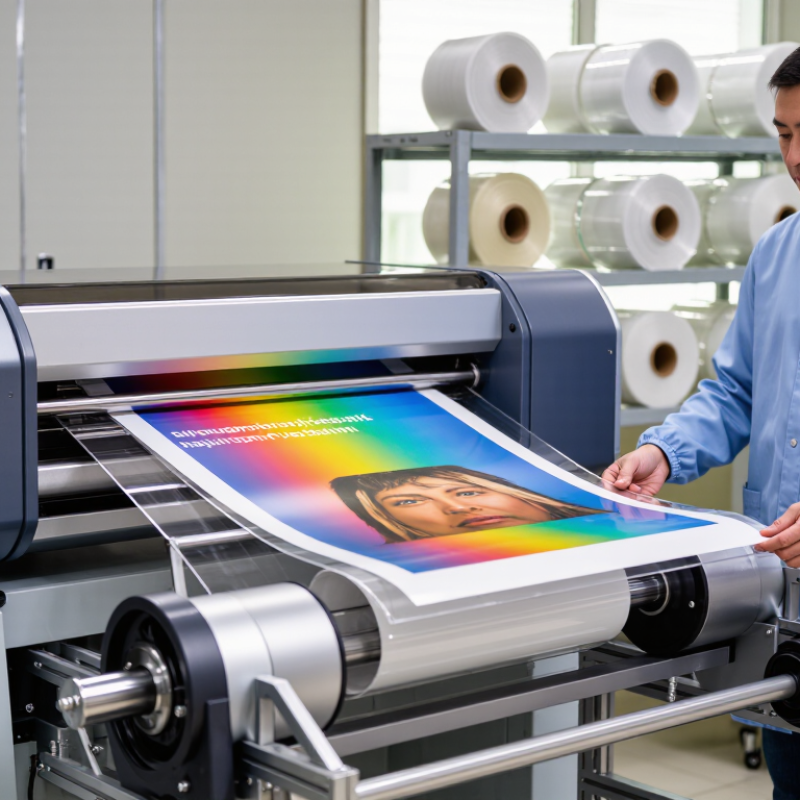
| Desktop DTF Printer | Prints with textile pigment inks onto PET film. Hot-melt adhesive powder is applied to the printed film, cured, then transferred with a heat press. | Commonly used on cotton, polyester, blends, and many dark or light fabrics. | Supports full-color artwork and does not require cutting around each design. White ink allows printing on dark garments. | Requires film, adhesive powder, curing, and a heat press. White-ink systems need regular circulation and maintenance. | Small shops, samples, short runs, and businesses with limited production space. |
| Roll-to-Roll DTF Printer | Prints continuously on roll-format PET film; printed transfers are powdered and cured before heat pressing. | Similar fabric range to other DTF systems, depending on the ink, film, adhesive, and application settings. | Handles longer print runs and can reduce manual film loading compared with sheet-based workflows. | Needs more floor space and coordinated printing, powdering, curing, and finishing equipment. Production results depend on the complete workflow. | Regular garment production and businesses printing multiple designs or longer runs. |
| Integrated DTF System | Combines film printing with automated or connected powder application and curing equipment; transfers are still applied with a heat press. | Garments and other compatible textiles, subject to the materials and transfer settings used. | Can reduce handling between printing and curing and make a repeatable production workflow easier to manage. | Higher equipment and space requirements than a basic printer. Integration does not remove the need for process checks or routine maintenance. | Businesses seeking a more streamlined DTF production line. |
| Printable Heat-Transfer Vinyl Printer | Prints designs onto printable heat-transfer vinyl, which is typically contour-cut, weeded when required, and applied with a heat press. | Garments compatible with the selected printable vinyl; some materials require specific vinyl or application settings. | Useful for shaped graphics, names, and designs where a cut vinyl edge is appropriate. | Cutting and weeding can add labor. Printable vinyl is a different transfer process from DTF and may have a visible film-like feel. | Custom apparel, names, numbers, and lower-volume jobs where cut graphics are suitable. |
| Sublimation Transfer Printer | Prints with sublimation ink onto transfer paper, then uses heat to transfer dye into a compatible surface. It is not a film-printing method. | Best suited to white or light-colored polyester textiles and specially coated hard goods. | On suitable materials, the dye becomes part of the surface rather than forming a separate adhesive film layer. | Not suitable for most cotton garments or dark fabrics without a separate compatible transfer material. | Polyester apparel and coated products where the substrate matches the sublimation process. |
| UV DTF Printer | Prints UV-cured graphics onto a transfer-film system, commonly used to apply decals to hard surfaces. It is generally a pressure-applied transfer, not a textile heat-press process. | Selected smooth, hard surfaces, depending on the transfer system and surface preparation. | Can create detailed, layered decals without cutting each design from colored vinyl. | Not the standard choice for heat-transfer garment printing. Surface compatibility and durability vary by transfer materials and application. | Hard-surface decals and product decoration rather than apparel heat transfers. |



 Close