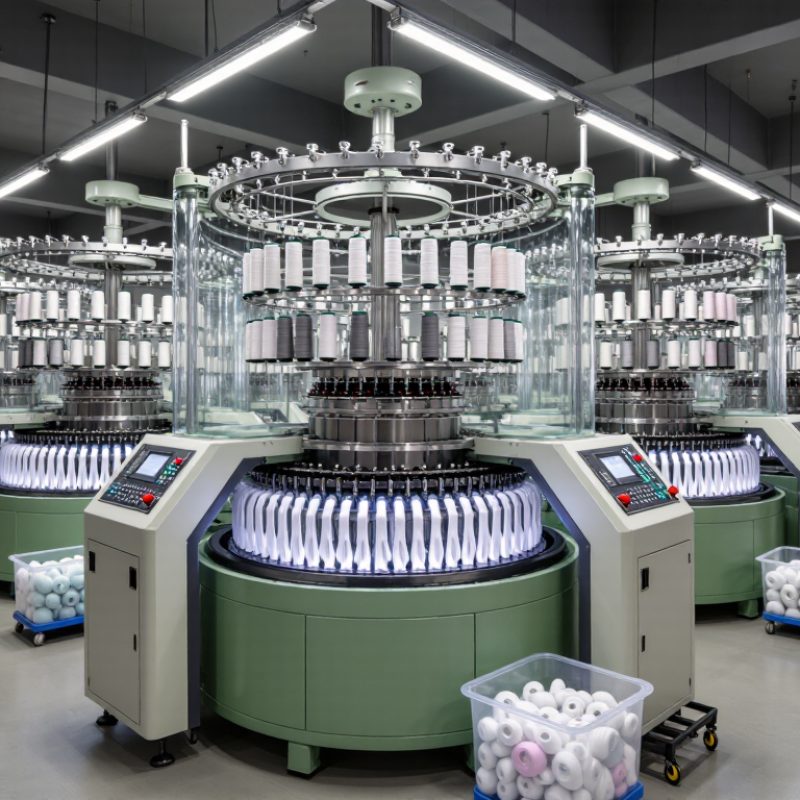
| Machine configuration | The cylinder arrangement and knitting functions match the intended product, such as single-cylinder construction for many everyday socks or double-cylinder construction for designs that require needle transfer. | Different constructions support different patterns, rib structures, and production requirements. | Run a sample matching the required sock construction and inspect the fabric and shaping. |
| Gauge and needle setup | Gauge and needle count are specified for the required yarn, fabric density, and sock size; needle selection and replacement are supported with suitable parts. | Gauge affects stitch size, fabric appearance, and the range of yarns and products the machine can handle. | Confirm the cylinder specifications and knit the intended yarn before purchase. |
| Pattern and control system | The controller supports the required pattern changes, clear program storage, and practical adjustment of knitting parameters; operating instructions are available in a language the team can use. | Accessible controls can reduce setup errors and make product changeovers easier. | Ask the operator to load a pattern, adjust settings, and recover from a simulated stop. |
| Yarn feeding and tension | Yarn feeders deliver yarn consistently, tension can be adjusted for the materials used, and the machine includes practical yarn-break detection or stop functions where applicable. | Stable feeding helps maintain even stitches and can limit defects caused by yarn breaks or uneven tension. | Knit with the planned yarns and check for dropped stitches, visible tension variation, and reliable stop response. |
| Heel and toe capability | The machine can produce the required heel and toe construction, with shaping functions and transfer operations appropriate to the specified sock design. | Heel and toe quality affects fit, durability, and the amount of manual finishing needed. | Inspect a complete sample sock, especially the heel, toe, and transition areas. |
| Terry and specialty functions | For terry or other specialty socks, the machine has the relevant knitting and yarn-handling setup; optional functions are matched to the actual product specification. | Specialty functions can expand product options but may add setup and maintenance requirements. | Request a sample made with the same terry structure, yarn, and pattern planned for production. |
| Production consistency | The machine maintains repeatable settings across production runs and provides accessible checks for common faults; performance claims are supported by a defined test and product conditions. | Consistent output helps with quality control, planning, and reducing rejected products. | Compare samples from a sustained run, not only a single demonstration sock. |
| Maintenance and spare parts | Routine service points are accessible, maintenance guidance is clear, and essential wear parts—such as needles and sinkers—can be identified and sourced. | Straightforward maintenance and parts availability help limit avoidable downtime. | Review the maintenance schedule, spare-parts list, warranty terms, and service response arrangements. |
| Safety and installation | The machine has appropriate guards and emergency-stop controls, with installation and operating guidance for the required site conditions. | Safe operation and correct installation are essential for operators and dependable production. | Check safety devices, electrical requirements, installation instructions, and operator training arrangements. |



 Close