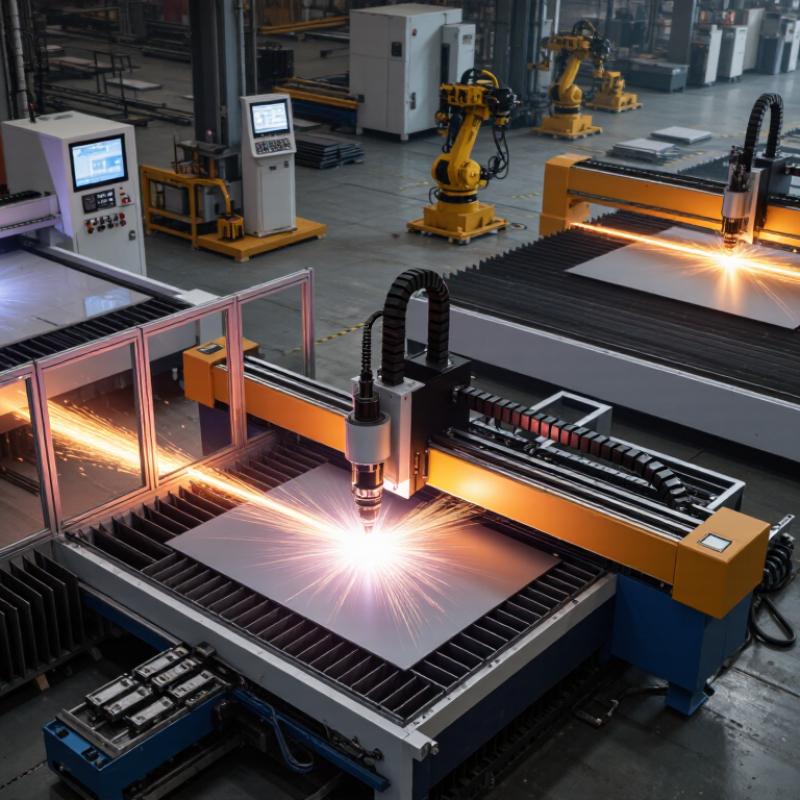
| Fiber laser cutting | High-volume sheet-metal production; intricate profiles; cabinets, enclosures, and precision components | Carbon steel, stainless steel, aluminum, and other laser-compatible metals | Commonly thin sheet to about 20–25 mm; higher-power systems can cut thicker sections depending on material and required edge quality | Typically about ±0.1–0.3 mm on suitable sheet-metal jobs; varies with thickness, machine condition, and setup | Fast on thin and medium sheet; narrow kerf; readily automated; little mechanical distortion | High equipment and operating costs; reflective materials and thick plate require careful process selection; fume extraction and laser safety are essential |
| CO₂ laser cutting | Non-metal sheet processing and selected metal-cutting work; signs, packaging, textiles, and some fabrication jobs | Acrylic, wood, paper, textiles, and certain metals with an appropriate configuration | Depends strongly on material and laser power; commonly used for non-metals from thin sheets to several centimeters | Fine detail and narrow kerf; achievable tolerance depends on material, thickness, and thermal effects | Versatile for many non-metal materials; good detail on suitable workpieces | Not a universal metal-cutting choice; some materials produce hazardous fumes and require material-specific extraction |
| Plasma cutting | Fabrication shops, structural steel work, repair, and medium-to-thick conductive plate | Electrically conductive metals, including carbon steel, stainless steel, and aluminum | Often used from thin plate to roughly 50 mm; heavier-duty systems can cut thicker material, with edge quality varying by thickness | Typically less precise than laser or waterjet; cut squareness and edge quality decline as thickness increases | Fast and cost-effective for many plate jobs; handles conductive metals and portable job-site work | Creates a heat-affected zone, dross, and fumes; may require edge cleanup; not suitable for non-conductive materials |
| Waterjet cutting | Thick, heat-sensitive, or mixed-material work; aerospace, stone, glass, composites, and precision plate parts | Metals, stone, glass, ceramics, rubber, plastics, and many composites | Commonly handles materials from thin sheet to well over 100 mm, subject to material, nozzle, and quality requirements | Can achieve roughly ±0.1–0.3 mm on precision setups; taper and tolerance depend on thickness, speed, and machine capability | No heat-affected zone; broad material compatibility; suitable for thick sections and heat-sensitive parts | Generally slower than thermal cutting on many metal jobs; abrasive use, water treatment, and maintenance add operating costs |
| Oxy-fuel cutting | Heavy plate work, structural fabrication, shipbuilding, and demolition where thick steel is common | Primarily carbon and low-alloy steels; unsuitable for stainless steel and aluminum in standard oxy-fuel cutting | Most effective on thick steel, often from about 25 mm upward; heavy-duty setups can cut several hundred millimeters | Coarser than laser or waterjet; edge finish and dimensional accuracy usually require more allowance or cleanup | Economical for very thick steel; robust process; suitable for portable and large-format cutting | Slow on thinner plate; substantial heat input and heat-affected zone; requires gas handling and fire-safety controls |
| Mechanical guillotine shear | Straight-line blanking of sheet and plate in repetitive production | Sheet metals such as mild steel, stainless steel, and aluminum, within machine capacity | Typically thin sheet to plate several millimeters thick; heavy-duty machines can handle substantially thicker stock | Clean, straight cuts when properly set; not intended for internal openings or complex contours | Fast, efficient, and economical for repeated straight cuts; no kerf waste along the cut line | Limited to straight cuts; capacity depends on material strength, thickness, blade condition, and machine design |
| Industrial bandsaw | Cutting bars, tubes, pipes, billets, and structural stock to length | Ferrous and non-ferrous metals; some machines also cut plastics and other stock materials | Selected by workpiece cross-section and saw capacity; machines range from small stock-cutting units to large billet saws | Generally suitable for accurate length cutting; finish and squareness depend on blade, feed, and material | Efficient for stock separation; relatively narrow kerf; suitable for bundles and many solid sections | Not suited to intricate sheet profiles; cutting speed and blade life depend on material and operating conditions |



 Close