| Polyisocyanurate (polyiso) IMP | A rigid foam core slows heat transfer; bonded metal skins provide a finished surface and help the panel act as a structural sandwich. | Approximately R-5.6 to R-6.5 per inch (RSI 0.99–1.14 per 25.4 mm), depending on product and test conditions. | Projects prioritizing high thermal resistance with relatively slim wall or roof assemblies. | Actual performance varies with temperature, panel joints, fasteners, and the complete assembly. Confirm the tested fire performance for the specific panel system. |
| Polyurethane (PUR) IMP | A closed-cell foam core provides insulation and is bonded between interior and exterior metal facings. | Approximately R-5.5 to R-6.5 per inch (RSI 0.97–1.14 per 25.4 mm), with values varying by formulation and test method. | Enclosures needing strong insulation performance and factory-finished construction. | Check the product’s fire classification, temperature limits, joint details, and applicable building-code approvals. |
| Expanded polystyrene (EPS) IMP | A lightweight cellular plastic core reduces conductive heat flow between the metal faces. | Approximately R-3.6 to R-4.2 per inch (RSI 0.63–0.74 per 25.4 mm). | Applications where cost, low weight, and straightforward thermal insulation are important. | Typically needs more core thickness than higher-R foam types for the same nominal insulation level. Review fire, moisture, and code requirements for the complete assembly. |
| Mineral wool IMP | Fibrous mineral insulation limits heat transfer; the metal facings protect and contain the core within the panel assembly. | Approximately R-3.0 to R-4.3 per inch (RSI 0.53–0.76 per 25.4 mm), depending on density and product. | Projects where noncombustible insulation or particular fire-performance objectives are a priority. | Often requires greater thickness to reach the same nominal thermal resistance as higher-R foam cores. Fire ratings apply to tested assemblies, not to a core description alone. |
| Roof IMP | Interlocking insulated panels span between designed supports; joints and attachment details help control water entry and air leakage. | Depends on core type, panel thickness, joint design, and support conditions. | Commercial, industrial, and other buildings needing an insulated, factory-finished roof enclosure. | Compare structural capacity, slope, drainage, weather seals, fasteners, and tested roof-system performance—not just nominal R-value. |
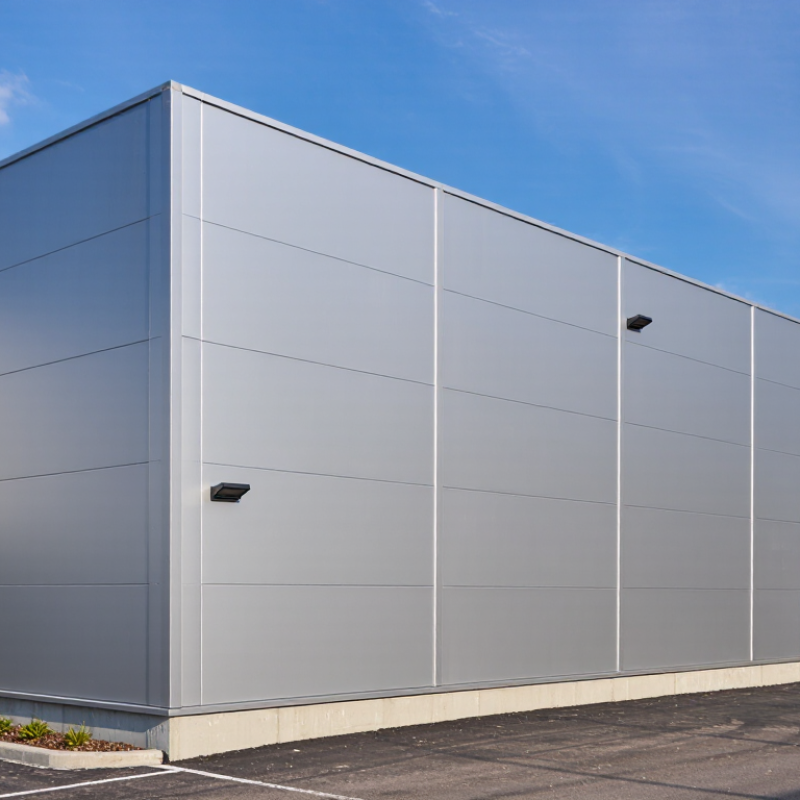
| Wall IMP | Interlocking panels create an insulated wall enclosure; the metal faces provide the exterior and interior finishes when designed for that use. | Depends on core type, thickness, panel joints, and installation details. | New construction or retrofit projects seeking a fast-to-install insulated wall system. | Specify joint configuration, air and water control, thermal bridges, corrosion protection, finish, and compatibility with openings and adjacent assemblies. |



 Close